
PREVIOUS WEATHER REPORTS
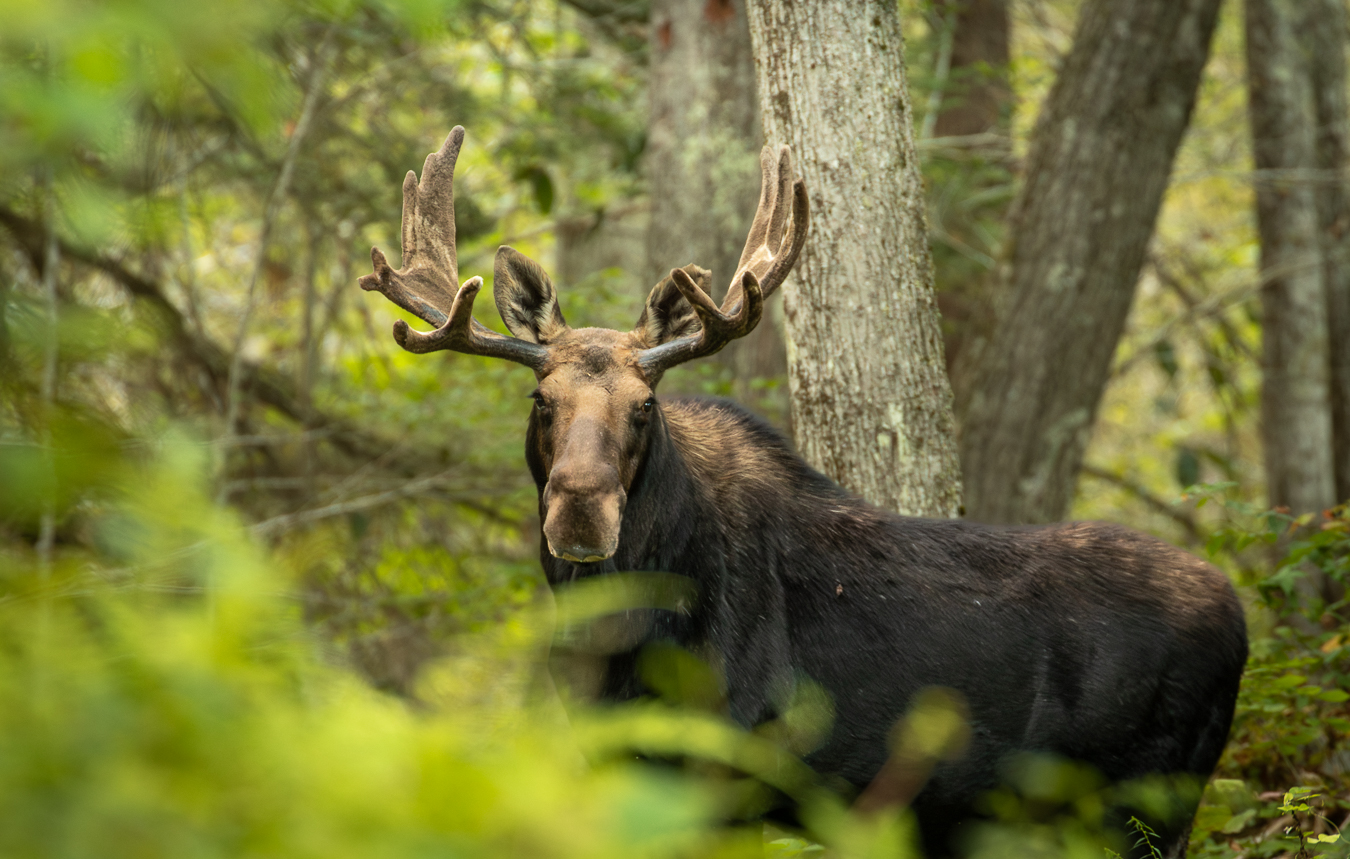
GMF’s Resident Moose are the Subject of Scientific and Photographic Study
Great Mountain Forest is home to 20 of Connecticut’s 100 or so moose. Yet most people who visit the forest will never spot one. That’s because despite their significant stature and status as New England’s largest land mammal, these ungainly ungulates—members of the order of hoofed mammals— move through the forest with remarkable stealth and agility.
Wildlife photographer Stephen Schumacher, however, who has been documenting GMF’s diverse fauna for eight years, has captured GMF’s resident moose on multiple occasions. And Ed Faison, senior ecologist at the Highstead Foundation, a regional conservation organization based in Redding, CT, has studied GMF moose to better understand how they impact temperate forests.
Under the Microscope
Faison, the lead author of a recent paper on the effect of moose and white-tailed deer in New England on forest regeneration, explains “Moose have been studied for decades in the boreal forest, in Canada and Scandinavia and Alaska. So a lot is known about what they do to forests up there, but very little is known about what’s going on down here [in the temperate forest].”
Moose are relative newcomers to Connecticut. In fact, there is no hard evidence to suggest that the species had a stable breeding population in the state until the 20th century.“GMF is a great study site because it’s one of the few spots in Connecticut with moose, it supports long-term research and is actively managed” explains Faison.
Faison along with Steve DeStefano from the United States Geological Survey Collaborative Wildlife Research Unit at the University of Massachusetts spent 15 years monitoring the browsing (foraging) habits of moose and deer to determine their impacts on the abundance and composition of a re-growing forest in a disturbed woodland site, such as an area that had been cleared for timber harvesting. GMF proved an ideal study site.
A moose that eats up to forty or fifty pounds of food per day can certainly produce notable effects on the reemergent trees. Faison and DeStafano found that rather than restrict the forest’s ability to regrow, as prior scholarship had suggested, browsing’s primary impact was to direct different plant species to succeed in the disturbed environment, without substantial sacrifices to overall biomass or biodiversity.
The study, Resilience and Alternative Successional Trajectories in Temperate Forests Exposed to Two Large Herbivores published in the journal Forest Ecology and Management in June, concluded that the moose and deer did not significantly impact forest resiliency, or its ability to regrow after disturbance.
However, the scientists also concluded that the moose and deer’s feeding habits did affect the forest’s composition. The browsed sites showed markedly reduced deciduous tree growth. That’s because the animals favored deciduous species, allowing white pine (Pinus strobus) to grow more abundantly in the browsed stands.
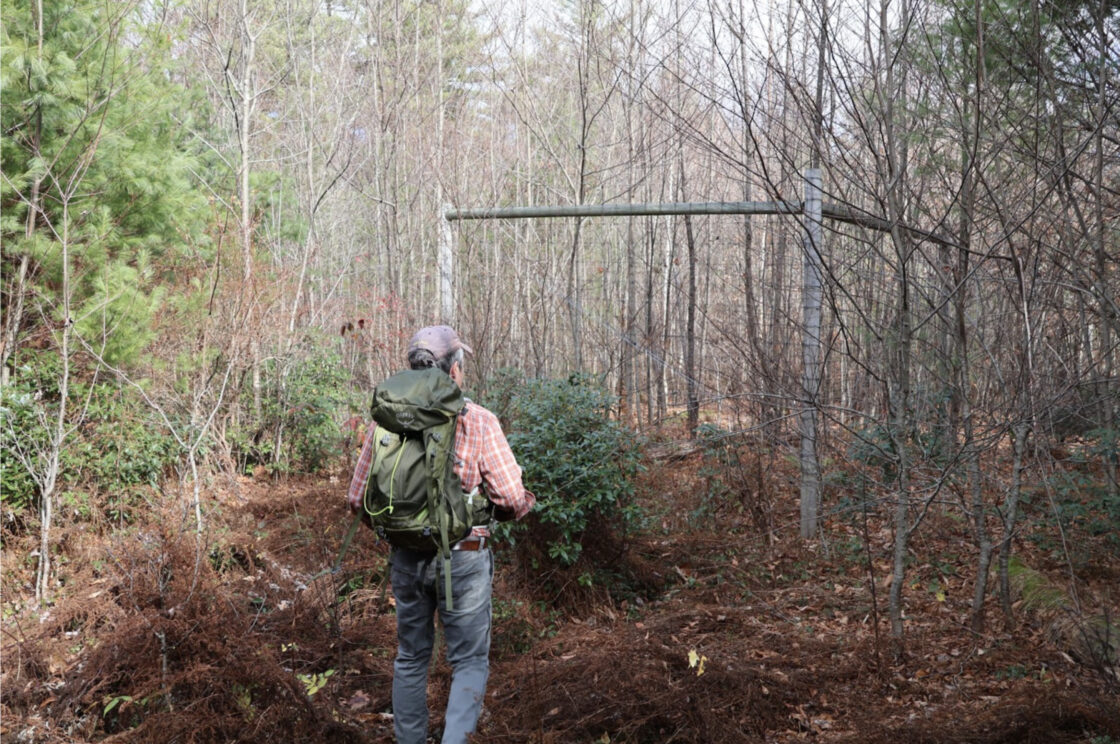
Faison inspects a partially enclosed plot that excludes moose but permits deer. Photo provided.
Through the Camera’s Lens
Rather than their impacts on the forest, wildlife photographer Stephen Schumacher is interested in documenting the animals themselves, which is no easy feat.
Despite being New England’s largest land mammal, moose are seldom seen. And even though their antlers can span up to five feet across, these ungainly looking, yet agile animals manage to negotiate the dense understory with remarkable ease.
“I’ve seen moose going through mountain laurel that is thicker than thick,” remarked Schumacher during a recent conversation. “It’s hard enough for me to get through there.”
Yet Schumacher persists. “This is a lifelong project,” he says. “I still want to get my quintessential moose in early morning or late afternoon sun getting lit up like a Christmas tree.”
Not only does their reticent nature make moose encounters a challenge. But a moose that feels threatened can kick, charge or stomp, particularly a cow protecting her calf.
Schumacher’s dogged pursuit of moose has meant he’s had his share of run-ins with the woodlands giants, and the pictures to prove it. On August 27 this year, while riding his bike, Schumacher spotted a looming shape emerging from the edge of the woods. Jumping off his bike, and struggling to keep his hands steady as he prepped his camera for the shot, Schumacher uttered a low guttural sound to draw the huge bull’s gaze.
Normally, the photographer wouldn’t vocalize to the animals, but since this was before rutting season, he said the bull was calm. “His ears were up… he wasn’t posturing with his antlers. He was relaxed.”
To Schumacher’s amazement, the bull offered a reply. “He turned his head broadside, and he looked back at me, and he answered me back.”
“It sent chills up my spine,” he continued, after a pause.
“Seeing that bull, that’s probably the coolest thing I’ll ever encounter. And I’ve been able to photograph wolves out in Yellowstone,” he said.
Schumacher has been tromping around GMF’s hinterlands for eight years, and he also monitors a number of trail cameras he set up around the forest, which gives him rare access to documenting moose as well as other mammals in the wild. Once, five years ago, two deer walked by one of his cameras and for a split second, the outline of their antlers matched perfectly. “Those guys were actually twins,” Schumacher said with a grin. Schumacher’s cameras have also captured fishers, martins, coyotes, foxes, bobcats, and “lots of bears—some giant bears.”
“I don’t take any of that for granted,” he said, emphasizing his gratitude to GMF staff for allowing him the access to do what he does. “It’s like getting a golden ticket in Willy Wonka.”
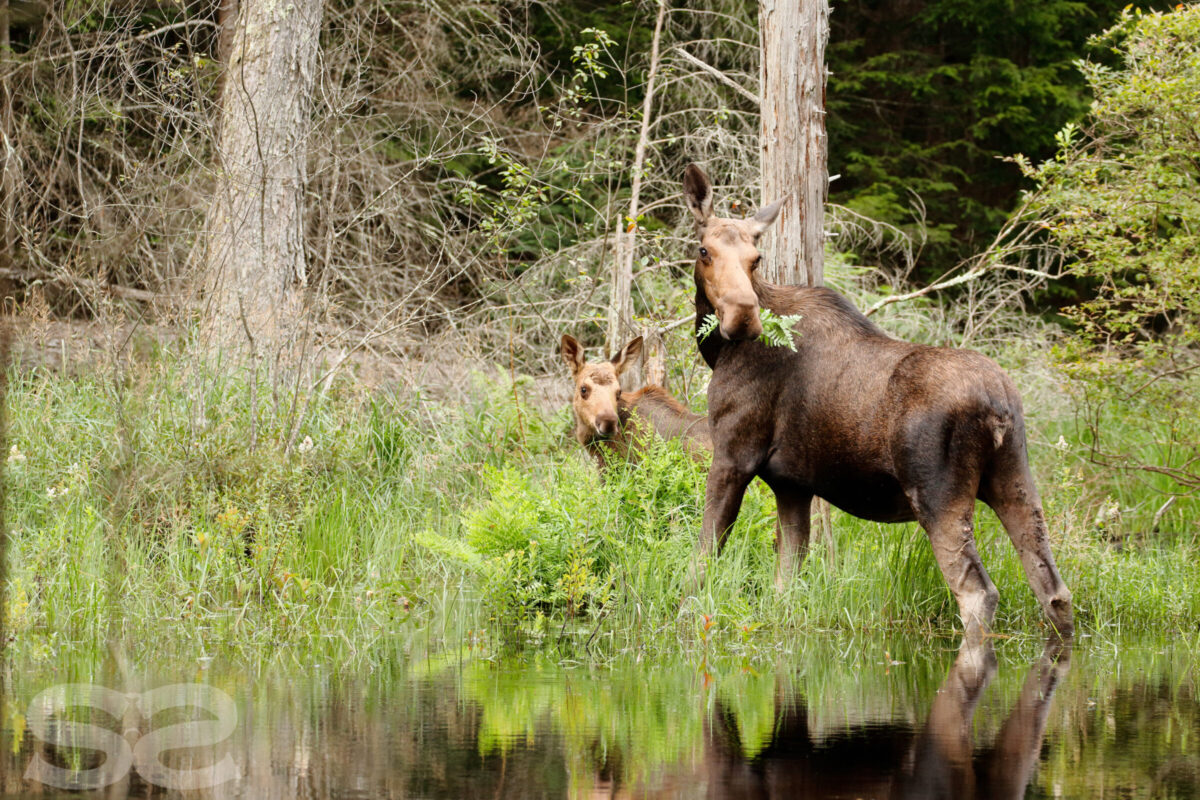
Despite his hands quaking with trepidation, Schumacher managed to capture a few images of a moose cow and her calf. Photo: Stephen Schumacher
Schumacher’s photographs and trail camera footage can be found on instagram @sds.wildlifeimages.
Misunderstood Asters: A conversation with Horticulturist Deb Munson
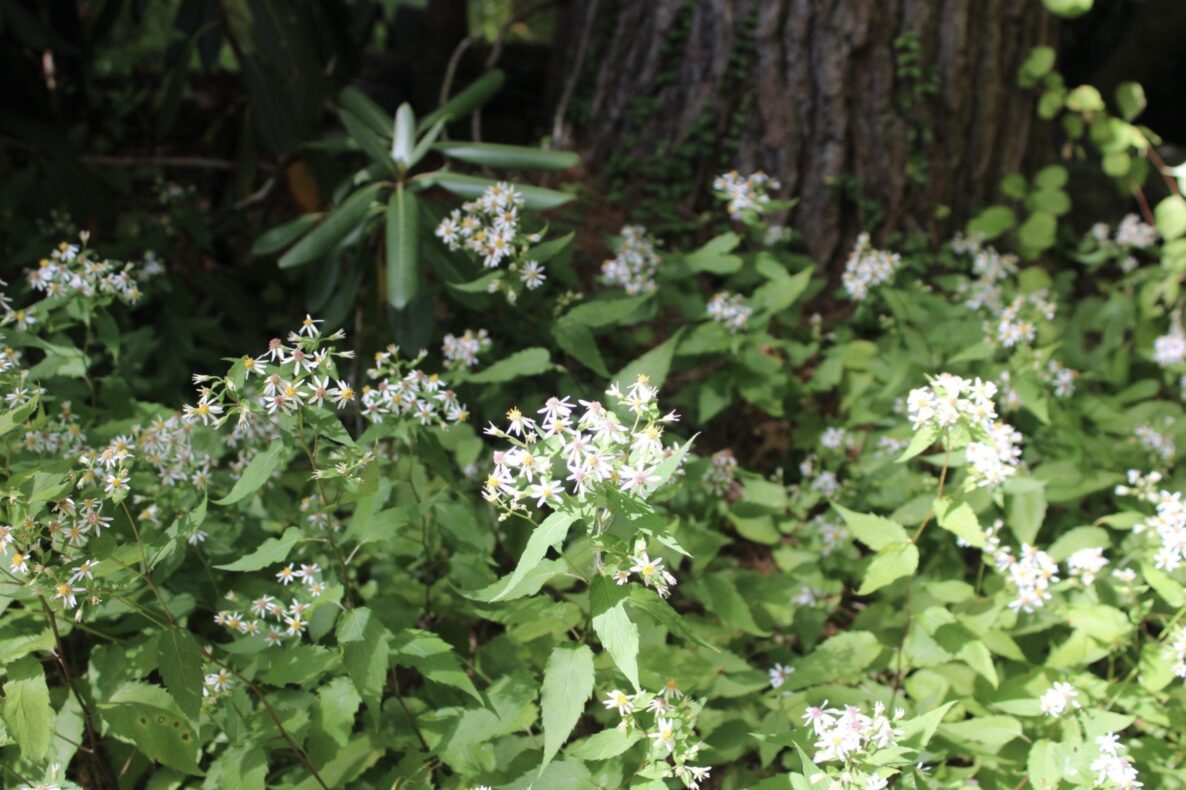
August has come and gone at last, the kids are back at school, and the forest floor is blanketed in white. While recent weather patterns have made anything seem possible, this is not the result of a historic Labor Day blizzard, but rather the on-schedule flowering of Eurybia divaricata, or, as it is commonly known, the white wood aster.
Expert horticulturalist, native plants advocate, and close GMF neighbor Deborah (Deb) Munson advises homeowners who see that snowy carpet abutting their yards at the forest’s edge to welcome the asters. They bring a host of late-season benefits to the garden and broader ecosystem alike.
“I think asters are very misunderstood,” said Deb in a recent interview, “which is unfortunate because they’re one of the greatest plants for pollinators and caterpillars,” second only in caterpillar hosting to fellow autumn-flowering goldenrod. The white wood aster is among the first of the New World asters to bloom in late August, and it has already brightened the dry and shady corners of Northwest Connecticut’s yards and woodlands.
If you’ve glanced out from your kitchen window in the past week, taken a recent stroll on one of GMF’s trails, or paid a long-weekend visit to your garden, chances are you’ve seen these late bloomers thriving under dappled sunlight, their individual stems mingling with their neighbors to create a veritable stronghold of delicate white blossoms.
The white wood aster’s ability to cover ground so extensively can alarm home gardeners and yard keepers who may find them to be “messy and weedy,” Deb said, but she assured that they provide a wealth of services.
That ability to provide a herbaceous groundcover is actually one of the aster’s greatest assets, she explained. “I believe in plants sort of being their own mulch,” Deb said, and the white wood aster can provide a perfect “carpet” in shadier portions of one’s garden or at the fringe where the yard meets the forest. She explained they flourish in the “ecotone” area at the woodland edge, or under a canopy that provides dappled shade.
Letting the garden, yard, or woodland mulch itself with understory plants and autumn leaf fall keeps the ecosystem contained, protecting against diseases or invasive species that could be brought in by an external material. Plus, it’s cost effective: “you pay people to take your debris away, and then you pay them to bring in mulch.” Deb suggested it’s cheaper, simpler, and safer to let the plants do the heavy lifting for you.
Plus, they’re self-sufficient. As they self-sow and are generally hardy, they require little maintenance. In Deb’s words: “They’re pretty carefree.”
Deb pointed out that like many other native fall-blooming wildflowers, they are drought-tolerant, unlike lots of non-native species that are sold at garden centers: “Native plants are adapted to our region, and they have more resiliency… I feel like it’s pretty dry right now, but it doesn’t seem like the asters are skipping a beat.” As erratic weather patterns, including droughts, persist, species that are able to withstand dry weather will continue to provide vital ecosystem functions and also, in the case of garden and yard populations, save water for homeowners.
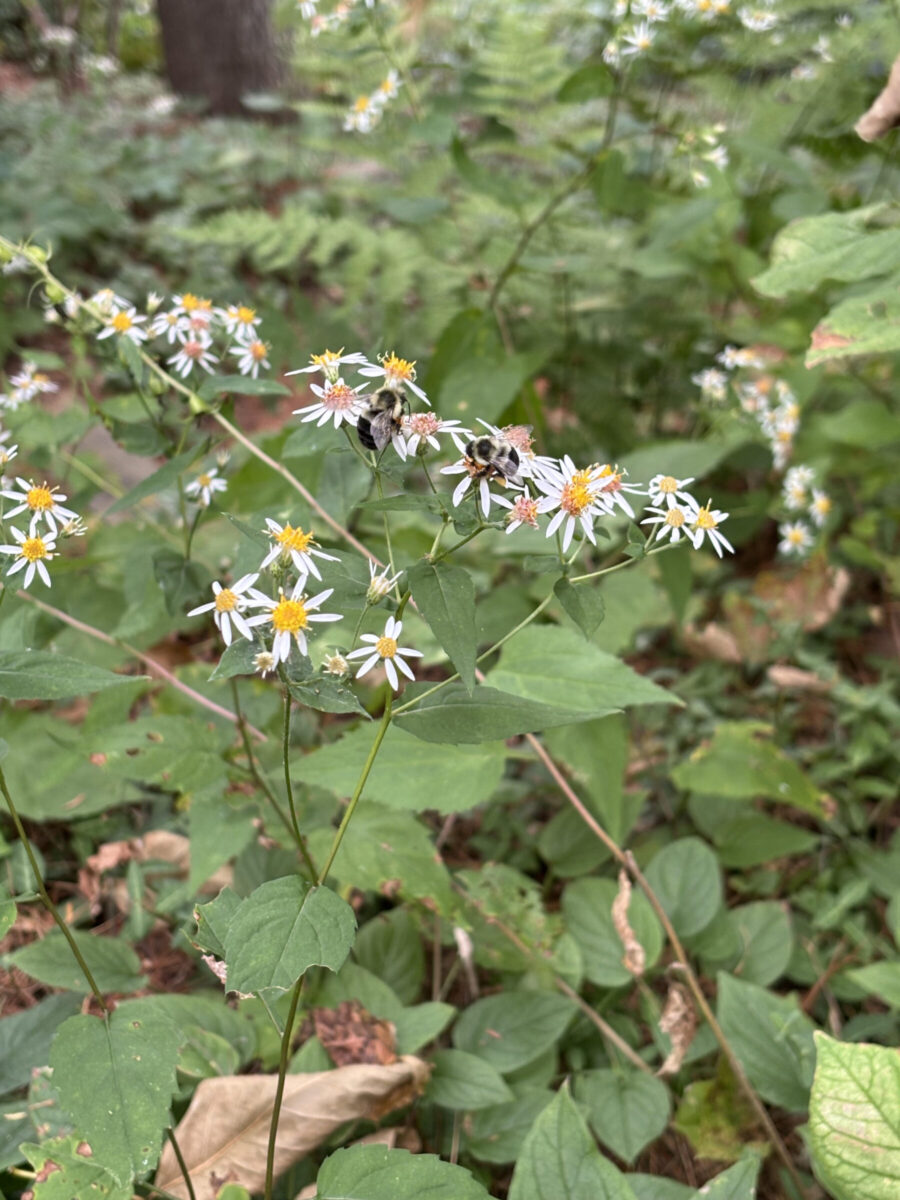
Photo by Alec Linden
And finally, aesthetics matter – as Deb put it, “they’re beautiful.” Since they are plants that flower in autumn, their comparatively humble springtime appearance of green, serrated foliage may entice many gardeners to pull them prematurely, unaware of the decorative potential in just a few months when the most glamorous spring ephemerals have long since shed their petals. Their good looks serve an ecological purpose too, bringing in bees, butterflies, and other late-season pollinators whose options for a meal are dwindling.
“If you’re not too tidy and antiseptic about your woodland edges, you could have an amazing display of asters and goldenrod,” Deb said, among other misunderstood yard-dwellers such as white snakeroot (Ageratina altissima). “I look out on my woodland edge, right off my porch, and I’m looking at goldenrod and aster divaricata (Eurybia divaricata), the white wood aster, and there’s Symphyotrichum cordifolium there.”
Deb advised the curious to keep their eyes peeled for a number of other fall flowering perennials just starting to show their colors: the deep purple New England Aster (Symphyotrichum novae-angliae), the flat-topped aster (Doellingeria umbellata), and the smooth aster (Symphyotrichum laeve), in addition to many others.
Deb said that she feels American landscaping aesthetics have erred too far in the direction of the sterile, and that she encourages homeowners and land managers in the Northwest Corner to embrace a “wilder” sensibility in their gardens and properties. Not only does welcoming fall wildflowers bring a jolt of color to one’s yard as the days ruthlessly shorten, but it establishes a communion between the home and the broader ecosystem that has largely eroded in much of modern Western life.
“I think learning your land is an important thing to do,” Deb said, and she has the resources for those looking to get started. For field guides, she recommends Lawrence Newcomb’s Wildflower Guide and Ted Elliman & New England Wild Flower Society’s Wildflowers of new England. She also suggests two introductory guides on local native plants: Native Plants for New England Gardens by Mark Richardson and Dan Jaffe and The Northeast Native Plant Primer by Uli Lorimer.
For those looking to chat directly to expert gardeners or start preparing for their own native plant garden, Deb has a list of local nurseries specializing in wild plants to check out: Lindera in Falls Village, the Native Plant Trust’s nursery Nasami Farm in Whately, Massachusetts, Earth Tones Native Plants Nursery in Southbury, Connecticut, and Helia Native Nursery in West Stockbridge, Massachusetts.
Future Forests in the Making: Climate-Smart Thinning at Great Mountain Forest
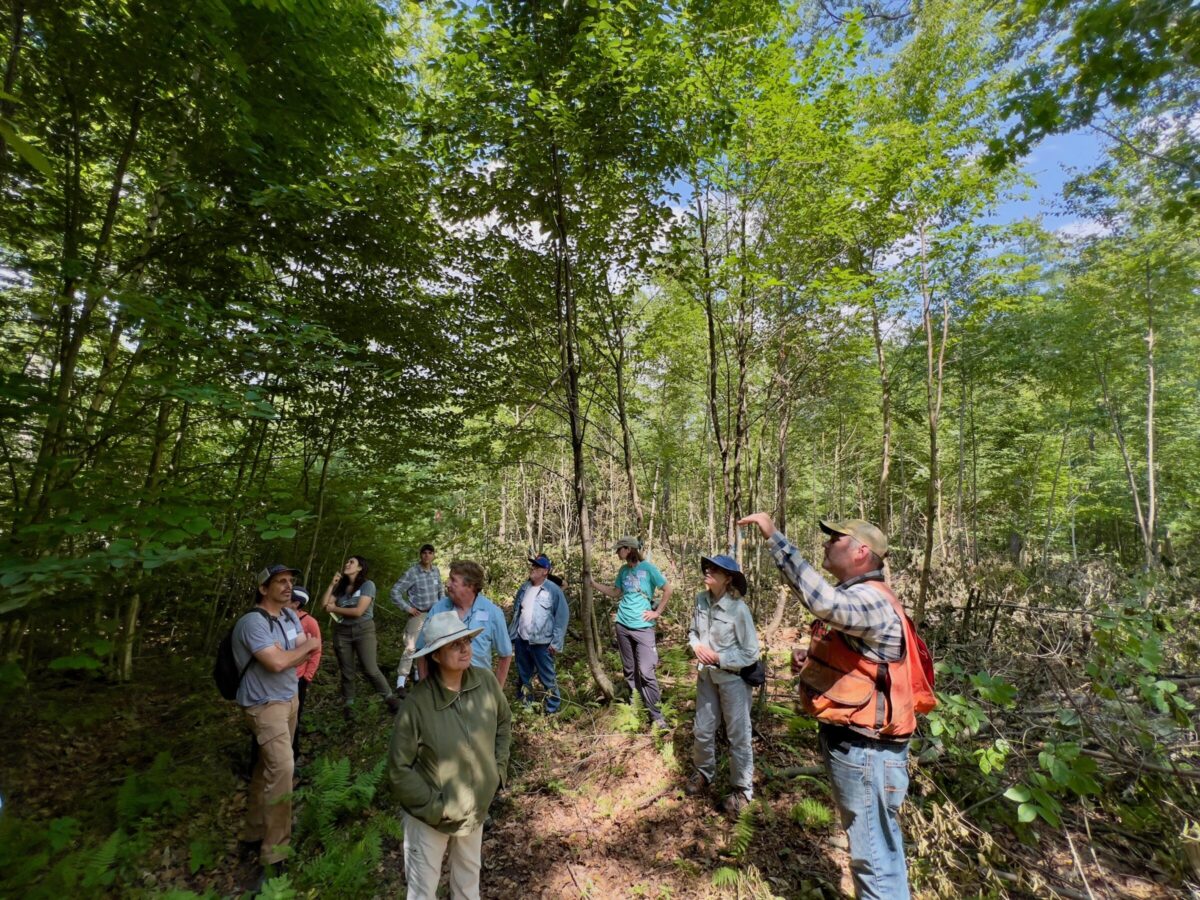
As New England experiences increasingly extreme weather, including hotter and wetter summers, keeping forests healthy and resilient to pests and disease is an ongoing challenge. Work has begun implementing Connecticut Land Conservation Council’s (CLCC) Climate Smart Land Stewardship Grant at GMF! Great Mountain Forest recently began a pre-commercial thinning project, which is a forest management practice that involves removing trees from a young, dense stand before they reach a size where they can be commercially harvested.
Managing Competition
In areas at GMF where trees were harvested 20 years ago, young trees have grown back fiercely, racing to become the future forest. Most of these new trees will end up being shaded out underneath their stronger brethren or succumbing to damage or disease. By applying management methods that support a diversity of tree and animal species and provide more resilience to pests and other disturbances, our foresters are controlling that competition to enhance traits we hope to promote.
We start by marking a “pre-commercial thinning,” or PCT, in three stands that are approximately 20 years old. “Thinning” means removing the trees that are competing with those we want to keep strong and healthy. “Pre-commercial” means that we are implementing this treatment when the trees are too small to be sold as wood products, which is where funding directed by CLCC comes in to support this work. We chose trees spaced on average 10 feet from one another, giving them the light they need to grow quickly when they are “released” from competition by this treatment.
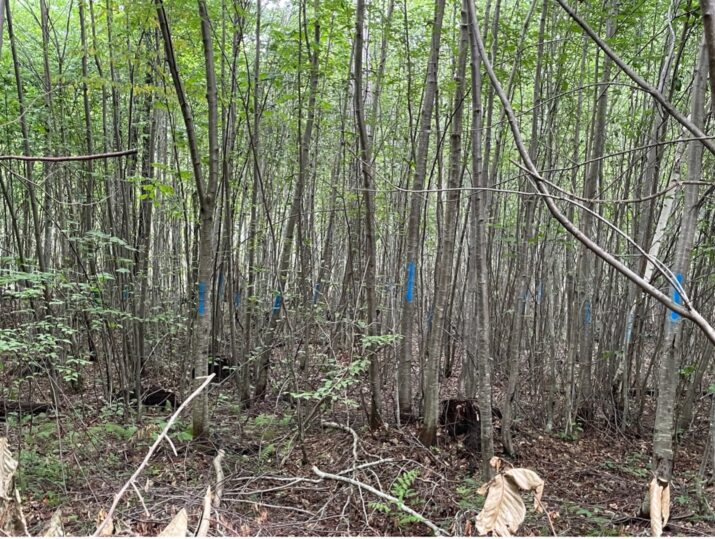
Stand marked before treatment (note very high density of stems).
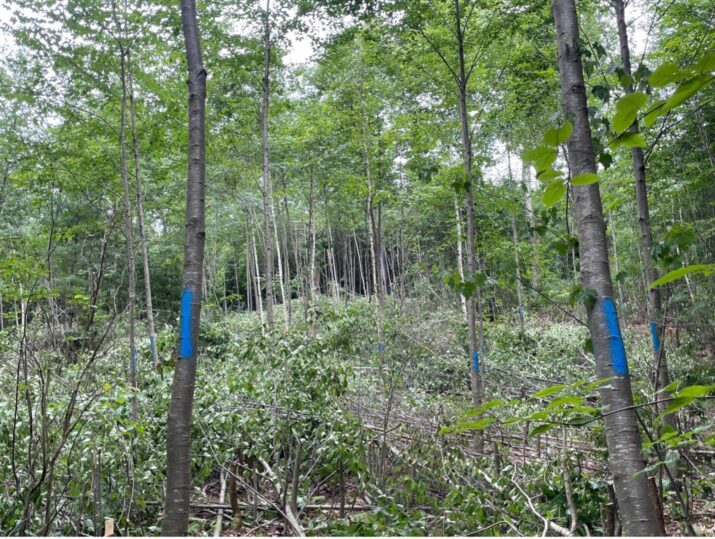
Stand after thinning treatment (only marked individuals remain standing).
Shaping the Future Forest
In selecting which trees to keep, there are a few things we keep in mind. The first is health and form. We choose trees that are going to last: those that aren’t suffering from disease, that have stable trunks and full crowns, and that have no obvious wounds.
Unfortunately, we have to remove most of the beech in these young stands. American Beech, or Fagus Grandifolia, is currently under a dual attack from beech leaf disease and beech bark disease. Nearly all of the beech in our forest are succumbing to one or both of these diseases. While we save any individuals that seem to display resistance, we know we cannot count on the majority of them as our future canopy.
The other factor we consider is species composition. Presently, these stands are almost entirely beech and black birch (Betula lenta). We therefore want to promote the other species within the stand to make it as diverse as we can. Tulip poplar, white, yellow and grey birch, ash, cottonwood, and oak are growing in these stands too, and we select for them to prevent the stands from becoming near-monocultures of black birch. While there’s nothing wrong with black birch, aiming for as much diversity as possible helps to increase stand resilience and support additional non-tree species in the forest. We’re also making sure to leave species like serviceberry and highbush blueberry. While these species won’t be our canopy trees, the fruits they produce are important food sources for birds.
Looking below the canopy, the effects of this treatment will also be seen on the forest floor. In this stage of competition, the amount of light that can reach the ground is quite limited. The trees are so densely packed that nearly nothing can grow beneath them. But by thinning the trees, we are allowing that light back in.
Forester Emeritus Jody Bronson inspired this project through his implementation of a similar PCT on a smaller scale over many years. What he saw after thinning was an understory full of not only herbaceous plants, but a new cohort of tree seedlings, particularly oaks, a group of species that has wonderful ecological value but can be difficult to regenerate. Now, should an ice storm come through and knock out the canopy trees, that young cohort is waiting in the wings to take off and swiftly become a forest again instead of having to compete for establishment.
Great Mountain Forest’s 2025 summer interns got to mark this treatment, selecting which trees to cut and which to leave. From the first week, they started thinking like foresters, making decisions that they would not see the full effects of for decades.
We are so grateful to CLCC for funding this work, which has provided young foresters with unique learning opportunities, added resilience to our forest, and created an excellent demonstration of sustainable forest stewardship.
Funding for this project was paid for by the Climate Smart Farming: Agriculture and Forestry Grant. Funding awarded and administered by the Connecticut Department of Agriculture and the Connecticut Land Conservation Council.
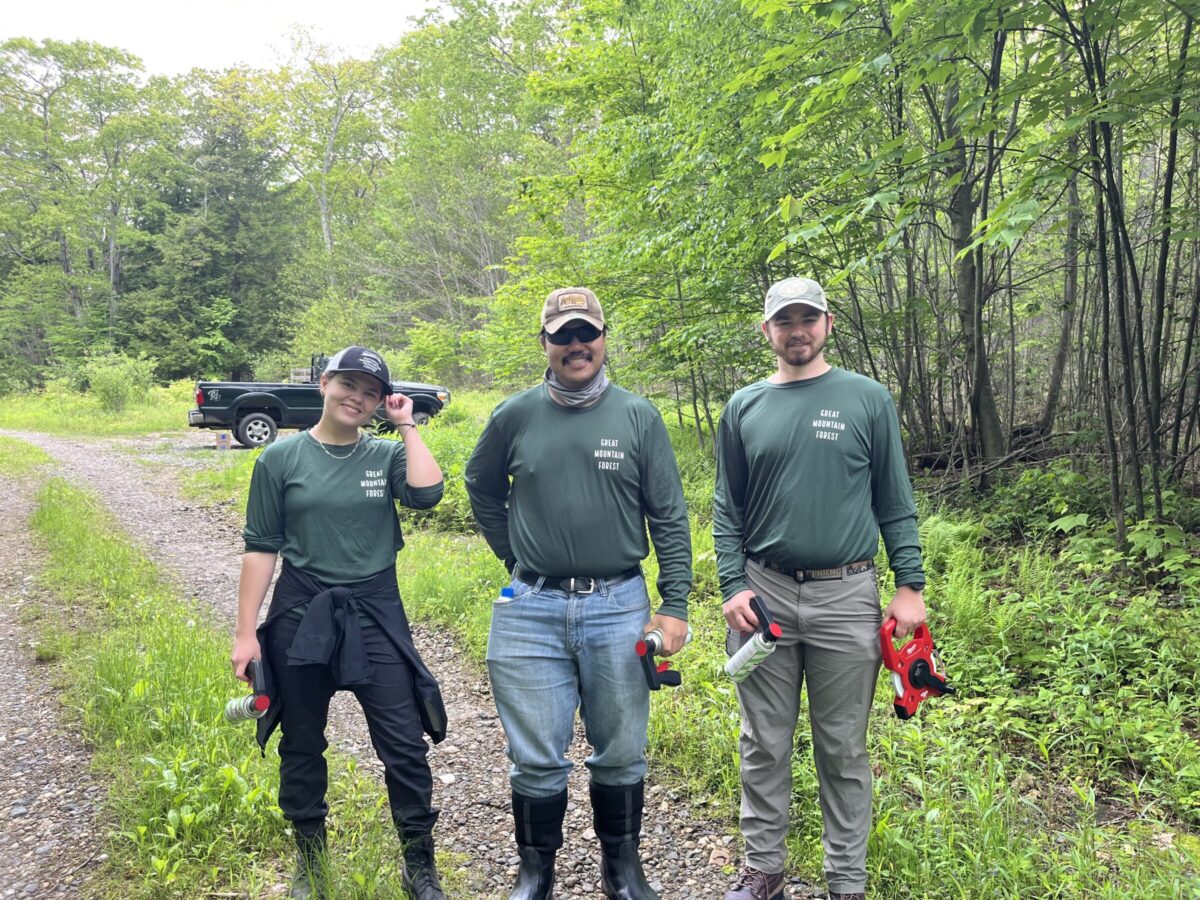
GMF’s 77th Cohort of Forestry Interns
Ren Cattafe
Hello! My name is Ren Cattafe, and I am an undergraduate student at UMass Amherst studying forest ecology and conservation. I grew up in eastern Massachusetts, spending a lot of time in forests, which fostered my love of nature early on and influenced my decision to pursue a career in natural resources. I’m interested in sustainable logging practices, promoting forest resilience through silviculture, and increasing community accessibility and knowledge of forested areas. During my studies I have also had the opportunity to participate in active hemlock woolly adelgid research, which I plan to continue in the coming academic year.
I feel extremely grateful to be working with GMF this summer. Not only has it been an incredible learning opportunity, but a chance to do work that serves a real purpose.
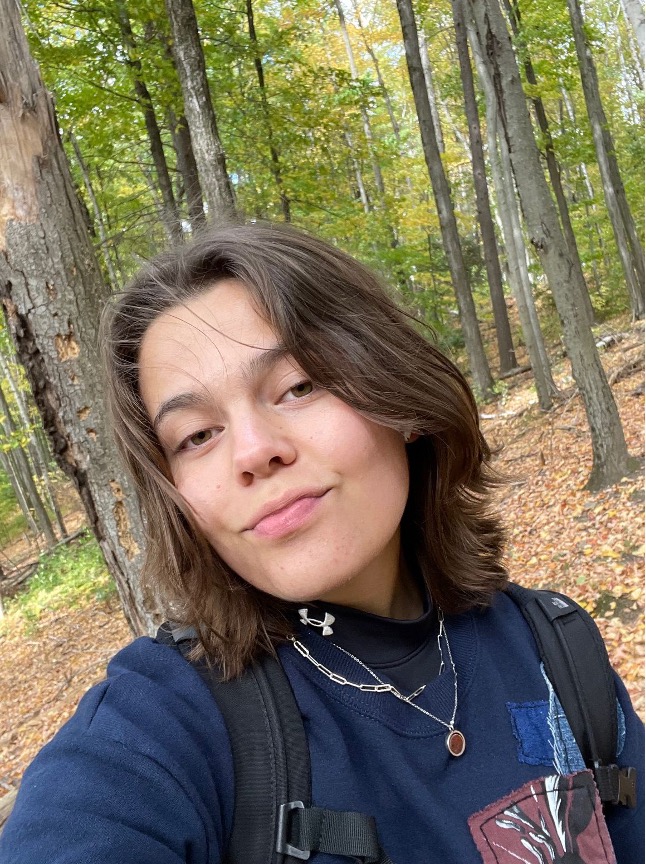
Within the first week, my fellow interns and I supported research that involved marking 30+ acres of trees with the goal of strengthening the dominant cohort and the understory. This experience has enhanced my ability to perceive and interpret forested landscapes in a manner that can’t be achieved in a classroom setting. I am thrilled that such research is supported here, and that both industry and science can coexist within the same space.
Will Watkins
Hello, my name is Will Watkins. I am a rising senior at North Carolina State University studying forest management with a concentration in ecology and a minor in environmental education. I first got into forestry as a degree because I grew up participating in boy scouts and spent a lot of time outdoors. The summer before I started my freshman year at college I was able to go on a special backpacking trip out in New Mexico where I learned about and helped with some forestry and conservation efforts. This inspired me to pursue forestry at school. Now that I have had some schooling and this internship, I know I made the right choice.
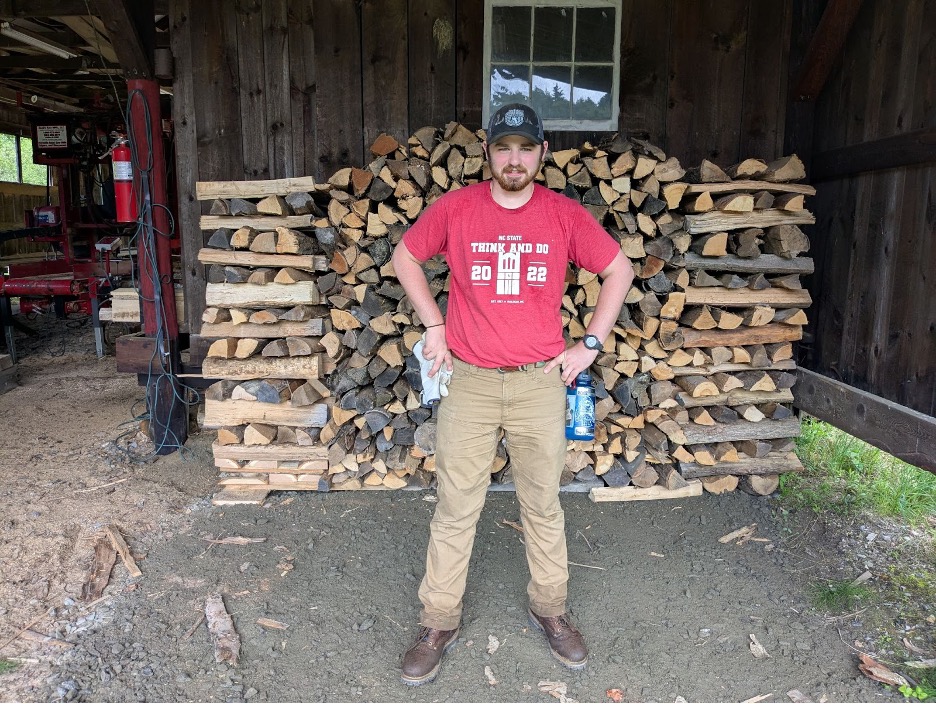
I was born and raised in North Carolina and had never heard of Great Mountain Forest, nor did I know much about the northwest corner of Connecticut. But as soon as I ran across this opportunity online I was excited and applied immediately. It checked all my boxes, plus it was in a part of the country that I have never been to? That’s great! Even now, after working here for a month, I am still slowly learning more about both GMF and the area.
So far, we have marked stands of trees for a pre-commercial thinning and we have made some plots in a stand of barberry to get an inventory of the understory. That is only a small bit of what we have done so far and what we will eventually get to do later in the summer. I am very much looking forward to the rest of the summer.
Ronald Law
Hello, my name is Ronald Law, and I am a 2025 summer intern at Great Mountain Forest. My interest in forestry began quite late in life as I was originally studying computer science. After some time however, my disinterest in the field became apparent to me and I decided I had to quit.

Six months later, I started working at a lawn care company, eventually becoming a tree and shrub specialist. Though I enjoyed my time there, I slowly came to realize the elements in our environment that were changing dramatically, resulting in the death and weakening of numerous plants under my care. As unusually warm winters became the norm, and invasive pests became more prevalent, I realized I wanted to work in a position that was more proactive than reactive when it came to the health of our environment. So I decided to return to school and pursue environmental studies, which eventually led me to my internship at Great Mountain Forest.

An afternoon in the Pleistocene

Peeking around the berry bushes into the Tobey Bog’s central clearing
The oft-maligned swamp, despite holding a persistent legacy in the cultural imagination as a place of decay with little utility or aesthetic appeal to humans, has garnered several famous fans over the years. The animated ogre Shrek, famed for his protectiveness over his marshy homeland, comes to mind as a recent example, though bogs have another, arguably more eloquent devotee: Henry David Thoreau.
“Yes, though you may think me perverse, if it were proposed to me to dwell in the neighborhood of the most beautiful garden that ever human art contrived, or else of a Dismal Swamp, I should certainly decide for the swamp,” the Transcendentalist thinker wrote in his 1851 treatise to wildness, “Walking.” In that lecture, Thoreau waxed poetic about replacing his cultivated front yard with “a few square rods of impermeable and unfathomable bog,” romanticizing the rawness of the bog in comparison to the orderliness of human landscaping.
Before I embarked on an afternoon visit to the bog on a gorgeous day in early June, GMF trustee, forester, and founding member Star Childs told me that he’s always identified with that particular fantasy of Thoreau’s. In fact, he’s been lucky enough to have lived much of his life with a swamp in his figurative front yard – namely, Tobey Bog in the “North Forty” region of GMF.
Tobey Bog is no ordinary wetland, at least not in Connecticut. In his as-yet unpublished paean to the forest, the late naturalist-poet David Leff, whose lifelong love affair with the GMF landscape began with an encounter with the bog, described it as “a subarctic fragment stranded about as far south as possible,” and, “a world unto itself where the usual ecological rules did not apply.”

A glimpse of Tobey Pond from beneath the hemlocks
Paddling out
Aided by the convenience of a canoe (courtesy of the Childs family), I took advantage of some rare good weather to ferry myself across Tobey Pond for my first visit to the bog. Paddling across the pond’s dark, serene waters, fringed by drooping hemlock boughs and tall stands of white pine, the experience felt more North Country than southern New England.
Tobey Pond, like the bog with which it shares a namesake, is a specter of the ice which once weighed heavily upon these hills. When the glaciers retreated at the end of the ice age, they left behind chunks of ice lodged in the ground, which created holes known as kettles that filled with meltwater. While Tobey Pond became a lake, suitable for things like canoeing and town beaches, Tobey Bog was poorly drained and poorly fed by water sources, eventually filling with a thirty foot thick bed of sphagnum moss from which now sprouts a strange array of conifers, berry bushes, and carnivorous plants. As I would soon find out, it was, in Thoreau’s words, “the jewel which dazzled me.”
A pocket of the cold north
Parking my canoe in a shady cove of the pond, I ambled by Skinner cabin and down a gravel road to a thin boardwalk leading through a claustrophobic tunnel of highbush blueberry, huckleberry, and invasive buckthorn shrub. Eventually, the brush parted to reveal a panoramic view of the bog which Leff described as resembling “a shag carpet of the 1970s” due to the mosaic of “heathered green and reddish highlights.” I agreed with Leff that the amphitheater-like space conjures the feeling of being within a “huge oculus in a massive rotunda.”
Ecologically, it recalls imagery of the boreal peat bogs of high latitude North America and Europe. Scrubby conifers perch upon a squishy bed of sphagnum moss that compresses at depth to form peat, a thick mat of organic material that is used as a fuel source in many parts of the world, or as in Scotland, to flavor liquor. Trees like red maple, larch, and white pine dominate a patchy overstory, while scrubby black spruce mingle with the berry bushes in the shrub layer, reminiscent of the landscapes of northern Maine or Atlantic Canada.
“It’s a little mini-ecosystem all of its own that attracts these northern species,” Star said.

One of the only deciduous conifers native to the US, the eastern larch, also known as the tamarack, thrives in boggy soils
These trees and shrubs can survive in the nutrient-poor, acidic soils that the bog provides, as can a much stranger, smaller, and hungrier flora: carnivorous sundews and pitcher plants. While the tiny sundews eluded my layman’s eye, the purple pitcher plant – the only species of its kind that tolerates cold weather – was obvious, with deep green and magenta leaf furls curling into the eponymous pitchers that trap prey to provide the valuable nitrogen the bog itself cannot provide. In little hollows beneath the shrub branches, the fleshy, bulbous blossoms of the plant, just opening at the time of my visit, stood from the moss like troupes of elves in dappled, emerald sunlight.
While this bog took thousands of years to form, it feels like a vestige of the Pleistocene era, when the land had just shaken itself free of its icy burden. The effect is amplified by the drone of frogs echoing through the larches and the thrum of dragonfly wings beating past my ears. It’s easy to grow fanciful here. Michael Gaige and Yonatan Glogower’s 2016 field guide to the forest recommends that readers should “go [to the bog] when you need to find some peace in your life, albeit of the soggy, acidic variety.”

The bulbous blossoms of the purple pitcher plant looking very Dr. Seuss among the moss and sedge
Timeless – but vulnerable
Tobey is “a true quaking bog,” said Star before I embarked. And quake it does. While the two-plank boardwalk feels solid enough underfoot, a subtle bounce under each step suggests the true nature of the gelatinous substrate beneath.
This shake, just a hint of unsteadiness, reflects the fragility of the ecosystem itself, no matter how ancient and timeless it may feel to a human visitor in this strange blip in geologic time. The existence of a peat bog is defined by the input of water outpacing its loss through evaporation and plant respiration, which makes them particularly susceptible to changes in temperature and precipitation.
Bogs further north, known as ombrotrophic bogs, receive the entirety of their water from precipitation, and are reliant on cool temperatures to keep from drying up, which is why they don’t occur as far south as Connecticut. As abnormally warm summers increase in frequency, disproportionately impacting arctic and boreal regions, these bogs are at risk. A 2020 study conducted in the Black Forest region of Germany (which somewhat resembles the rugged but low hills of Northwest Connecticut) found that biodiversity in temperate bogs has already been impacted by climate change, and remains threatened due to rising temperatures and decreased precipitation. The study maintains that there are few management options available to combat these trends.
When these bogs dry up, they can also burn. There has been ample research conducted in recent years on the environmental impacts of smoldering wildfires on peatlands, which can quietly burn in the soil for years, overwintering deep in the peat layer. Peat bogs contain a large percentage of the world’s terrestrial carbon stores, similar to the amount held in the atmosphere, and fires can release massive amounts of the gas. A 2021 study on northern peat fires reported that arctic wildfires are on the rise, and have been contributing significantly to greenhouse gas emissions. If warming temperatures continue unmitigated, the study predicts that annual carbon loss from peat souls could total almost 550 megatons per year.
As this carbon is released, it contributes to global warming which is already disproportionately affecting northerly regions. This warming in turn melts more permafrost and dries out the soil, thus allowing more fires to ignite, which as a result puts even more carbon into the atmosphere. It’s what climatologists call a positive feedback loop.
Tobey Bog is minerotrophic, meaning it receives supplemental water through ground seepage. Due to its limited size it is not a great carbon store itself, and its moisture content is supported by the additional groundwater it receives. It too, however, is at risk from rising temperatures and changes in precipitation patterns, as decomposition rates can increase “dramatically” with warmer weather, penetrating the deep peat layers of preserved organic material, according to Gaige and Glogower. Its reliance on peripheral water sources also puts it downstream of any impacts to those resources.

A window to the north
Connected futures
Former GMF director Hans Carlson ran a column in the “Norfolk Now” contemplating the natural and cultural history of the region’s landscape in the late 2010s, including an article on Tobey Bog, a place which he said has largely remained on the outskirts of Western interest. Now, though, the bog is no longer able to sustain an existence separate from the human behavior, even as it gains value in the eyes of conservationists and nature-lovers. Carlson’s words on the subject, written nine years ago, are more potent now than ever: “We will continue to leave Tobey Bog to its own processes and life cycles, preserving it as a rarity in Southern New England, but it is no longer a place on the margins of our choices.”
Many of our leaders and decision-makers could benefit from a trip to the bog. It captivates and enchants, and thus, perhaps may encourage the right choices. Gaige and Glogower reference a 1991 master’s thesis by Erica Hamlin in which she told the story of Tobey Bog’s ecology through creative scientific prose and charcoal drawings. “It is a good reminder that strange ecosystems like bogs have the power to inspire people across disciplines and cognitive frames,” they write.
Or, as Thoreau said: “Hope and the future for me are not in the lawns and cultivated fields, not in towns and cities, but in the impervious and quaking swamps.”

Healthy forests, healthy people – and healthy ticks?
The hills are alive in Northwest Connecticut, but it’s not all birdsong and snowdrops: the blacklegged tick has shaken off its winter torpor, and now crawls in droves through the understory, spreading disease and myths in equal measure.
Dr. Scott Williams, Chief Scientist and Head of the Department of Environmental Science and Forestry at the Connecticut Agricultural Experiment Station (CAES), a state organization spearheading research on tick-borne diseases, dismissed two commonly held misconceptions about the tiny, dangerous insect: “They don’t fly. They don’t drop out of trees.” Williams advised that rather than worry about the branches overhead, think low and keep your ankles covered. “They crawl up from the ground for the most part, or [from] a few inches off the ground.”
Demystifying tick behavior and pathogen transmission yields surprising insights into how to manage disease levels in our region: in a healthy forest, more ticks might actually equal less disease, Williams explained.
Debunking Myths
Blacklegged ticks (also widely known as deer ticks) and Lyme disease are commonly misunderstood components of the New England forest, starting with the illness’ origin story. Conspiracy theories abound speculating where it began, with an especially persistent and oft-debunked claim that it leaked from a government research facility on Plumb Island.
But reputable research has shown that the disease has been circulating in the northern hemisphere for millennia. One of the bacterium responsible for causing Lyme disease, Borrelia burgdorferi, was detected in Ötzi the Iceman, a 5,000 year-old mummy found in the Eastern Alps in the 1990s. A study conducted by the Yale School of Public Health in 2017 traced B. burgdorferi back to North American forests of 60,000 years ago, meaning the bacterium was resident in our woods long before the earliest human inhabitants arrived.
Closer to home
Deer ticks and Lyme disease are as Connecticut as New Haven pizza, with one of our picturesque coastal towns lending its name to the ailment after a cluster of cases there in the 1970s lead to its identification as a unique condition. The state remains positioned in the very heart of tick country, and the Icebox of Connecticut, which previously benefitted from the protection of its harsh winters, is losing its defenses as the cold season continues to warm up.
“We’re not trying to scare people from being outside, we’re trying to educate people on when the various stages [of ticks] are active – what’s tick habitat and what’s not,” Williams said. For instance, a field of high grass, commonly regarded as a tick haven, is actually largely inhospitable to the bugs, as they desiccate quickly in a dry environment. “That’s kind of a desert for ticks,” Williams explained.
The most “ticky” habitat “is really that edge where your lawn meets the forest,” he said, and when it comes to getting bitten, it’s often a matter of timing.
When to watch out
While adult deer ticks are active now, Williams explained that May, June, and early July are the months when most infections occur since that’s when both humans and the nymphal stage of deer ticks are likely to be active outdoors. Although the adult ticks wandering the undergrowth and brush now can certainly transmit the pathogen, it’s the nymphs that are “the really problematic guys,” Williams said, in part because they are small and hard to detect, and also because in spring, “human activity and tick activity in the nymphal stages coincide.”

A white-tailed deer in the forest. Photo: Mike Zarfos
Host competency and the dilution hypothesis
Active ticks, active humans, and an abundance of both yield higher bite rates, thus contributing to more infections. However, Williams explained that the species present in an ecosystem can have significant impacts on the spread of tick-borne pathogens to humans.
A surplus of white-tailed deer upon the landscape, for example, is often thought to correlate to more tick-borne illness. While a large deer population will often support a high concentration of ticks, deer are a “dead-end host” for the bacterium, meaning they don’t transfer the pathogen back into the ticks.
Mice, however, are “competent hosts.” The concept of host competency is the ability of a reservoir host species (animals that carry and spread disease-causing pathogens) to infect the ticks with pathogens, which small rodents are highly adept at whereas larger animals are less so. When deer are plentiful on a landscape, “you typically have high tick abundances with lower infections with the various pathogens,” Williams said.
The reservoir host species of B. burgdorferi that actually infects the ticks with the pathogen are small rodents, especially the white-footed mouse which is common to the Litchfield Hills. When fewer deer, and other medium sized mammals, are available, Williams explained that the ticks will then be forced to feed primarily on mice, which will support a smaller population of ticks within which the pathogen is much more concentrated.

CAES team conducts Lyme disease research with mice in Woodbury. Photo: Mike Zarfos
Healthy forests, healthy people
In a healthy ecosystem with a spectrum of animal species, ticks aren’t forced to rely on these highly competent hosts for a blood meal. Williams explained that this scenario, in a species-diverse forest, describes what disease ecologists call the dilution hypothesis: “with a diversity of animals, you’re going to see less infection in the ticks because they have so many options to feed.”
The loss of forest diversity can have the opposite effect, Williams said, which is happening across the Northeast due to development and the incursion of invasive species. Several years ago, Williams conducted research on the correlation of Japanese barberry, an invasive shrub, with tick populations; some of the work was done at Great Mountain Forest with the help of GMF forester Jody Bronson. The study found that the dense tangle of undergrowth created by the proliferation of the shrub caused a humid microclimate that not only provided great tick habitat, but enabled them to remain active throughout the day.
Normally, the moisture-dependent ticks might be inactive under a pile of leaves during the heat of the day, Williams said. But the microclimate created by the “monoculture” of invasive brush growth means ticks continue looking for a host “pretty much 24 hours a day.” He clarified that this was not specific to Japanese barberry, but any plant that grows in a monoculture tangle, “which is pretty much what invasives do in our neck of the woods.”
“What we’re trying to push is a healthy, diverse forest, and that’s very applicable to Great Mountain Forest,” Williams said. The goal, he continued, is responsible management: “If you have a healthy, diverse, well-managed forest, you’re going to have a diverse array of wildlife, and as a result you’re going to have a healthier tick population with lower pathogen infection. That’s kind of the bottom line.”