Balancing Tradition and Change with Maple Syrup Veteran Jody Bronson
March 10, 2026
Alec Linden
Reflecting on the career of Forest Emeritus Jody Bronson
Maple syruping is as synonymous with New England as Dunkin’ or the Patriots, but with much more history. Far from an heirloom, it’s a living, breathing practice, with sap-obsessed devotees across the region trudging through deep snow each year at the first hint of warmth in the hopes of a good yield.
GMF Forester Emeritus Jody Bronson is one such acolyte, and as he’ll tell you, turning sap to syrup is serious business – “You either go into it all the way or don’t do it at all.”
Bronson, with a lifetime of sap boiling under his belt, has helped keep the traditional spirit of syruping alive at GMF. Like many historic practices and customs that have survived, maple syrup production is suspended in the balance between old knowledge and new technology as the world – and climate – changes around it.
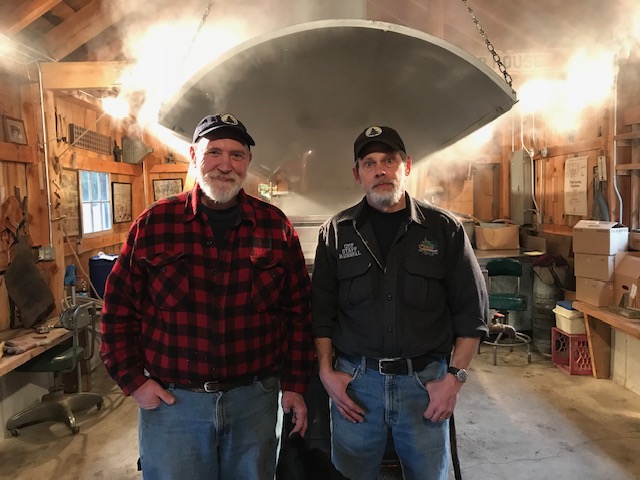
Bronson stepped back from his duties as GMF’s lead boiler this year, nearly fifty years after first joining GMF’s syruping team. Read on below for Bronson’s reflections on his own history with GMF’s staple forest product.
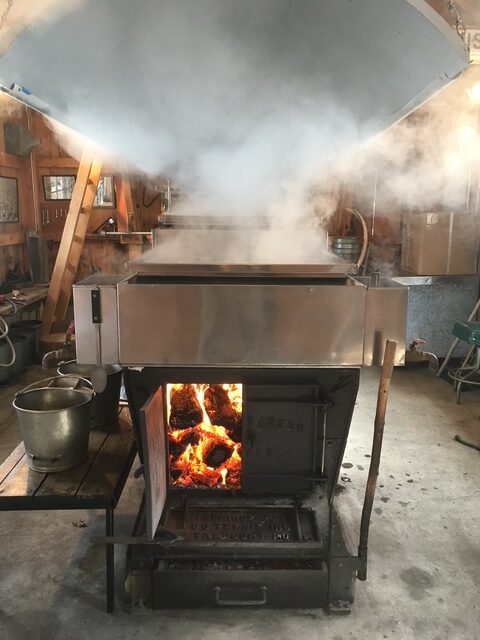
While many saphouses have turned to oil or propane to fuel operations, GMF still uses locally harvested wood. Photo: Jody Bronson
Sap season and climate change
Spring, while exalted for the colorful profusion of blossoms and greenery in its latter stage, is a highly phased season. There is the dreaded mud season, of course, the bane of many a hiker and low-clearance vehicle alike. But to those in the know, spring truly begins with sap season, when daytime temperatures climb above freezing and overnight lows remain cold.
As the climate warms, though, this window is getting shorter and coming earlier, which generally translates to a lower sap yield. Speaking on a late February day when the GMF crew was out tapping trees, Bronson said in the “old days” they would manage about 19 collections – days when the sap conditions align enough that sap flows and the team can harvest it – per season, but now they’re down to 12 or so.
Bronson had been out just days before with GMF Forester Kate Regan-Loomis and GMF Property Manager Russell Russ packing trails in the deep snow to make accessing the sugarbush easier. Bronson is efficient in the snowy forest – “Kate and Russell, they go, ‘Jody, you’re fast on snow shoes!’ And I’m laughing because I’m not fast at anything!
“I’ve been on snowshoes my whole life,” he eventually ceded. Still, snowy tapping sessions are growing infrequent as February snowpack becomes less reliable.
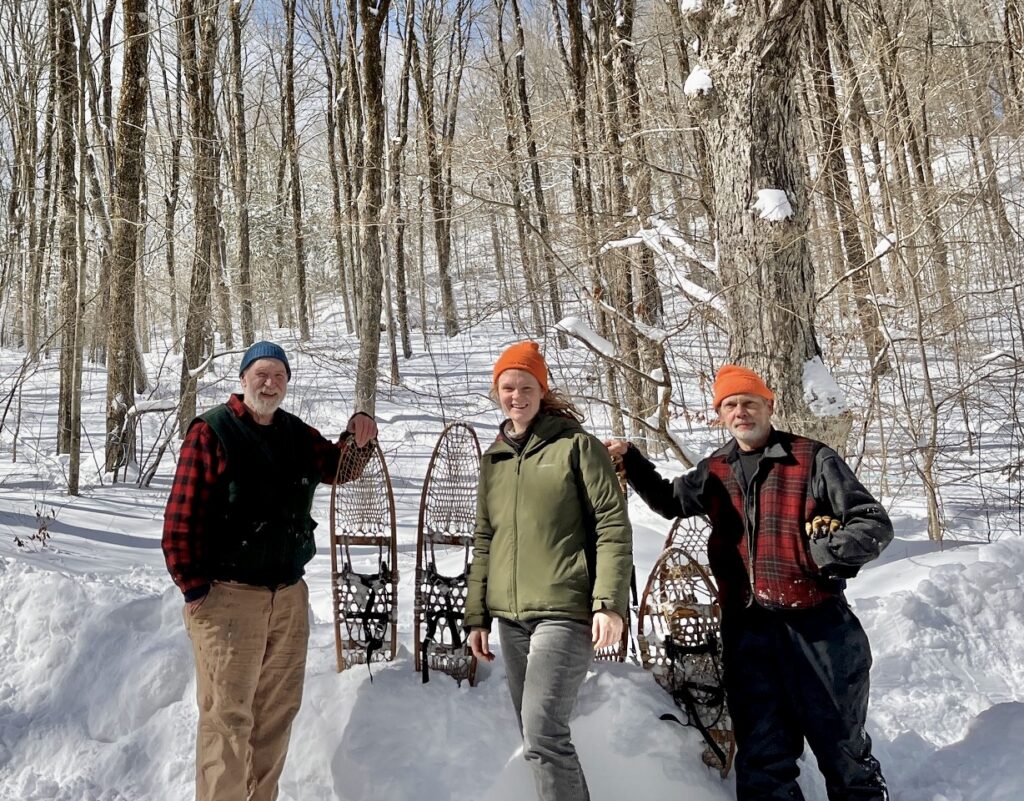
From left: Bronson, Forester Kate Regan-Loomis and Property Manager Russell Russ pack access trails to the sugarbush through deep snow in late February 2026. Photo: Kate Regan-Loomis.
A layer of snow on the forest floor is important in insulating the trees’ roots by delaying buds from sprouting. When buds are out, the sap collection season, which historically ran from late February into April, is essentially over. This winter, which Bronson described as an “old school Norfolk/Falls Village winter,” may bring collections back up, he said, but cautioned that the sap season is a fickle and unpredictable beast.
“When somebody says, ‘Well, how do you think the season is going to be?’ I always say I’ll tell you at the end of April,” Bronson said.
Tuning in to the season
Bronson’s sap wisdom is borne from a lifetime of experience. He grew up in Winchester Center, and started working at a small sugar house when he was nine or ten years old. He was mostly collecting sap in those early days, but he also got his first taste of boiling there. It was love at first sight, or perhaps, first scent, recalls Bronson. “You just love the smell of it.”
He joined the GMF team in 1976, and hasn’t missed a sap season since. Bronson also runs a syrup operation at home with his wife, whose own family in Quebec has deep roots in the tradition. His two daughters also know the trade and lend a hand at the sugarhouse when able. “It’s kind of a Bronson thing,” he said.
Bronson said that the process, which can be grueling, is more than just making a product – it’s a way to get in tune with the transition of seasons. “You’re outside, and noticing all the little details – the little changes,” he said. “It’s the promise of spring, the promise of everything starting to grow again and turn green.”
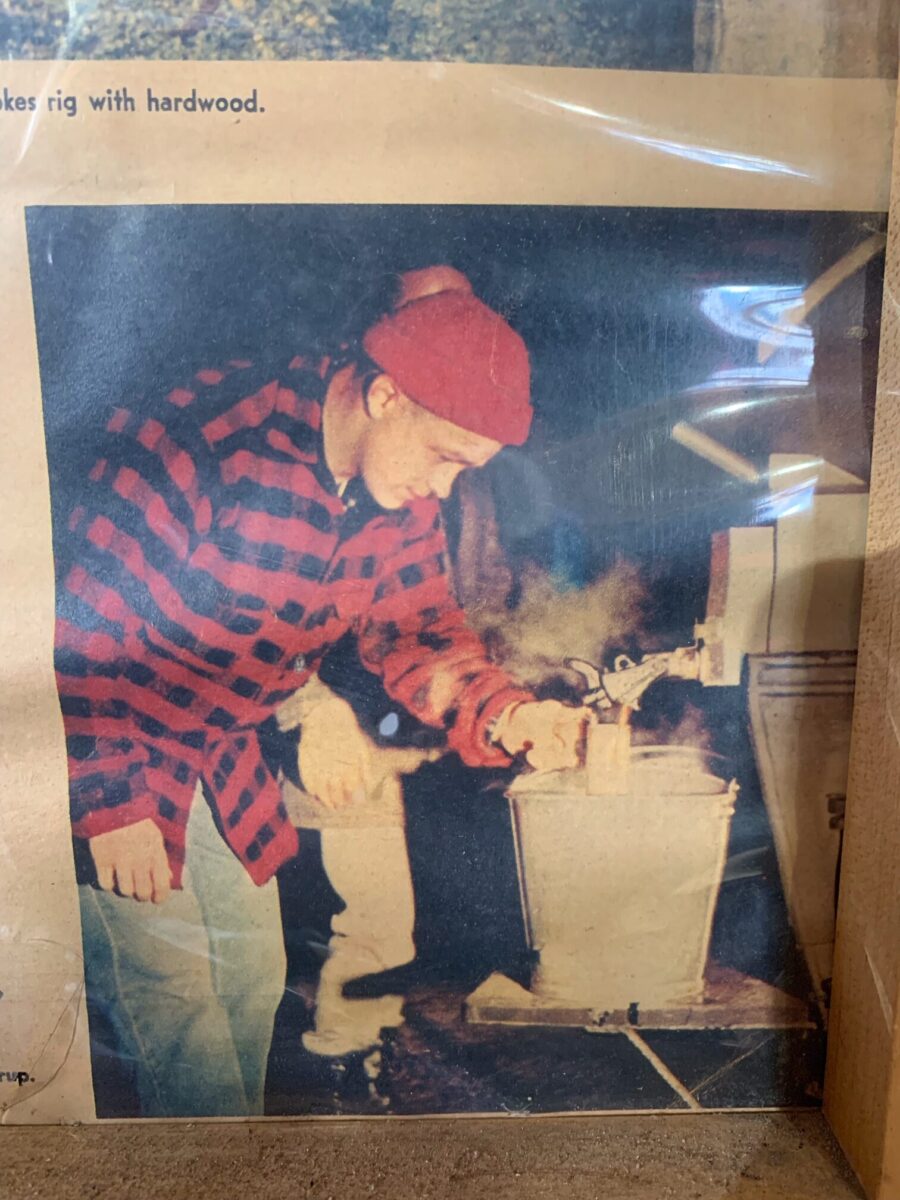
Local woodsman Wayne Jenkins played a key role in GMF’s syrup production from the mid 1960s to the mid 2000s. Photo: GMF Archives.
Keeping record
It’s the observational, meditative nature of collecting, boiling, and evaporating sap – and the process’s inextricable link to weather – that motivated GMF foresters in the 1940s to start keeping records, affectionately known by staff as the “Sap Journals.”
The journals are a log of the yield of each day of sap collection each season, as well as, crucially, the conditions that allowed – or didn’t allow – things to flow.
GMF forester Darrell Russ, who ran the GMF weather station for decades, was the first to build out the detailed reports, which Bronson largely took over in the 1990s.
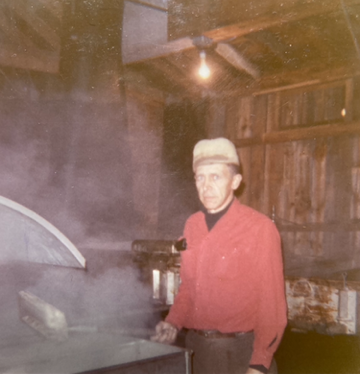
Darrell Russ, longtime lead boiler at the GMF saphouse, tending to the evaporator. Photo: GMF Archives.
The resulting entries are snapshots of sap seasons of yore. One report from March 21, 1956 reads: “Cold & very snowy period. During past two weeks 54” (4 ½ feet) of snow have fallen! Temperature frequently below zero. Mar. 21 a.m. temp. 13. 3 ½ to 4 feet of snow on the level, collecting very difficult.”
Continued cold and snow delayed collection that season, but several weeks later, on April 10: “Perfect day, no wind, bright sun; temp. 45 after a good freeze 25. Deep snow; 1620 buckets, Record Run.”
Bronson maintains that while these records are useful in trying to piece together patterns from the chaos of sap season, they serve a further purpose in memorializing the days when syrup production was a more intimate, hands-on process.
“This is where I think all these old journal records are going to be important,” he said. “People just aren’t doing it that way anymore.”
The old and the new
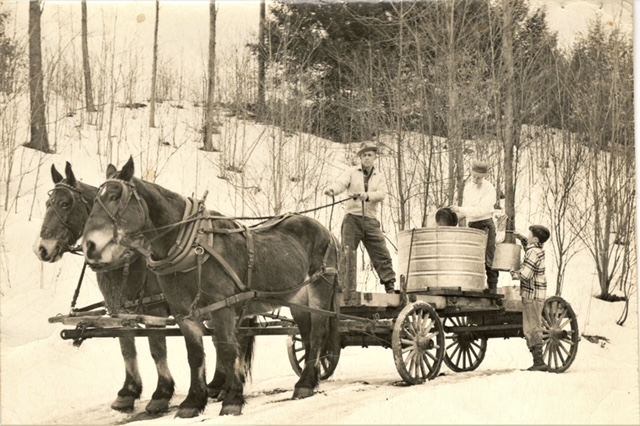
Darrell Russ drives a team of horses as collectors pour buckets full of sap into a holding tank. Photo: GMF Archives.
Like many other industries, sap production is becoming increasingly automated. While sap makers once collected buckets hung on trees, sap now pours directly from the tap into a tube network that deposits the tree’s lifeblood directly into a storage tank. Some systems use vacuum to draw more sap to offset low harvests when nonideal conditions limit sap flow. Less time in the forest means less time to see the details of the changing season, Bronson said, as well as a more distant relationship with the trees themselves.
New evaporators are enclosed to collect steam for pre-heating the syrup, and reverse osmosis units — GMF had one of the original models back in the 1970s — have drastically improved syrup production efficiency. Before newer technology, boilers had to test the syrup with a hydrometer to gauge when it was ready, but that process is now automatic.
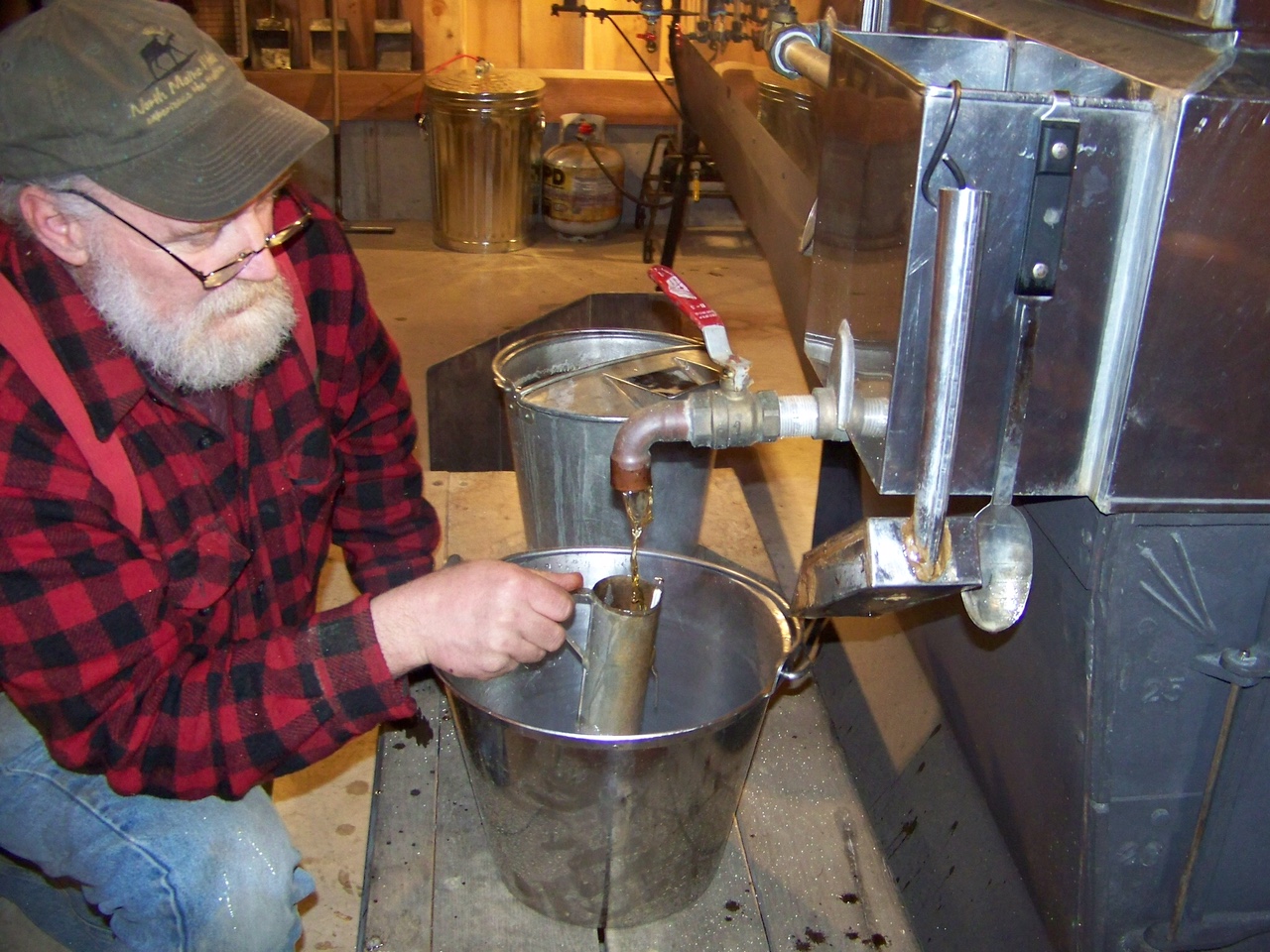
Bronson tests syrup density with a hydrometer. While modern equipment gauges when the syrup is ready automatically, syrup makers still run hydrometer tests daily to ensure the machine is accurate. Photo: Holly Jenkins.
“I definitely prefer the old traditional way,” Bronson said. “You can see the boil, you can smell the boil… you have to use all your senses to run an [old] evaporator.”
That’s where the value of the Sap Journals lies, he said – in keeping the old spirit of the work alive.
Still, he recognizes the value of new, efficient technology as the sap season becomes more unreliable. “Global warming has made the window for making syrup shorter,” he said, and new technologies allow syrup producers to maintain their craft. Reverse osmosis units, for instance, have allowed red maples, a much more common tree than the sugar maple in southern New England, to be used for syrup.
As Bronson will tell you, in maple syrup the only constant is change. True to that idiom is the changing of hands at the GMF saphouse after three and a half decades under his leadership. While he admits it’s difficult to cede his duties, he’s confident that the future of maple syrup at GMF is bright under the stewardship of Russell Russ, the son of Bronson’s own predecessor, alongside Regan-Loomis. Plus, he won’t be far in case a helping hand is needed.
“I’m passing it on to good hands,” assured Bronson.
About the Author
Alec Linden is a news reporter, environmental storyteller, and researcher based out of Norfolk. After completing a master’s degree in environmental governance and policy at the University of Oxford in 2023, Alec moved back to the Northeastern US to begin a career caring and advocating for the hills, ravines, and rivers that he cherished growing up in downstate New York. Alec relocated to the Northwest Corner in the summer of 2024 to become a reporter with the Lakeville Journal, and now helms newsletter and copy editing duties for GMF. During his down time, Alec spends as much time as possible on skis, and in the warmer months pokes around the woods of the Berkshires and Taconics to search for new rock climbing routes.