Sap to Syrup: A Maple Tree Adventure (K-4)
Most Prevalent Themes:
ELA (Grades K–4):
Students use drawing, writing, observations, and evidence to record and communicate what they discover during their investigations. Connections: W.K–4.2
NGSS (Grades K–4):
Students use observations and investigations to explore what plants and animals need to survive, how their structures support growth and survival, and how living things respond to changes in their environment. Connections: K-LS1-1 • 1-LS1-1 • 2-LS2-1 • 3-LS4-4 • 4-LS1-1
Audience:
Kindergarten and Elementary School
Duration:
2 ½ hours
Description
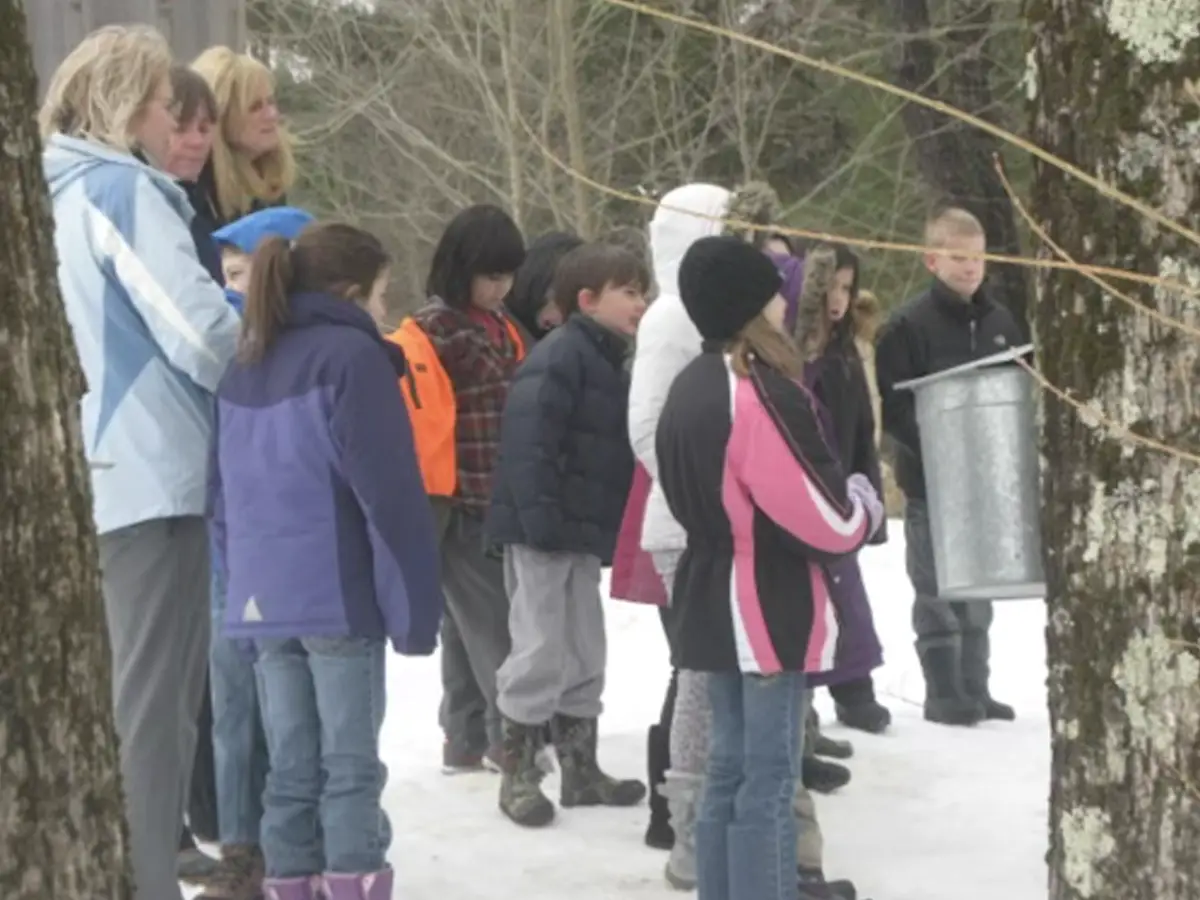
Come explore Great Mountain Forest’s sugarbush and discover the story behind one of New England’s sweetest traditions! In this hands-on field experience, students become Maple Tree Detectives as they search the forest to identify sugar maples, investigate what is happening inside a tree, and uncover where maple sap comes from. Students examine the tools used to tap trees, practice tapping, and follow the journey of sap through the sugarbush and into the sugar house. There, they compare sap and syrup, investigate how heat and evaporation transform watery sap into sweet maple syrup, and see the maple-making process in action. Along the way, students learn that the sugarbush is more than a source of syrup—it is a living forest that provides habitat for plants, animals, fungi, and countless other organisms. Centered on “I wonder…” and “Let’s investigate!” This engaging K–4 adventure combines observation, movement, hands-on exploration, and a maple syrup taste test while connecting students to the science, stewardship, and seasonal rhythms of a working forest.
Learning Intentions:
By the end of the session, students will be able to:
- Identify a sugar maple.
- Describe where sap comes from and when it flows.
- Trace the journey of sap from tree to sugar house.
- Explain how heating sap removes water and transforms it into maple syrup.
- Recognize that a sugarbush is also a forest habitat that supports many living things.
- Describe how caring for a healthy forest supports both wildlife and maple sugaring.