
Adaptation Detectives: Wildlife Survival in the Forest (3-4)
Most Prevalent Themes:
ELA (Grades 3–4):
Students strengthen communication and science literacy skills through collaborative discussions, asking and answering questions, recording observations, constructing evidence-based explanations, and developing vocabulary related to adaptations, habitats, ecosystems, biodiversity, and stewardship. Connections: SL.3.1 • SL.4.1 • W.3.8 • W.4.8
NGSS (Grades 3–4):
Students investigate how inherited and environmental traits, physical structures, senses, and behaviors help animals survive in different habitats. They use observations, models, and evidence to explain adaptations and how they contribute to survival. Connections: 3-LS3-2 • 3-LS4-3 • 4-LS1-1 • 4-LS1-2
Audience:
Grades 3 -4
Duration:
2 ½ hours
Description
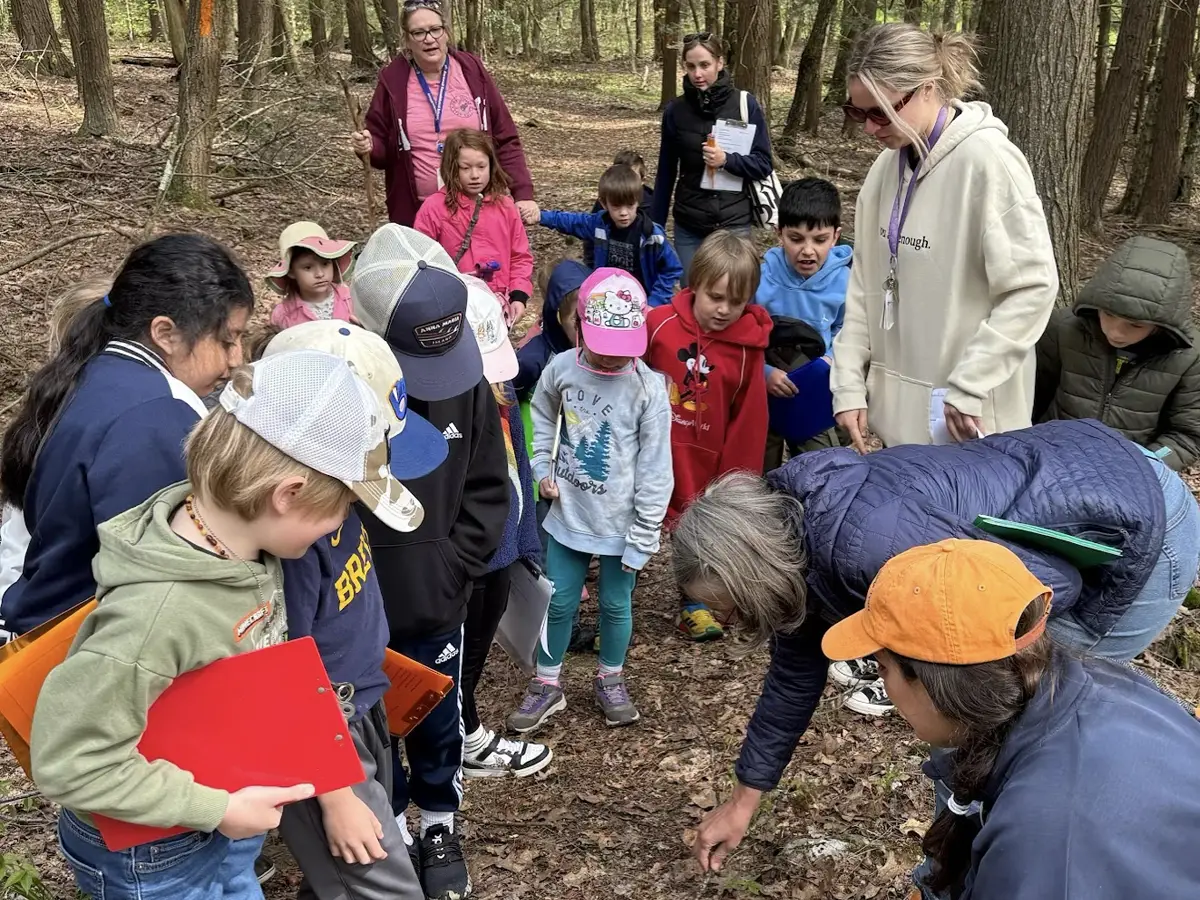
Step into the role of a wildlife biologist and discover how animals are uniquely adapted to survive in the forests of Great Mountain Forest. Through hands-on, minds-on investigations, students will explore the forest as a living laboratory- observing habitats, examining animal skulls, testing bird bill adaptations, and uncovering the survival strategies of local wildlife. Working collaboratively, students will gather evidence, ask questions, and develop explanations about how physical and behavioral adaptations help animals find food, avoid predators, and thrive in diverse habitats. Through field-based exploration and active games, students will investigate the interconnected relationships between organisms and their environment while considering how biodiversity supports healthy ecosystems. Aligned with Next Generation Science Standards (NGSS), this immersive outdoor experience engages students in developing and using models, looking at data, constructing explanations, and understanding how organisms have structures and behaviors that support survival. Most importantly, students will leave with a deeper appreciation for the role of stewardship in maintaining the diverse habitats that wildlife depend upon.
Learning Intentions:
By the end of the session, students will be able to:
- identify and explain how physical and behavioral adaptations help forest animals find food, avoid predators, and survive in their habitats.
- investigate forest habitats and determine how food, water, shelter, and space support the survival of different species.
- describe how a variety of plants and animals interact within a forest ecosystem and explain why biodiversity is important for ecosystem health.
- evaluate how human actions can help or harm wildlife habitats and identify ways people can protect and sustain healthy forest ecosystems.