Your Curriculum. Our Forest.
Most Prevalent Themes:
Students engage in authentic field science by:
Asking Questions and Defining Problems – developing questions that can be investigated in a forest environment.
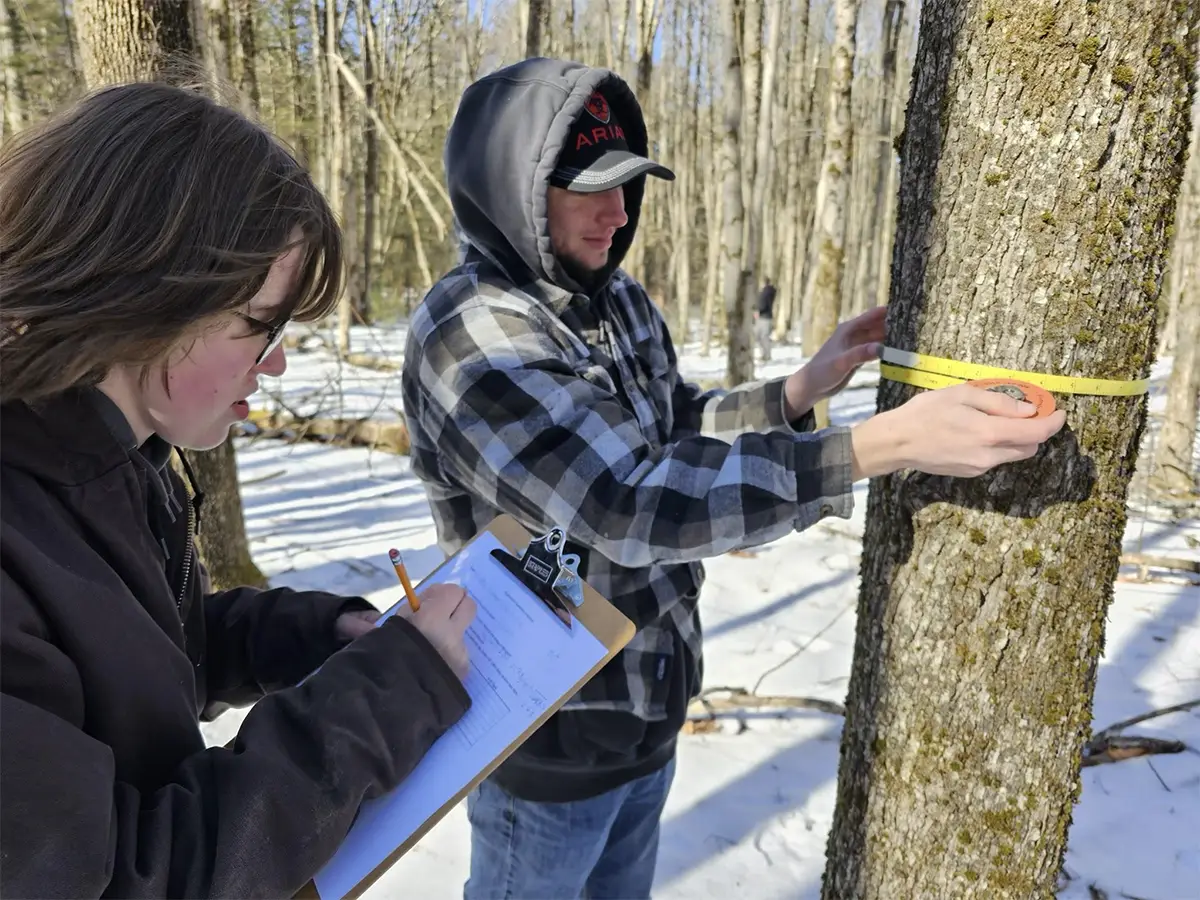
Planning and Carrying Out Investigations – conducting field observations, measurements, sampling, and data collection.
Analyzing and Interpreting Data – identifying patterns and relationships in ecological and environmental data.
Constructing Explanations and Designing Solutions – using field evidence to explain natural processes or consider approaches to environmental challenges.
Engaging in Argument from Evidence – using observations and data to support claims about forest systems, management, or environmental change.
Audience:
High School
Duration:
2 ½ hours - 5 hours
Description
Your high school students’ field experiences at Great Mountain Forest can be customized to complement what students are learning in the classroom.
Teachers can share their learning intentions, formative touchpoints, or areas of study, and our educators will work with them to create hands-on experiences in the forest that allow students to apply, investigate, and extend their classroom learning.
Whether students are exploring ecology, forestry, climate, geology, biodiversity, agricultural science, or another area of study, the forest becomes the classroom—providing opportunities to observe, investigate, ask questions, collect evidence, and apply classroom concepts in a real-world setting.
Programs can also support Envirothon preparation, with experiences designed around the skills and knowledge students are developing in those programs.
A GMF experience can be a single visit or the beginning of an ongoing partnership. Return visits can build on previous experiences as students progress through high school, allowing them to develop increasingly sophisticated field skills, investigations, and understanding of the natural world.
Every GMF field experience emphasizes environmental sustainability, responsible use of natural resources, stewardship, and an appreciation for the beauty, complexity, and interconnectedness of nature.
Learning Intentions:
By the end of the session, students will be able to:
By the end of the session, students will be able to engage in authentic field science by:
- Asking Questions and Defining Problems – developing questions that can be investigated in a forest environment.
- Planning and Carrying Out Investigations – conducting field observations, measurements, sampling, and data collection.
- Analyzing and Interpreting Data – identifying patterns and relationships in ecological and environmental data.
- Constructing Explanations and Designing Solutions – using field evidence to explain natural processes or consider approaches to environmental challenges.
- Engaging in Argument from Evidence – using observations and data to support claims about forest systems, management, or environmental change.