March 2026

Green Fire Film
Spring Equinox Forest Immersion: Emerging Light
Building Bridges Between Land Trusts and Researchers: Lessons from the Field

Visit the Great Mountain Forest Sap House!
June 2026
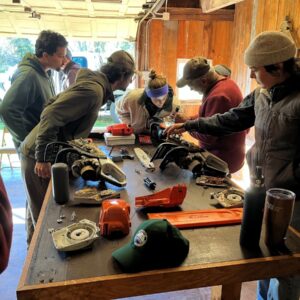
Game of Logging
August 2026
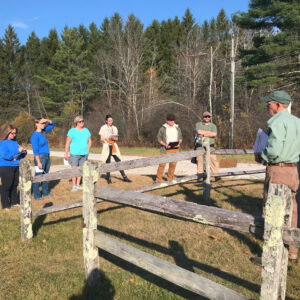
Teach the Teachers: Forestry Education Retreat
February 10, 2026
By: Alec Linden
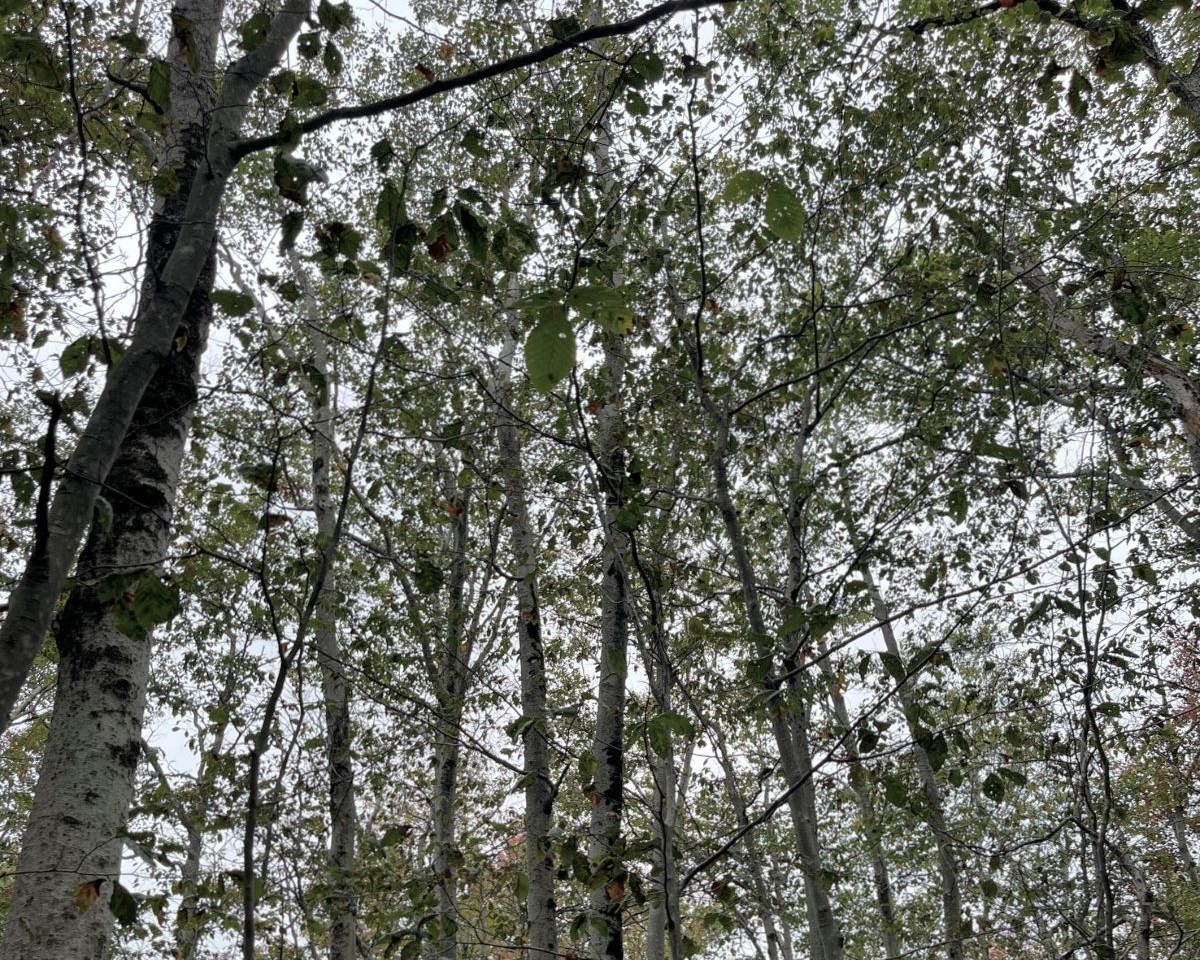
Less than a decade ago, beech leaf disease was unknown to New England’s expansive beech canopies. But now? “In Connecticut, every single beech tree has beech leaf disease,” said Elisabeth Ward, a forest ecologist with the Connecticut Agricultural Experiment Station (CAES). Ward is one of several researchers working on a long-term study in Great [Read More...]
December 23, 2025
By: Alec Linden
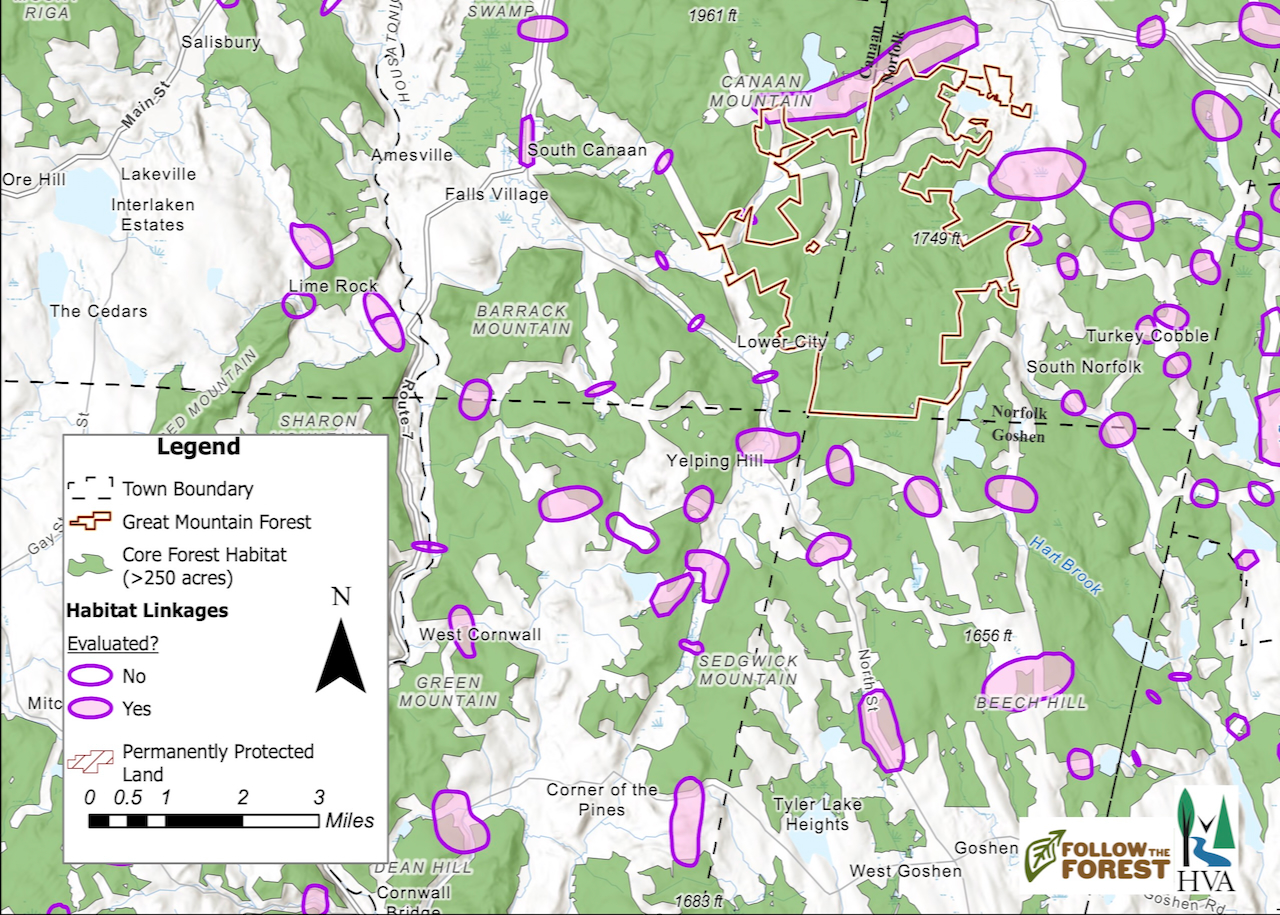
Great Mountain Forest’s 6,300-acre expanse is, in a sense, one of Connecticut’s broadest highways. Save the rare maintenance vehicle or Sunday stroller, though, it is no conduit for humans, but rather the fast lane – or a rest stop – for the abundant flora and fauna of the New England woodlands. That highway is [Read More...]
November 10, 2025
By: Alec Linden
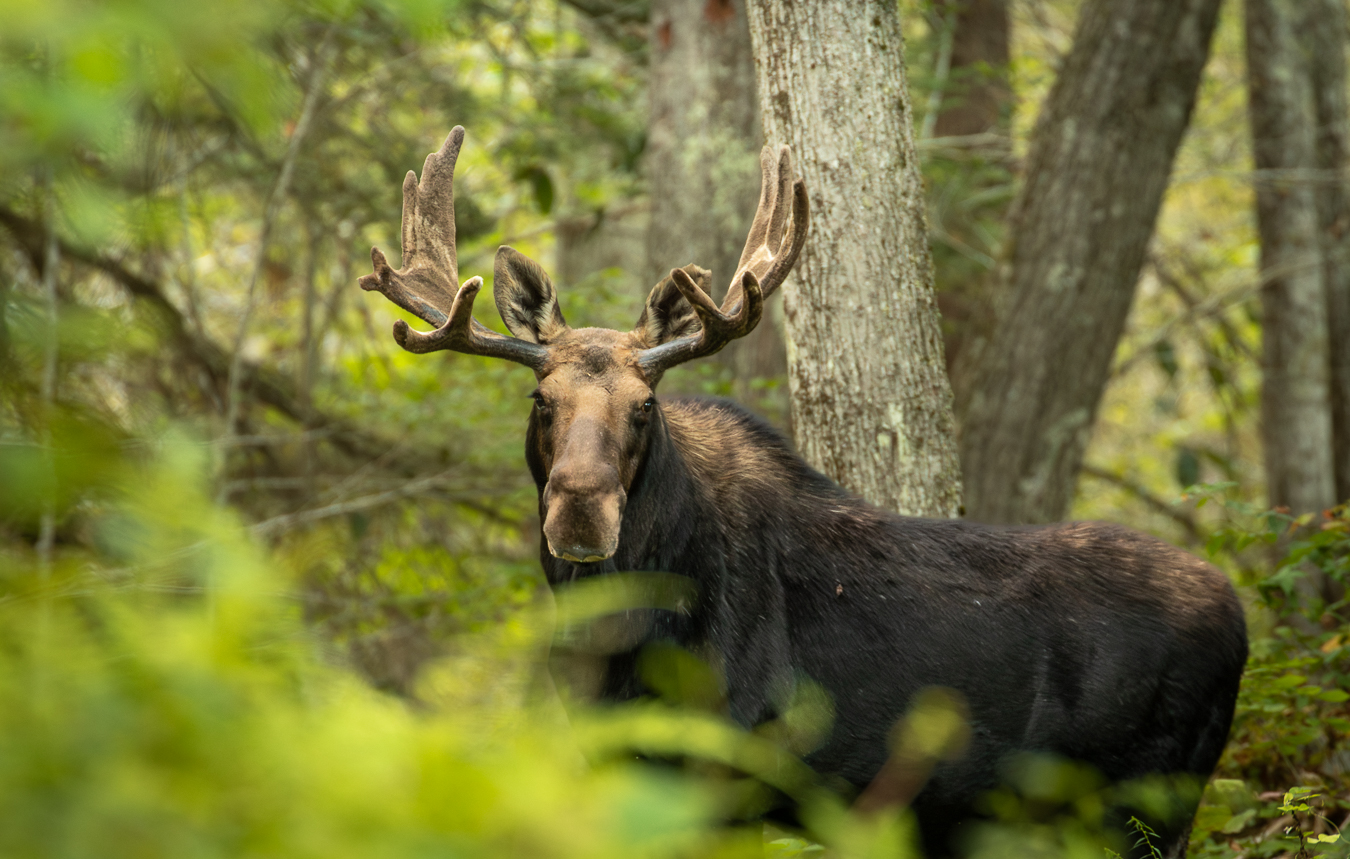
Great Mountain Forest is home to 20 of Connecticut’s 100 or so moose. Yet most people who visit the forest will never spot one. That’s because despite their significant stature and status as New England’s largest land mammal, these ungainly ungulates—members of the order of hoofed mammals— move through the forest with remarkable stealth [Read More...]
September 9, 2025
By: Alec Linden
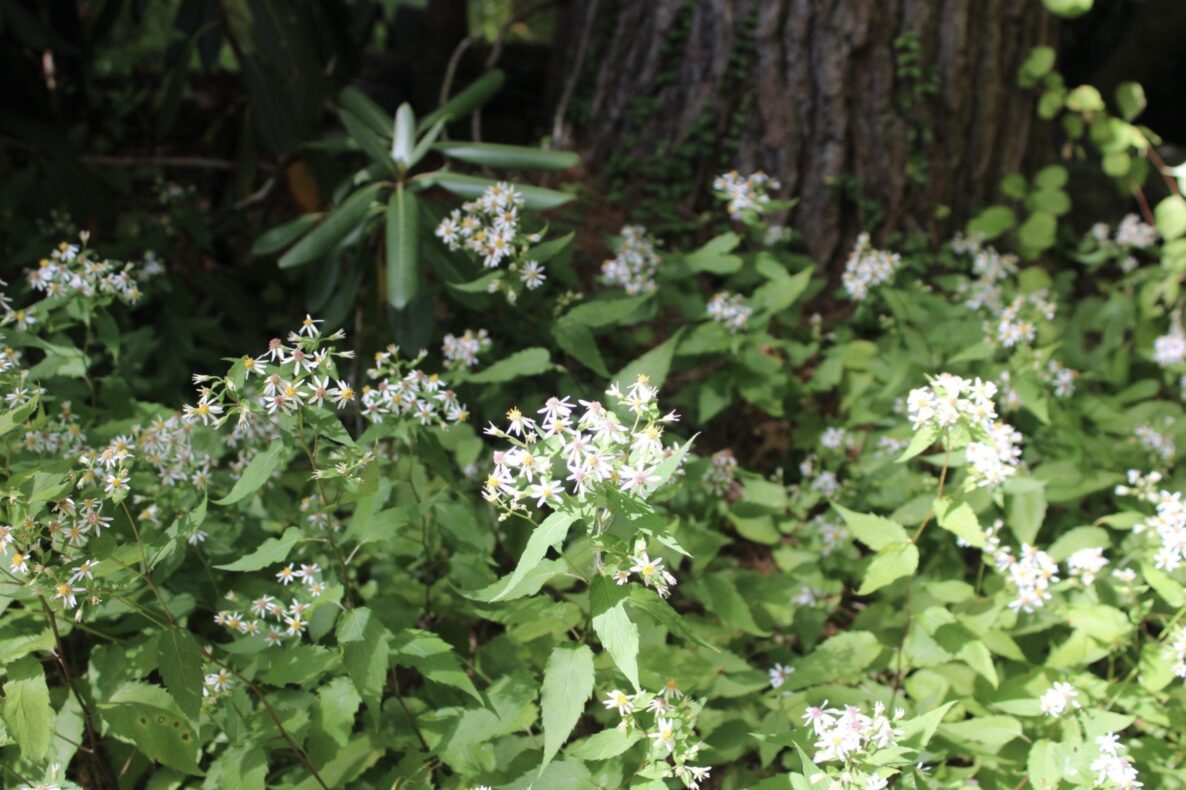
August has come and gone at last, the kids are back at school, and the forest floor is blanketed in white. While recent weather patterns have made anything seem possible, this is not the result of a historic Labor Day blizzard, but rather the on-schedule flowering of Eurybia divaricata, or, as it is commonly [Read More...]
August 1, 2025
By: Alec Linden
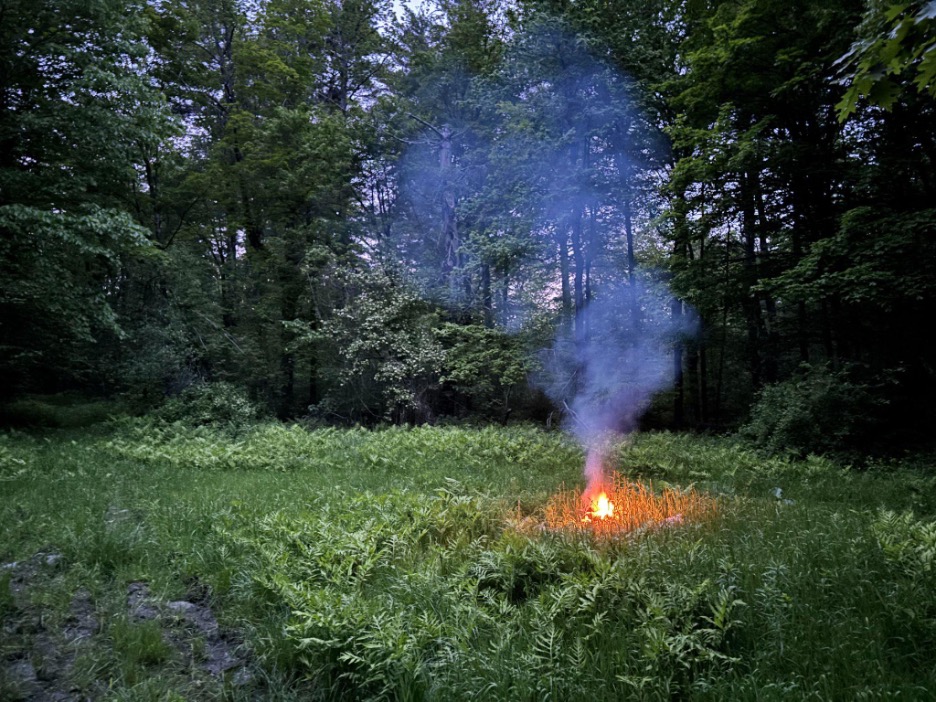
In late May, in my role as GMF Newsletter Editor, I had the opportunity to spend the night at the Meekertown Cabin, a rustic but cozy outpost on the site of a onetime homestead at the southwestern extremity of this 6,300 acre forest. The objective was to produce the article you now read; whatever [Read More...]
August 1, 2025
By: Kate Regan-Loomis
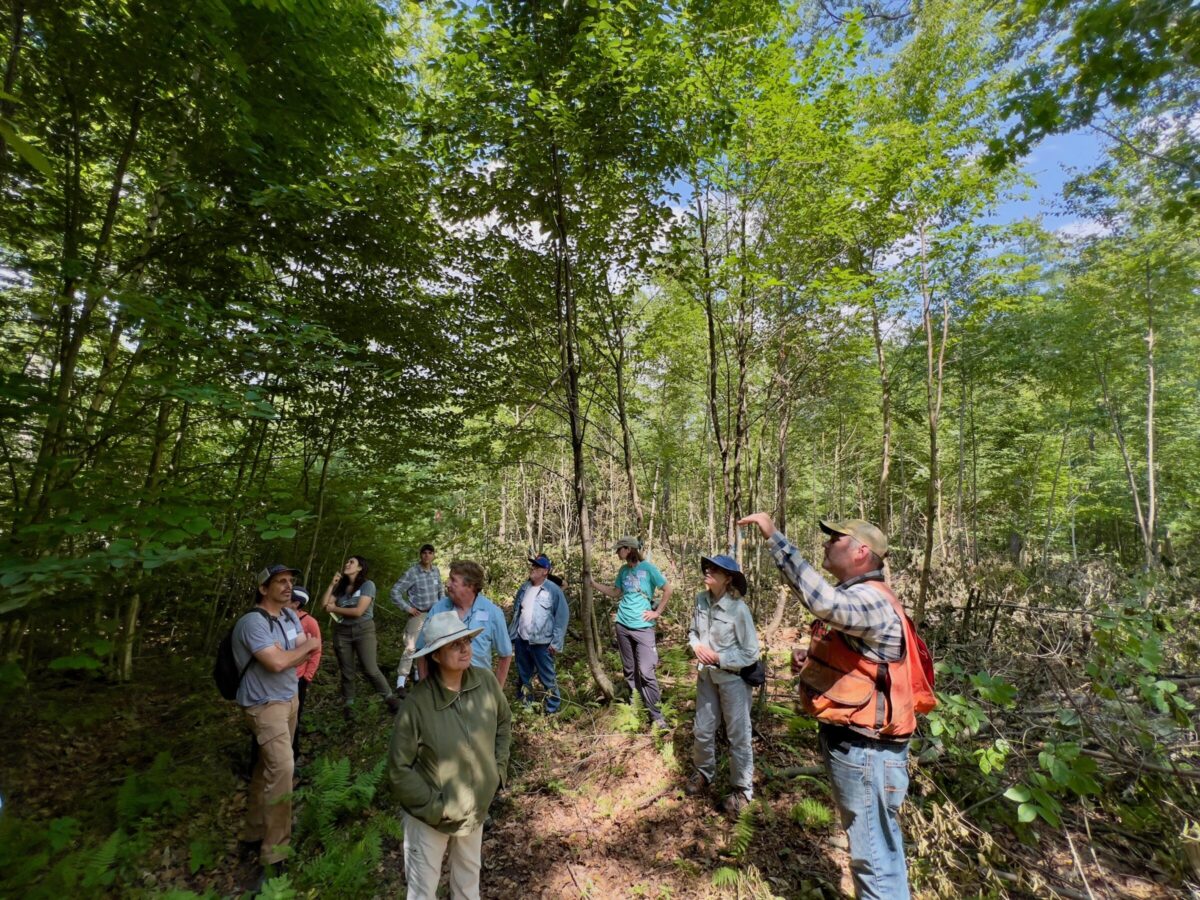
As New England experiences increasingly extreme weather, including hotter and wetter summers, keeping forests healthy and resilient to pests and disease is an ongoing challenge. Work has begun implementing Connecticut Land Conservation Council’s (CLCC) Climate Smart Land Stewardship Grant at GMF! Great Mountain Forest recently began a pre-commercial thinning project, which is a forest [Read More...]
August 1, 2025
By: Great Mountain Forest
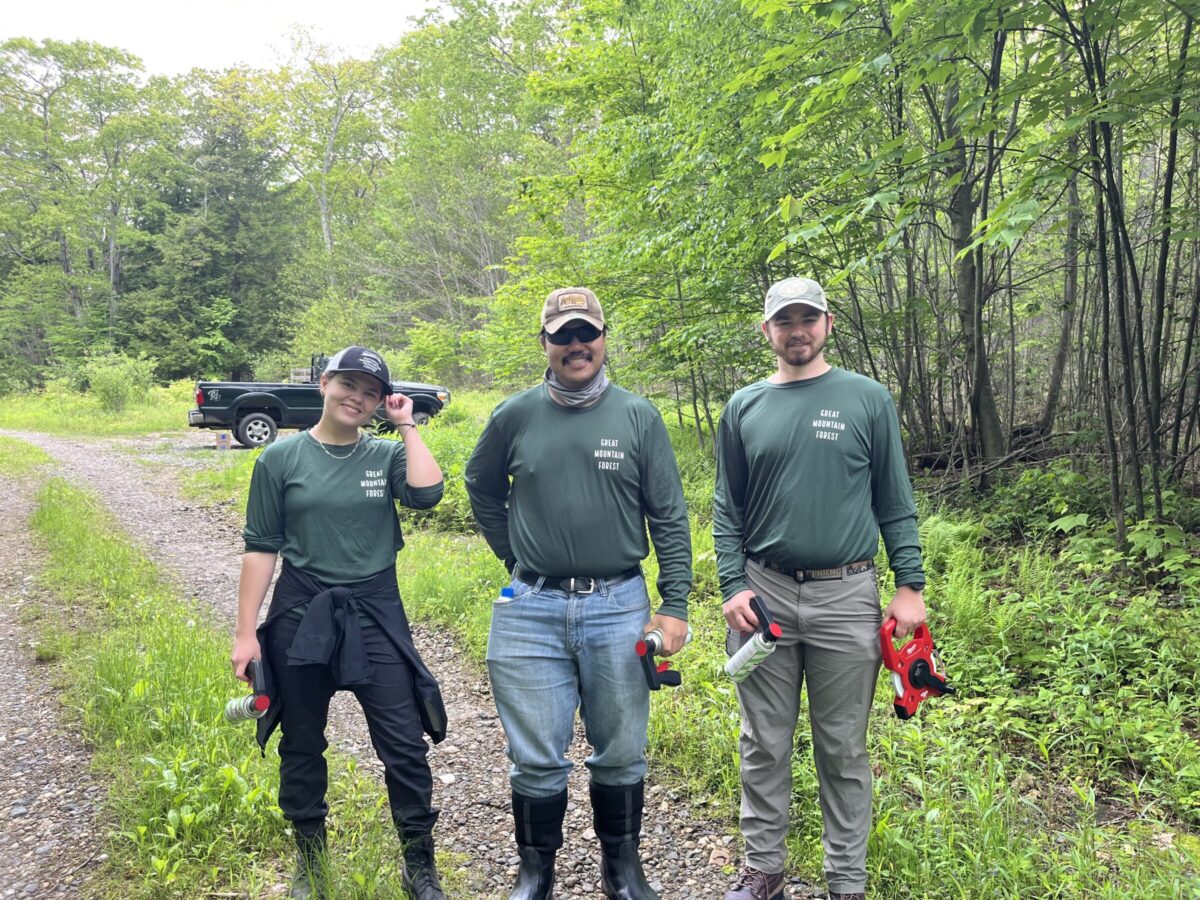
Ren Cattafe Hello! My name is Ren Cattafe, and I am an undergraduate student at UMass Amherst studying forest ecology and conservation. I grew up in eastern Massachusetts, spending a lot of time in forests, which fostered my love of nature early on and influenced my decision to pursue a career in natural resources. [Read More...]

June 17, 2025
By: Alec Linden
Peeking around the berry bushes into the Tobey Bog’s central clearing The oft-maligned swamp, despite holding a persistent legacy in the cultural imagination as a place of decay with little utility or aesthetic appeal to humans, has garnered several famous fans over the years. The animated ogre Shrek, famed for his protectiveness [Read More...]

April 9, 2025
By: Alec Linden
The hills are alive in Northwest Connecticut, but it’s not all birdsong and snowdrops: the blacklegged tick has shaken off its winter torpor, and now crawls in droves through the understory, spreading disease and myths in equal measure. Dr. Scott Williams, Chief Scientist and Head of the Department of Environmental Science and Forestry at [Read More...]

March 7, 2025
By: Alec Linden
Winters in the Ice Box of Connecticut have been getting warmer, and this one is no exception. While the mercury did drop at times, data from the GMF weather station through February this year reveals a familiar trend: above-average temperatures and below-average snowfall. GMF Property Manager and Head Weather Observer Russell Russ said that [Read More...]
GREAT MOUNTAIN FOREST’S MISSION & HISTORY
OUR MISSION:
Great Mountain Forest’s mission is to be a leader in forest stewardship. We practice sustainable forest management, promote biodiversity and resilience to climate change, support education and research, and welcome all who love the woods.
Great Mountain Forest (GMF) encompasses more than 6,000 acres of contiguous forestland in the towns of Norfolk and Canaan, Connecticut. GMF is owned and managed by The Great Mountain Forest Corporation, a not-for-profit 501 © 3 private operating foundation.




LEARN ABOUT OUR HISTORY:
Great Mountain Forest (GMF) is one of the nation’s oldest conservation legacy organizations and one of the largest conservation easements in New England. Located in Connecticut’s Northern Litchfield County is GMF’s more than 6,000 acres of contiguous forest and woodland habitat that straddles Falls Village (Canaan) and Norfolk.
During the 1800s, Hunts Lyman and Barnum Richardson Iron Companies owned much of what is now Great Mountain Forest. Colliers worked throughout the Forest, sending the charcoal they produced to local blast furnaces to smelt iron ore. Vast tracts of the Forest were repeatedly and intensively cut over in this process, with little thought to the future. Hemlock stands in the Forest were felled to provide tanbark for the local tanneries.
By the early 20th century, the original composition of the forest was greatly altered. Shade-intolerant saplings of pin cherry, aspen, and gray birch dominated the landscape, and much of the land was reduced to burned-over scrub. A century of industrial use left little of either economic or ecological value, and the land was sold or abandoned for taxes by the iron companies.
In 1909, Frederic C. Walcott and Starling W. Childs began a partnership and acquired 400 acres of barren land around Tobey Pond and established the reserve that would later grow into Great Mountain Forest. They dedicated themselves to restoring and managing the land and reintroducing wildlife to the areas.
Over the next several decades, they secured several thousand additional acres to manage and experimented with native species to see what might adapt to the Connecticut waste woodlands.
Edward C. “Ted” Childs, succeeded his father Starling in 1932. Both he and Walcott continued to add tracts of land and the conservation philosophy at GMF shifts to managing the Forest as a holistic entity. Also in that year, Great Mountain Forest became a volunteer National Weather Service (NWS) Cooperative Weather Observer Station, one of about 165 in Connecticut. Since then, Great Mountain Forest staff have recorded daily weather readings for the NWS.
In 1938, a hurricane leveled Yale University’s research forest in eastern Connecticut. Ted Childs, a Yale alumni, gifted seven acres in the heart of GMF and constructed the Yale Forestry Camp. In 1941, The Yale School of Forestry (now Yale School of the Environment) began using the camp for field training of its students and the relationship between Yale and GMF through the Yale Camp continues today.
With the death of Frederic Walcott died in 1948, Ted Childs purchased Walcott’s interest, along with additional land. This increased GMF to its present size of over 6,000 acres.
In this same year, Ted Childs began an intern program, bringing young forestry students to work with the GMF forestry crew. This internship afforded budding forestry professionals from around the country the opportunity to apply their classroom learning. Today, GMF’s robust internship program continues in that
tradition.
In 2003, the Childs Family protected the land through the transfer of the forest to the Forest Legacy Program of the U.S. Forest Service. Through a conservation easement, the Forest is now an independent non-profit entity.