
PREVIOUS WEATHER REPORTS
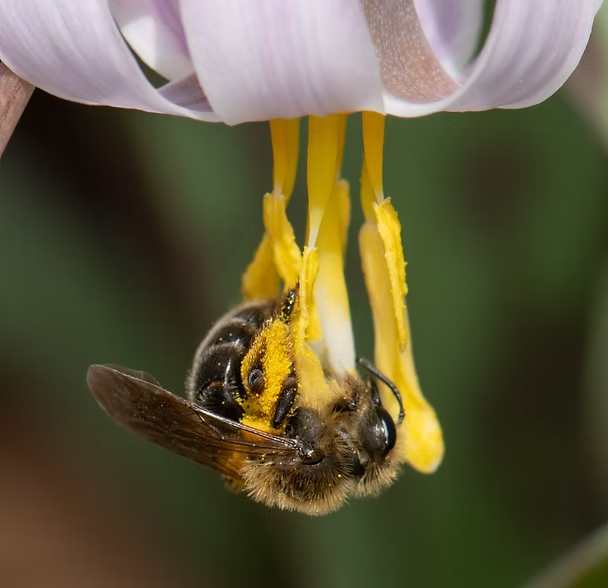
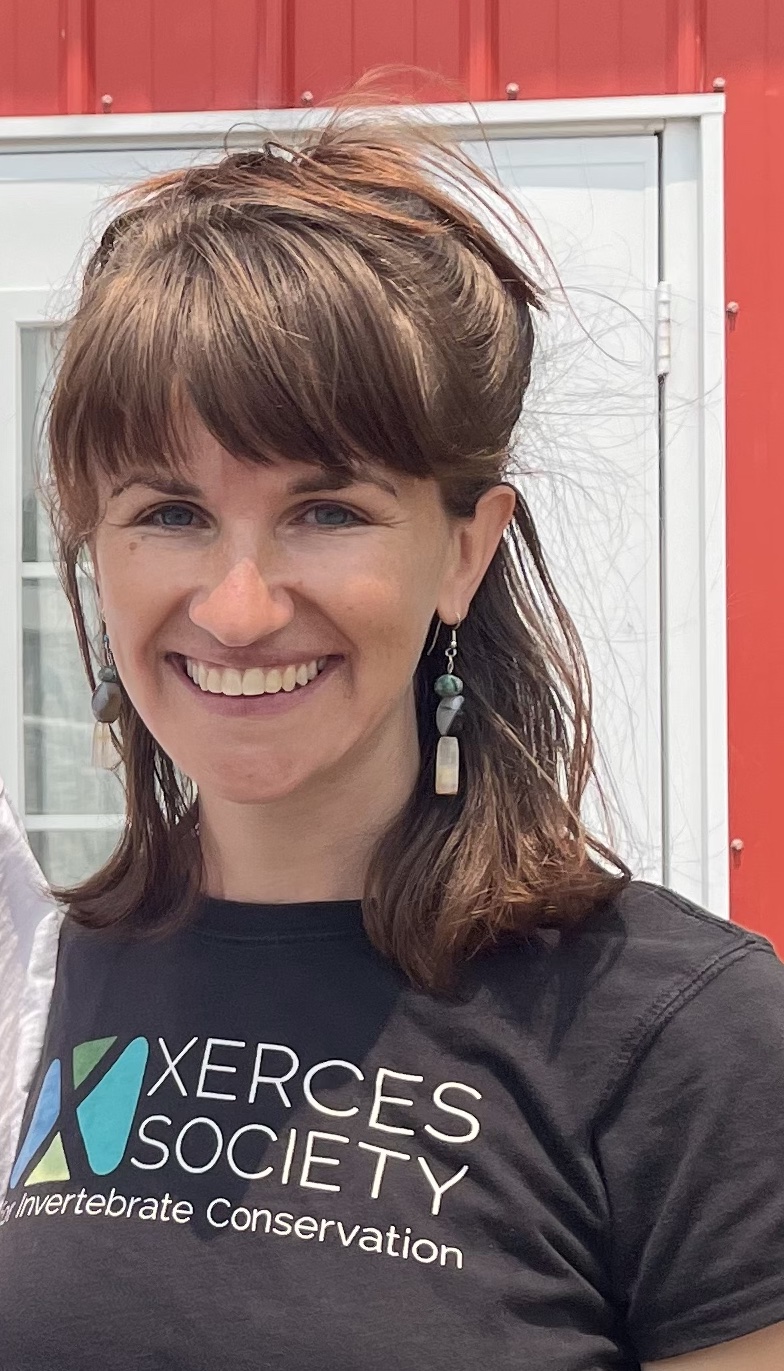
Seeing the Forest for the Bees with Biologist Kass Urban-Mead
Pollinator Conservation Biologist & NRCS Partner Biologist
The Xerces Society for Invertebrate Conservation
As a pollinator conservation specialist at Xerces, Kass Urban-Mead works with staff and research partners to develop technical guidelines and provide training on pollinator conservation practices. She directly assists with planning, designing, installing, and managing habitat in forested, agricultural, and urban areas. She completed an MSc at the Yale School of Forestry. Her PhD work in the Cornell Entomology Department characterized the wild bee communities active in early spring forests and forest canopies. She quantified the canopy pollen consumed by spring-active bees, and the movement of bees between forests and spillover into apple orchards. Kass grew up raising 4-H dairy goats in the lower Hudson Valley of NYS.
DATE: Saturday, January 17, 2026
TIME: 12:00 PM- 1:30 PM
LOCATION: The Norfolk Library
9 Greenwoods Road East
Norfolk, CT
GMF Mindful Forest Immersion Series
Step into the stillness and beauty of Great Mountain Forest with our three-part Mindful Forest Immersion Series. Guided by certified Kripalu Mindful Outdoor Leaders, each seasonal gathering invites you to slow down, breathe deeply, and connect with the forest—and yourself—through practices of mindfulness, creativity, and community.
Celebrate the turning of the seasons with contemplative outdoor experiences designed for all levels. Each session includes a gentle guided walk, sensory awareness practices, seasonal tea and snacks shared in circle, and a unique creative or reflective activity inspired by the rhythms of nature.
- 🍂 Fall Forest Immersion: Nature’s Ephemeral Art
Saturday, November 1, 2025 · 10:00am – 12:00pm - Location: 177 Canaan Mountain Road, Falls Village, CT
- Create a collaborative forest mandala while exploring themes of impermanence and beauty.
- ❄️ New Year Forest Immersion: The Art of Wintering
Sunday, January 4, 2025 · 12:00pm – 2:00pm - Location: 90 Golf Drive, Norfolk, CT
- Honor the wisdom of winter with a fire-gazing meditation and reflection on resilience and renewal.
- 🌱 Spring Equinox Forest Immersion: Emerging Light
Saturday, March 21, 2026 · 1:00pm – 3:00pm - Location: East Gate, 201 Windrow Road, Norfolk, CT
- Awaken your senses and welcome in Spring through guided mindful walking, simple movement, nature meditation, and community conversation and listening.
- This Spring Equinox offering includes an introduction to nature journaling and sketching — not as an art class, but as an awareness-building practice of wonder, curiosity, and creativity.
No art, hiking or meditation experience is needed.
Open to participants ages 14 and up. Tickets: $25 per person.
Join us in honoring the forest as teacher and companion—an invitation to pause, notice, and grow alongside the changing seasons.


Winter Lecture Series -The Engaging Landscape

Winter Lecture Series: Tom Blagden is an accomplished nature photographer and writer with over 40 years of experience. Tom’s photographs have graced the covers of renowned magazines, including Smithsonian, Audubon, Nature Conservancy, and Sierra.
“My goal in sharing these photographs of GMF is to immerse viewers in as full a sense of place as possible and as seen through fresh eyes. Nature photography has the power to instill an emotional connection to our landscape that then allows us to assign a higher sense of value.”

Winter Lecture Series -Conservation and Restoration of The Venezuelan Andean Cloud Forests

Carlos García Núñez is a professor at the Institute of Environmental and Ecological Sciences at the University of Los Andes in Merida, Venezuela. Visiting Scholar at Trinity College Center of Urban and Global Studies.
Dr. Garcia Nunez earned his PhD in Tropical Ecology from the University of Los Andes. He has an extensive record of teaching, research, and fellowships, including serving as a visiting scholar at Harvard University, Universidad de Alicante in Spain, and Universidad Nacional de Colombia.
His focus as a scientist is on understanding the structure and functioning of tropical terrestrial ecosystems and the requirements for their conservation and restoration. His research provides essential guidance for sustainable development and reforestation programs, while considering the impacts of global changes in land use and climate change.
Winter Lecture Series -Mycorrhizal Network

John Wheeler is a mycologist and founding member and president of the Berkshire Mycological Society. For 34 years John has hunted and identified wild mushrooms in Massachusetts. Former Prof. at Simon’s Rock college of Bard. John has encounter over 1,000 different species of mushrooms in the Berkshires alone.
John will talk about the underground network of fungus and the connections that benefit trees in the forest. Participants will also learn about how mushrooms can be used to booster health.

Frozen in Time
Frozen in Time: A Glacial Legacy at GMF
Long before 1909, when Frederic C. Walcott and Starling W. Childs acquired the 400 acres of barren land around Tobey Pond, which would become Great Mountain Forest, other forces were at work that would shape the land in ways far more dramatic than any human intervention. Some 15,500 years ago, advancing and melting glaciers created land formations—including kettles, erratics, roche moutonnées, and glacial polish—which are visible in the forest today.
Tobey Pond, The Finest of Kettles?
Tobey Pond is an example of a kettle, formed when vast chunks of ice were buried under sediment. The melting ice left a depression in the earth, and because the water table was high enough, a pond was formed. Nearby, where the water level was marginal, a kettle bog was born. With its black spruce (likely the southernmost stand in New England), Tobey Bog is proof of this glacial activity. Where the water table is low, a land depression formed on the forest floor, as seen in the white-pine-filled depressions of the old Norfolk Downs golf course, now part of GMF.
Erratics
A hike through GMF invariably brings you to a glacial erratic. These sizable boulders are solitary reminders of the force of glacial ice, moving boulders far from home and depositing them in a new locale, often great distances away. One storied example of a GMF erratic is Meetinghouse Rock off Meekertown Road. This rock became the civic centerpiece for the town meetings held by the residents of Meekertown in the late 1700s. Here, at the house-shaped boulder, residents debated and decided on issues of their common interest. Another glacial erratic that visitors can see up close is located on Crossover Trail.
Roche Moutonnée
Despite the French moniker, roche moutonnées (sheep rock) are common in the Northeast. In GMF, several sites fall into this glacial category, most notably Wapato Lookout and a lookout off of a Crossover Trail spur.
Roche moutonnées formed in GMF when thick glacial ice from the north moved over hilly or mountainous landscapes. Rocks and debris trapped in the glacier scour the north-facing side of the rock. Often, striations in the rock provide evidence of the glacier’s path.
As the glacier descends on the other side of the peak, the force and friction of the ice begin to “pluck” rock fragments and chip away at the surface. This chipping away at the rock’s surface creates a rocky cliff or depression where water can accumulate to form a tarn or small lake. Both Wapato Pond and Crissey Pond are tarns resulting from glacial activity. Over time, Wapato Pond evolved into a wetland. However, in the 1930s, the creation of a dam allowed the pond to reassert itself to what we see today.
Glacial Polish
Glacial polish, evident on the balds of both Matterhorn and Stoneman Summit, results from a glacier scouring the bedrock clean, leaving striations in the rock behind. These striations point to the path and trajectory of the glacier. Matterhorn Summit is accessible via trail spur off Sam Yankee Trail. The Iron Trail reaches Stoneman Summit.
More information about GMF’s glacial and geologic history can be found in our May 2023 newsletter article Deep Time Under GMF and in A Fieldbook: Great Mountain Forest. Download the GMF Points of Interest Map and related descriptions from our website to explore GMF’s geologic and glacial history from its trails.