
PREVIOUS WEATHER REPORTS
Restoring a Changing World: Forest Management for Invasive Species, Carbon, and Biodiversity with Dr. Sara Kuebbing
A GMF Winter Lecture
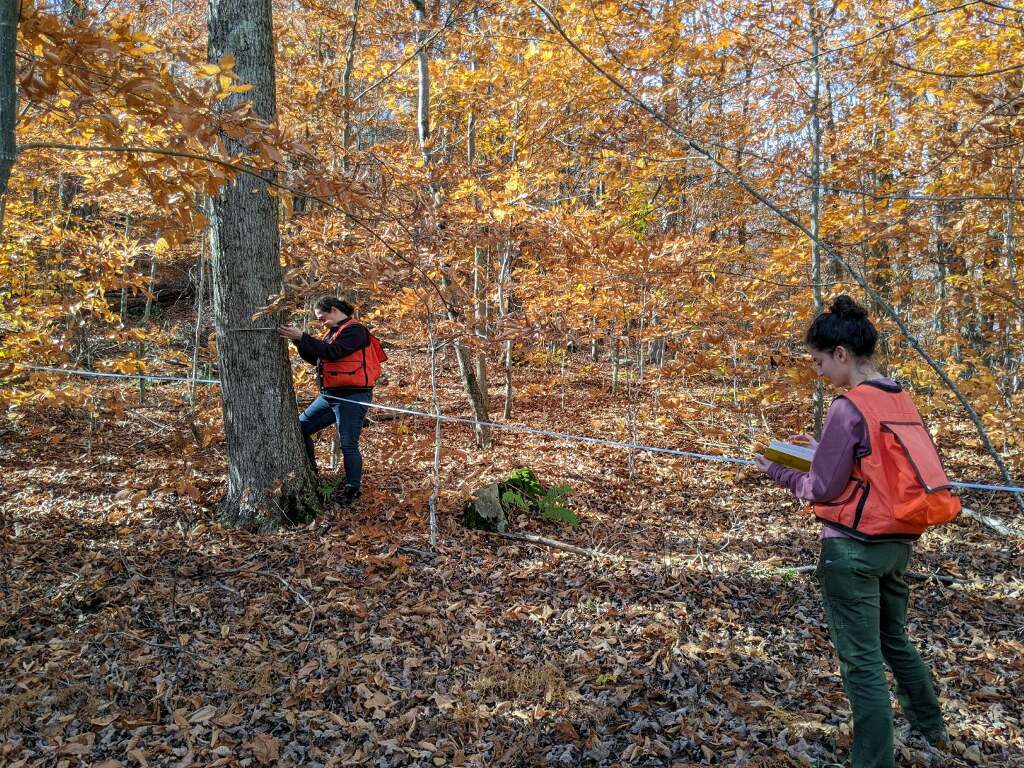
Eastern deciduous temperate forests are facing growing global change disturbances such as accumulating invasive species, temperature warming, and extreme weather events. Major international policy initiatives, like the Intergovernmental Science-Policy Platform on Biodiversity and Ecosystem Services (IPBES) and the Intergovernmental Panel on Climate Change (IPCC), stress the importance of sustainably managing forest ecosystems to preserve resilience to these global change pressures. Join Dr. Sara Kuebbing as she highlights the global changes linked to nonnative, invasive plant growth in forests, the response of forest plants to warming spring temperatures, and how we can use forecasting models to inform management efforts!
Dr. Sara Kuebbing
Research Scientist at the Yale School of the Environment and Director of Research of the Yale Applied Science Synthesis Program
Dr. Kuebbing is trained as an ecologist with expertise in conservation biology, invasion biology, plant ecology, community ecology, and ecosystem ecology. Her research focuses on how humans can make informed decisions on how to best protect and conserve landscapes, ecosystems, and all the species that lives within them. She works with a variety of scientists, land managers, and policymakers to focus research questions and share results. She is excited to be the inaugural director of YASSP, which is a research program space for open collaboration among practitioners, academics, and policymakers to develop applied science that guides sustainable land management.
Prior to moving to YSE, Dr. Kuebbing was an Assistant Professor in the Department of Biological Sciences at the University of Pittsburgh. Her research training includes postdoctoral positions with the Yale Institute for Biospheric Studies and the Smith Conservation Fellows Program, a PhD from the Department of Ecology and Evolutionary Biology at the University of Tennessee and a BS from the Department of Entomology & Wildlife Conservation at the University of Delaware.
DATE: Saturday, February 28, 2026
TIME: 4:00 PM – 6:00 pm
LOCATION: The Norfolk Library
9 Greenwoods Road East
Norfolk, CT
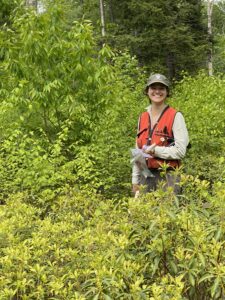
Promoting Forest Health in the Aftermath of Invasive Pests & Pathogens with Dr. Elisabeth Ward
A GMF Winter Lecture
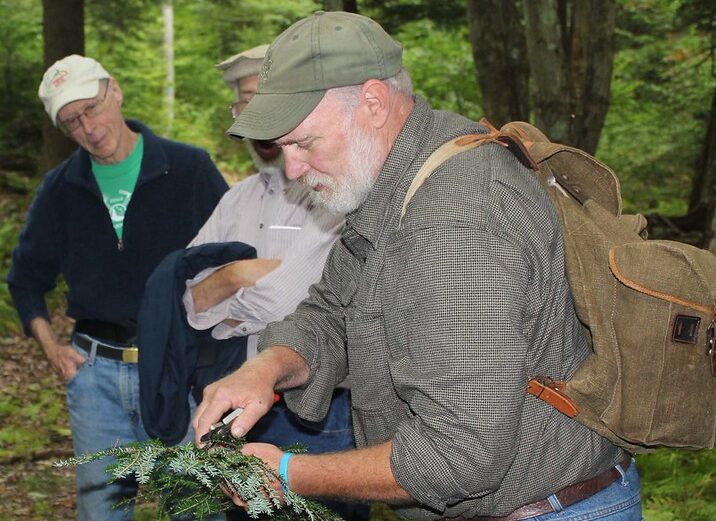
Connecticut’s forests are changing in response to novel pests, pathogens, diseases, and other stressors. Join Dr. Elisabeth Ward as she explores the impact pests, pathogens, and diseases have on our local forests. Focusing on emerald ash borer and beech leaf disease, Dr. Ward will discuss potential management practices that can fend off these disturbances and safeguard the health and resiliency of our forests. Learn more about how you can take an active role in protecting our woodlands!
Dr. Elisabeth Ward
Scientist at Connecticut Agricultural Experiment Station
Dr. Elisabeth Ward is a Scientist at the Connecticut Agricultural Experiment Station that leads a research program focused on improving forest ecosystem health and resiliency. She received her BS in Biology from Brown University and her MS and PhD from The Forest School at the Yale School of the Environment. Her current research examines how changing conditions in Connecticut, such as tree mortality from invasive pests and pathogens, are shifting the structure and composition of forests as well as the ecosystem services they provide.
DATE: Saturday, February 7, 2026
TIME: 4:00 PM – 5:30 pm
LOCATION: The Norfolk Library
9 Greenwoods Road East
Norfolk, CT