
PREVIOUS WEATHER REPORTS
Restoring a Changing World: Forest Management for Invasive Species, Carbon, and Biodiversity with Dr. Sara Kuebbing
A GMF Winter Lecture
Eastern deciduous temperate forests are facing growing global change disturbances such as accumulating invasive species, temperature warming, and extreme weather events. Major international policy initiatives, like the Intergovernmental Science-Policy Platform on Biodiversity and Ecosystem Services (IPBES) and the Intergovernmental Panel on Climate Change (IPCC), stress the importance of sustainably managing forest ecosystems to preserve resilience to these global change pressures. Join Dr. Sara Kuebbing as she highlights the global changes linked to nonnative, invasive plant growth in forests, the response of forest plants to warming spring temperatures, and how we can use forecasting models to inform management efforts!
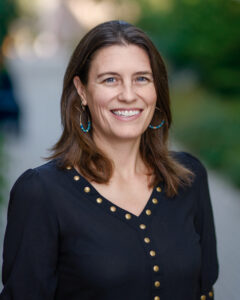
Dr. Sara Kuebbing
Research Scientist at the Yale School of the Environment and Director of Research of the Yale Applied Science Synthesis Program
Dr. Kuebbing is trained as an ecologist with expertise in conservation biology, invasion biology, plant ecology, community ecology, and ecosystem ecology. Her research focuses on how humans can make informed decisions on how to best protect and conserve landscapes, ecosystems, and all the species that lives within them. She works with a variety of scientists, land managers, and policymakers to focus research questions and share results. She is excited to be the inaugural director of YASSP, which is a research program space for open collaboration among practitioners, academics, and policymakers to develop applied science that guides sustainable land management.
Prior to moving to YSE, Dr. Kuebbing was an Assistant Professor in the Department of Biological Sciences at the University of Pittsburgh. Her research training includes postdoctoral positions with the Yale Institute for Biospheric Studies and the Smith Conservation Fellows Program, a PhD from the Department of Ecology and Evolutionary Biology at the University of Tennessee and a BS from the Department of Entomology & Wildlife Conservation at the University of Delaware.
DATE: Saturday, February 28, 2026
TIME: 4:00 PM – 6:00 pm
LOCATION: The Norfolk Library
9 Greenwoods Road East
Norfolk, CT
Promoting Forest Health in the Aftermath of Invasive Pests & Pathogens with Dr. Elisabeth Ward
A GMF Winter Lecture
Connecticut’s forests are changing in response to novel pests, pathogens, diseases, and other stressors. Join Dr. Elisabeth Ward as she explores the impact pests, pathogens, and diseases have on our local forests. Focusing on emerald ash borer and beech leaf disease, Dr. Ward will discuss potential management practices that can fend off these disturbances and safeguard the health and resiliency of our forests. Learn more about how you can take an active role in protecting our woodlands!
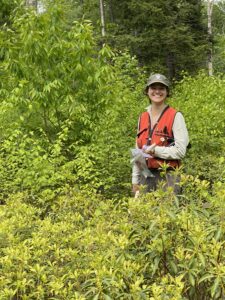
Dr. Elisabeth Ward
Scientist at Connecticut Agricultural Experiment Station
Dr. Elisabeth Ward is a Scientist at the Connecticut Agricultural Experiment Station that leads a research program focused on improving forest ecosystem health and resiliency. She received her BS in Biology from Brown University and her MS and PhD from The Forest School at the Yale School of the Environment. Her current research examines how changing conditions in Connecticut, such as tree mortality from invasive pests and pathogens, are shifting the structure and composition of forests as well as the ecosystem services they provide.
DATE: Saturday, February 7, 2026
TIME: 4:00 PM – 5:30 pm
LOCATION: The Norfolk Library
9 Greenwoods Road East
Norfolk, CT
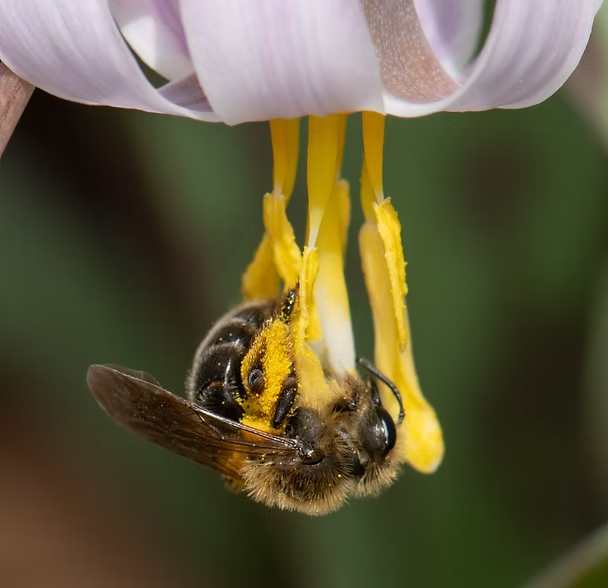
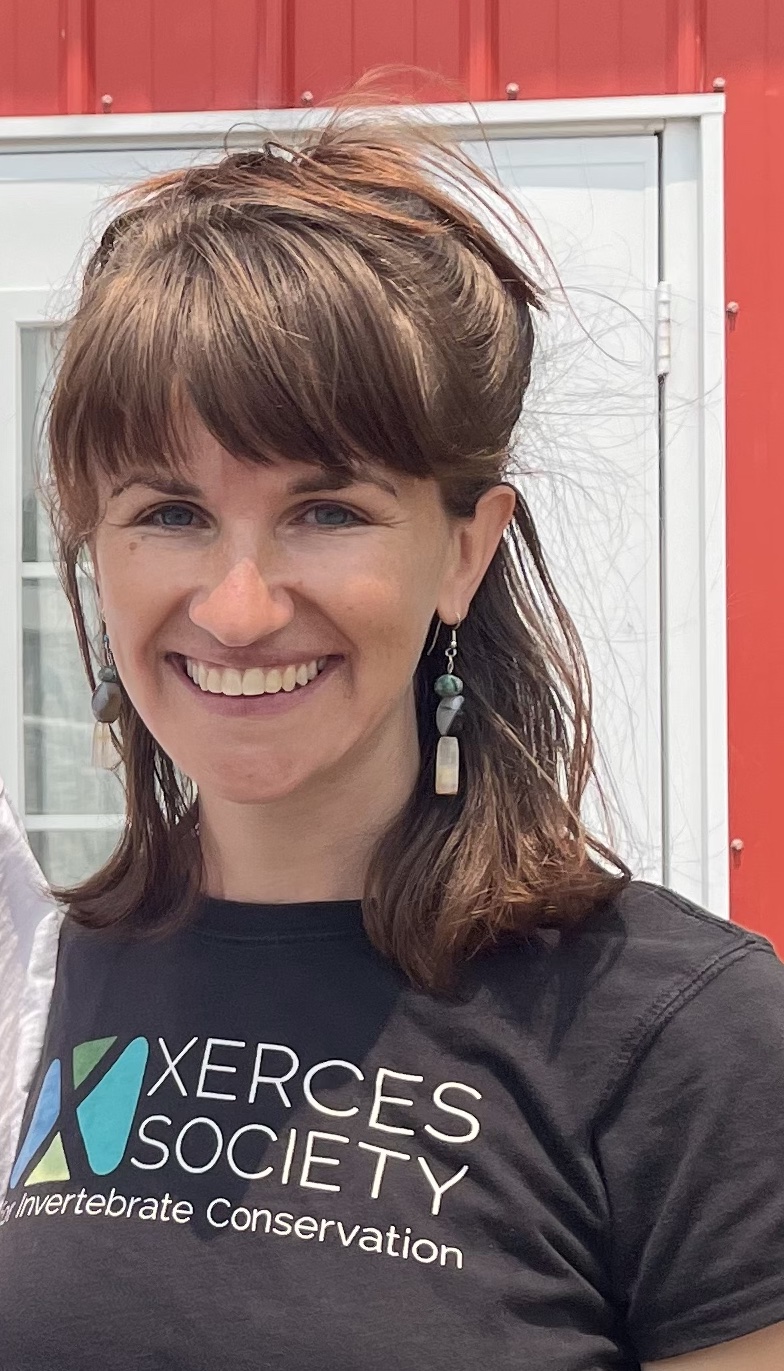
Seeing the Forest for the Bees with Biologist Kass Urban-Mead
Pollinator Conservation Biologist & NRCS Partner Biologist
The Xerces Society for Invertebrate Conservation
As a pollinator conservation specialist at Xerces, Kass Urban-Mead works with staff and research partners to develop technical guidelines and provide training on pollinator conservation practices. She directly assists with planning, designing, installing, and managing habitat in forested, agricultural, and urban areas. She completed an MSc at the Yale School of Forestry. Her PhD work in the Cornell Entomology Department characterized the wild bee communities active in early spring forests and forest canopies. She quantified the canopy pollen consumed by spring-active bees, and the movement of bees between forests and spillover into apple orchards. Kass grew up raising 4-H dairy goats in the lower Hudson Valley of NYS.
DATE: Saturday, January 17, 2026
TIME: 12:00 PM- 1:30 PM
LOCATION: The Norfolk Library
9 Greenwoods Road East
Norfolk, CT
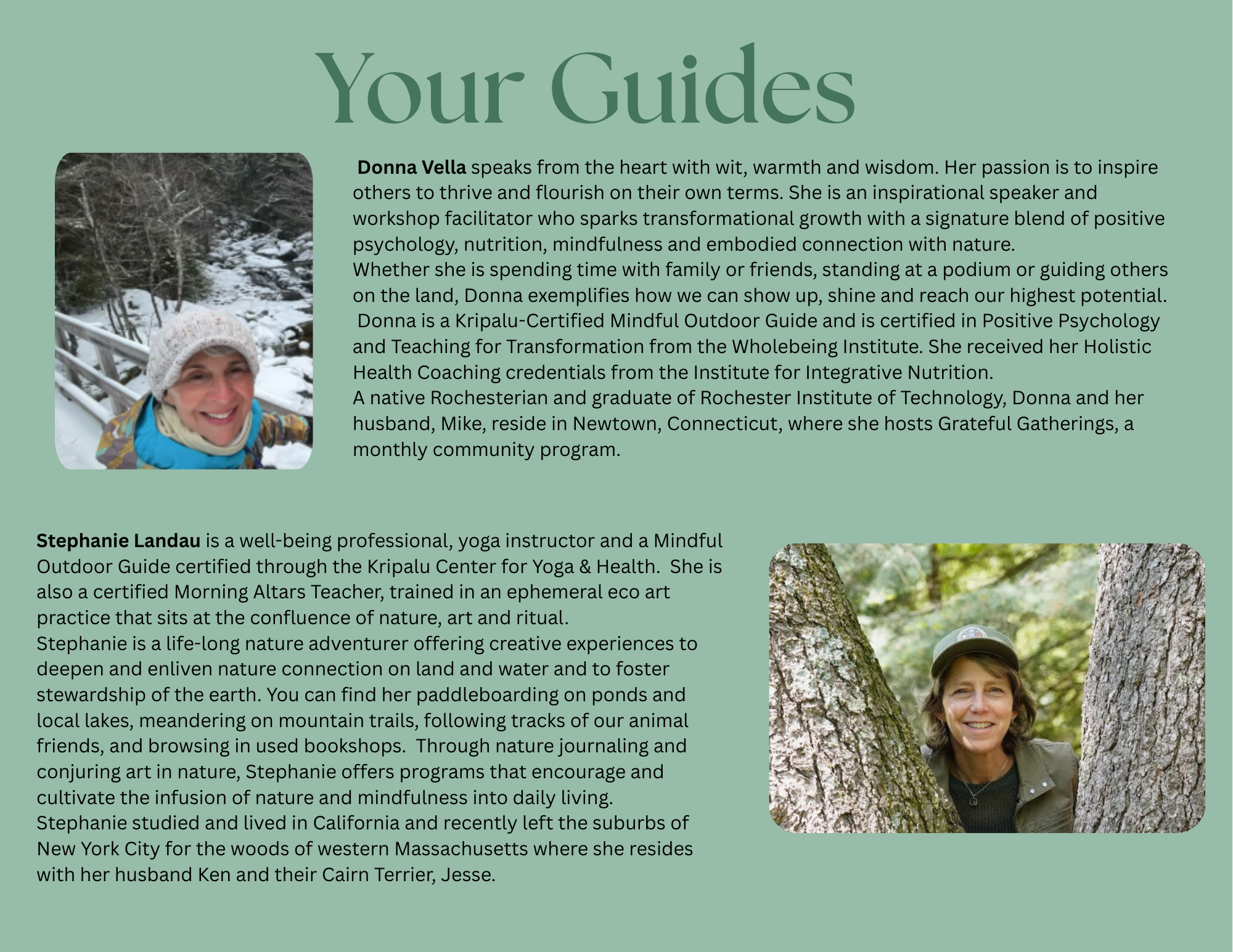
GMF Mindful Forest Immersion Series
Step into the stillness and beauty of Great Mountain Forest with our three-part Mindful Forest Immersion Series. Guided by certified Kripalu Mindful Outdoor Leaders, each seasonal gathering invites you to slow down, breathe deeply, and connect with the forest—and yourself—through practices of mindfulness, creativity, and community.
Celebrate the turning of the seasons with contemplative outdoor experiences designed for all levels. Each session includes a gentle guided walk, sensory awareness practices, seasonal tea and snacks shared in circle, and a unique creative or reflective activity inspired by the rhythms of nature.
- 🍂 Fall Forest Immersion: Nature’s Ephemeral Art
Saturday, November 1, 2025 · 10:00am – 12:00pm - Location: 177 Canaan Mountain Road, Falls Village, CT
- Create a collaborative forest mandala while exploring themes of impermanence and beauty.
- ❄️ New Year Forest Immersion: The Art of Wintering
Sunday, January 4, 2025 · 12:00pm – 2:00pm - Location: 90 Golf Drive, Norfolk, CT
- Honor the wisdom of winter with a fire-gazing meditation and reflection on resilience and renewal.
- 🌱 Spring Equinox Forest Immersion: Emerging Light
Saturday, March 21, 2026 · 1:00pm – 3:00pm - Location: East Gate, 201 Windrow Road, Norfolk, CT
- Awaken your senses and welcome in Spring through guided mindful walking, simple movement, nature meditation, and community conversation and listening.
- This Spring Equinox offering includes an introduction to nature journaling and sketching — not as an art class, but as an awareness-building practice of wonder, curiosity, and creativity.
No art, hiking or meditation experience is needed.
Open to participants ages 14 and up. Tickets: $25 per person.
Join us in honoring the forest as teacher and companion—an invitation to pause, notice, and grow alongside the changing seasons.


Winter Lecture Series -The Engaging Landscape

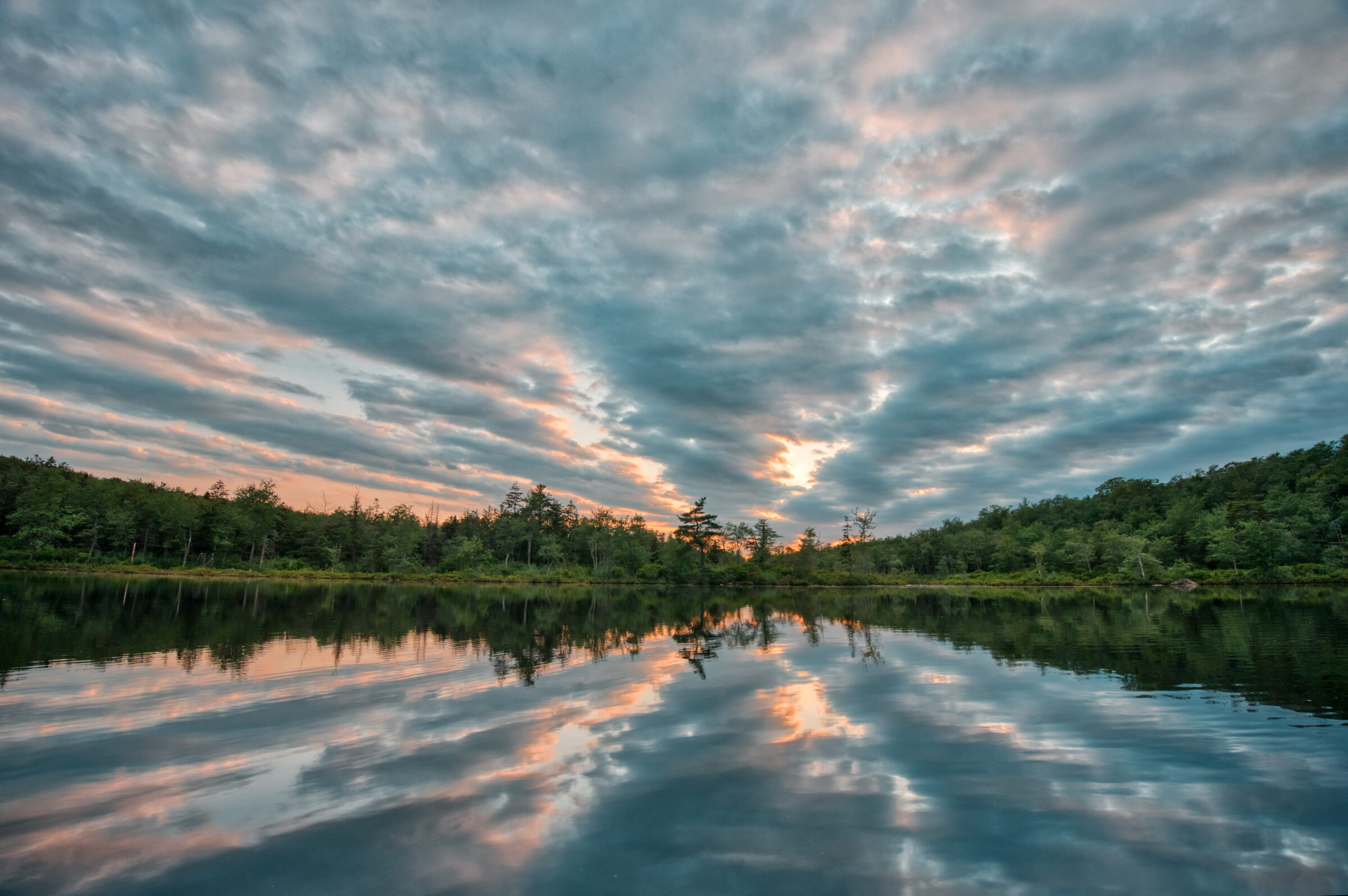
Winter Lecture Series: Tom Blagden is an accomplished nature photographer and writer with over 40 years of experience. Tom’s photographs have graced the covers of renowned magazines, including Smithsonian, Audubon, Nature Conservancy, and Sierra.
“My goal in sharing these photographs of GMF is to immerse viewers in as full a sense of place as possible and as seen through fresh eyes. Nature photography has the power to instill an emotional connection to our landscape that then allows us to assign a higher sense of value.”