
PREVIOUS WEATHER REPORTS
The Classroom Under the Canopy
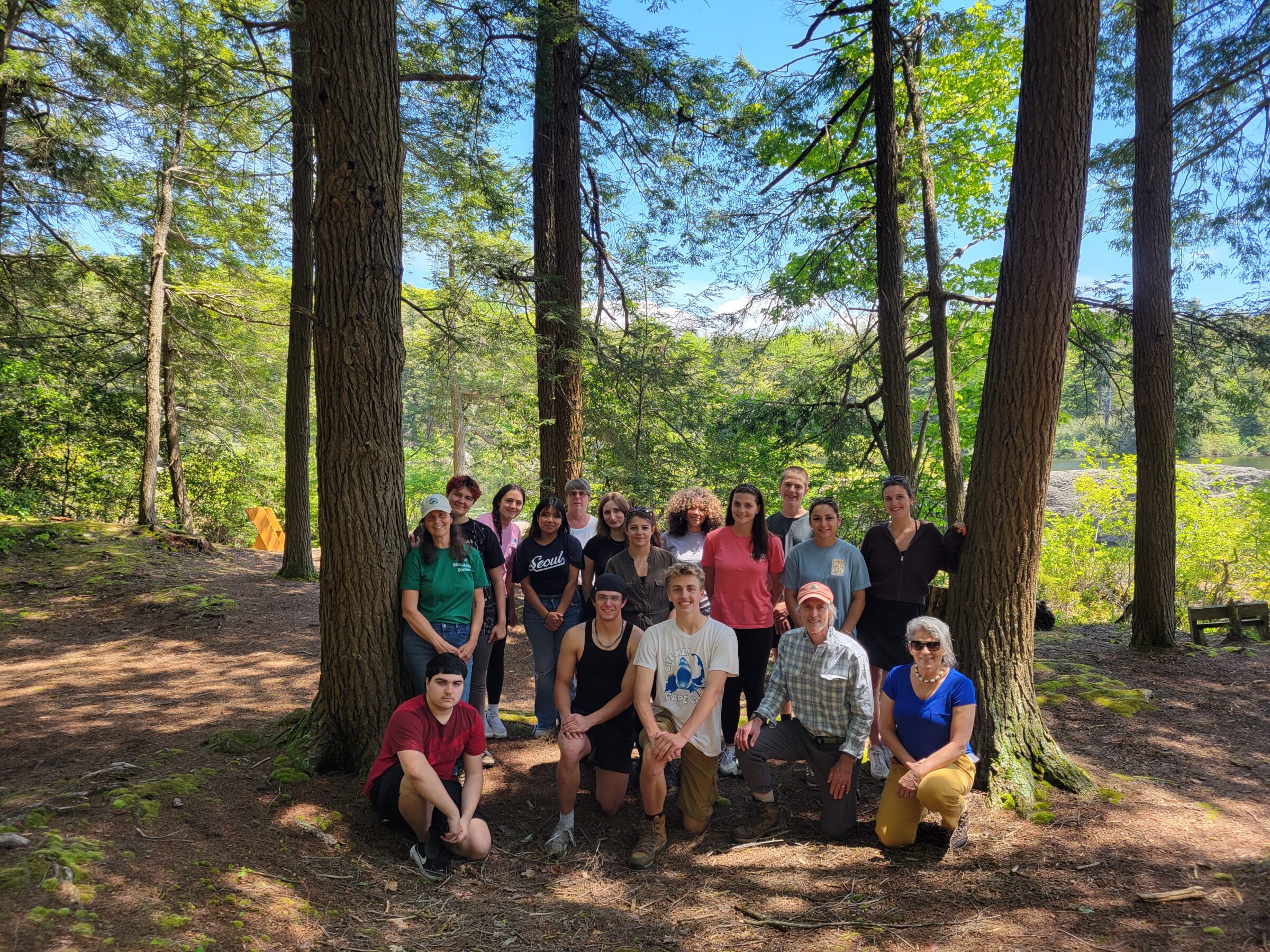
In early June, kindergarten through fourth grade students from Norfolk’s Botelle Elementary School left their desks and headed outdoors to Great Mountain Forest. Younger students, who had been studying ecology, took to the woods to flip logs in search of insects. The older group visited the forest’s weather station for a lesson on the impact of rain, snow, heat and cold on the environment.
“Anytime kids get to spend time outside, explore nature and then connect that experience with what they’re learning in the classroom is a win-win,” said Botelle Principal Lauren Valentino.
For the past two years, Great Mountain Forest Program Coordinator Vicki Nelson, a former science teacher, has been developing a field-based curriculum designed to complement and deepen the instruction students receive at school. Nelson, along with the educators who have brought their classes to Great Mountain Forest in the past, contend that experiential learning in the natural world brings students social, emotional and skill-building benefits that are harder to cultivate in the classroom. Plus, they say, outdoor learning is essential for student well-being in an increasingly digital age.
GMF as a forestry laboratory
GMF Program Coordinator Vicki Nelson, who spent 36 years teaching at Cornwall Consolidated School, is responsible for developing the curriculum and is still evolving it.
She focuses on the forest’s unique “riches” as assets to provide students with experiences they won’t find elsewhere.
“We have a sugar house, a weather station, and so many geologic features that are just mind-blowing,” she said. Currently, available modules cover topics such as ecology, dendrology, geology, biodiversity, and maple syruping, with many more in development.
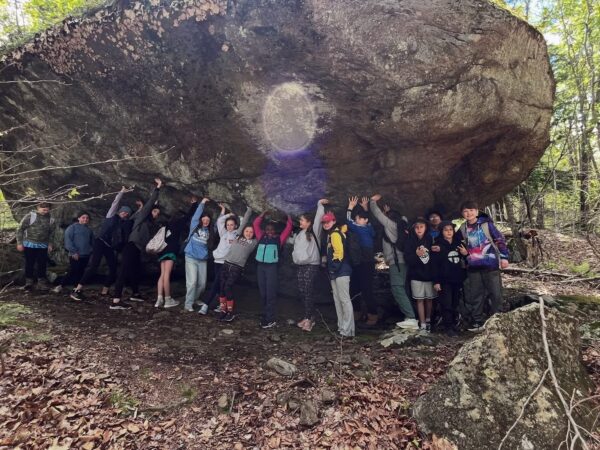
Students from Cornwall Consolidated School beneath one of GMF’s massive glacial erratic boulders. Geology is one of several subjects visiting students explore through GMF’s K-12 programming.
Great Mountain Forest Trustee Lisa Bowden, who previously served as principal of Salisbury Central School and superintendent of Region One School District, is currently assistant executive director at EdAdvance, an education support organization for Northwest Connecticut. She is thrilled about the educational opportunities that GMF affords.
“The great thing about this forest is that it’s not just a nature preservation organization but a working conservation site, so kids can see the kinds of things the forest produces for human use,” she said. “And if we’re going to keep producing those good things, we have to protect the flora and fauna that live there.”
Bowden has seen firsthand how direct exposure to the natural world deepens students’ understanding of concepts like stewardship and earth systems, which can be abstract to children, she explained.
“They have to go out and see it,” she said. “They have to see how much care goes into a managed forest.”
Getting out of the classroom
Botelle School’s field trip was not a one-off, but the beginning of a strengthening partnership between two Norfolk neighbors, according to Principal Valentino.
“We’ve utilized Great Mountain Forest as an educational resource in a variety of ways in the past.” she said, “but I’m really enthusiastic about a collaboration that builds a tradition of experiences for our students.”
She noted trips to GMF and other outdoor learning sites provide a broader sense of place and community to students who don’t spend much time outdoors at home.
Debbie Tallon, a seasoned first and second grade teacher with 26 years at the school, cherishes opportunities to take her students outside. She finds that during GMF field trips, the students engage with the landscape, but also more with each other.
“I noticed that some of the kids who are my quieter learners are outgoing on the trip” she observed. “They kind of just came out of their shell.”
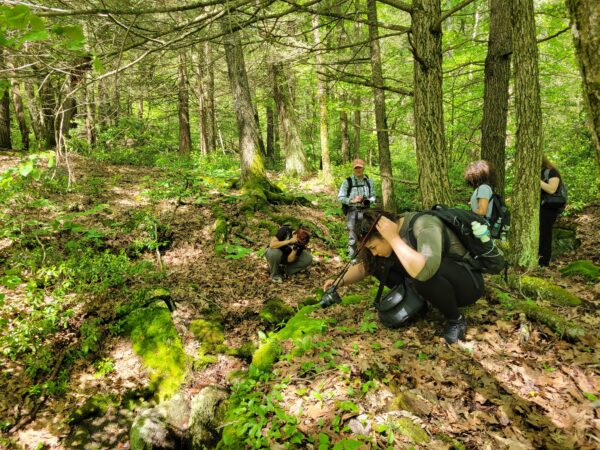
Elementary students are not the only beneficiaries of an education in GMF. On May 26, photography students from Torrington High School, Housatonic Valley Regional High School, and Northwest Regional High School for a masterclass in conservation photography from GMF’s celebrated Photographer-At-Large Tom Blagden, pictured center.
Kirsten Gray, a teacher at Cornwall Consolidated School who recently took first and second graders to GMF, connected storytelling to the ecosystem. Her students walked the Iron Trail while pausing to read chapters from a book about an oak tree’s role in a forest—just like the one around them.
“The setting encouraged curiosity, reflection, and connection in a way that felt meaningful and memorable,” she said
Teaching the Teachers
There can’t be forest education without forest educators, which is why GMF is hosting the inaugural “Teach the Teachers” retreat on August 14th through 16th.
The retreat is the brainchild of Audra Leach and Emily Picard, both former high school agricultural science teachers. Leach, the program administrator for the Northwest Conservation District, a state-mandated nonprofit that protects agriculture and natural resources, said the idea has been percolating between them for a decade. Picard currently serves as the U-Conn 4H Extension educator for Fairfield County, southwestern Connecticut’s chapter of the international youth development organization.
Co-hosted by the Northwest Conservation District, U-Conn 4H, and GMF, the weekend-long immersive conference will address what Leach and Picard have identified as a gap between educators and experts in outdoor education, whether it be safety, science, or just the logistics of getting a group of students into the field. “We just kept hearing the same thing,” Picard said— “We need resources in order to teach this.”
Leach explained that GMF’s status as a working forest gives it a compelling edge as a venue for experiential learning.
She said that the active forest use component gives GMF a “unique advantage” over other outdoor education centers in the region. It’s not only younger students, she explained, but also many adults who don’t understand the value of balancing forest conservation with sustainable use and management.
The upcoming retreat is intended for educators of all types to take away outdoor education skills and knowledge and an expanded forestry professional network back to their respective teaching spheres.
The retreat will feature a talk from acclaimed author and forester Ethan Tapper, which is free and open to the public, as well as a full weekend schedule of workshops and networking opportunities.
Register for the event here.
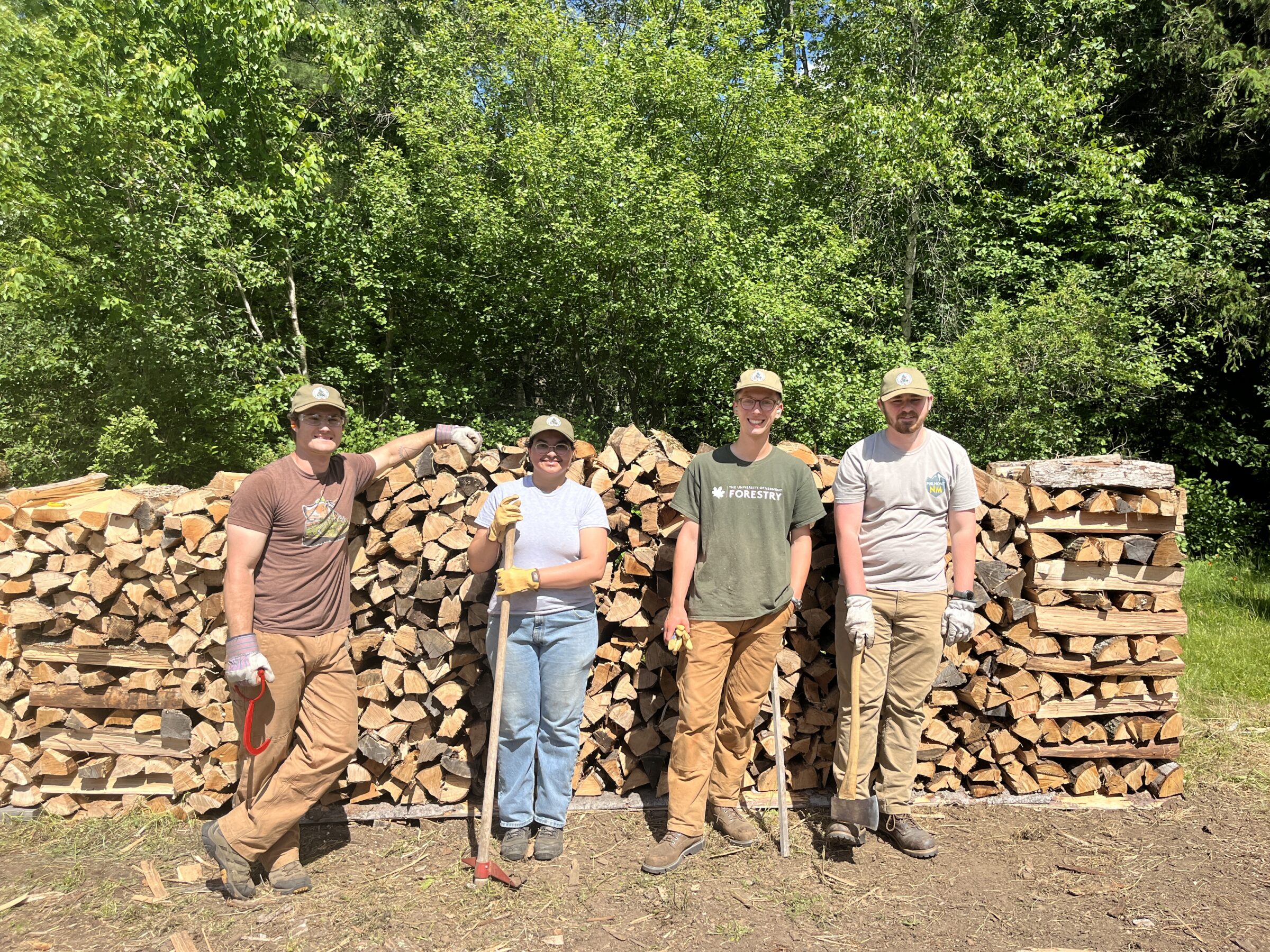
The Next Generation of Land Forest Stewards Take on Great Mountain Forest
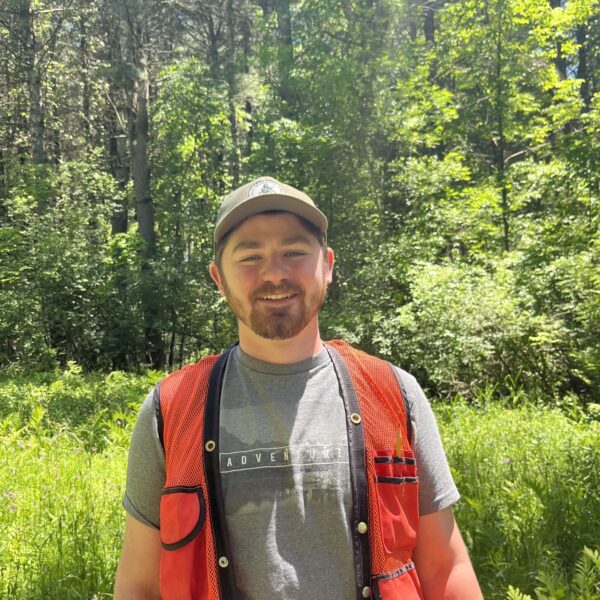
Photo courtesy of Kate Regan-Loomis.
Will Watkins, Forester’s Assistant
My name is Will Watkins. I recently graduated from North Carolina State University in Raleigh with a bachelor’s degree in Forest Management. If you recognize my bio at all, it’s because I was an intern here at GMF last summer, and I loved it so much that I wanted to return. This summer I am filling a position as a forester’s assistant, supervising and working with the interns on most of their projects while also getting to go out and complete some individual tasks. One of the reasons that I wanted to come back to GMF was because of how diverse and large the forest is. Even though I was here an entire summer, I only touched the surface of what I could experience at GMF. So, I wanted to come back and discover all I missed and continue some of the work I ran out of time to finish.
In only the first week of being back, we hit the ground running, setting up trail cameras around the forest to monitor wildlife. We have also begun to take inventory of and mark out an old stand of white pine for a thinning. We are thinning to give more space to the best trees in the stand so that they can add more growth around the stem and to allow more light to reach the forest floor. Methods to choose which trees to keep standing and which to take out involve looking at how the spacing of each tree impacts the trees around it as well as the growth form of the trees.
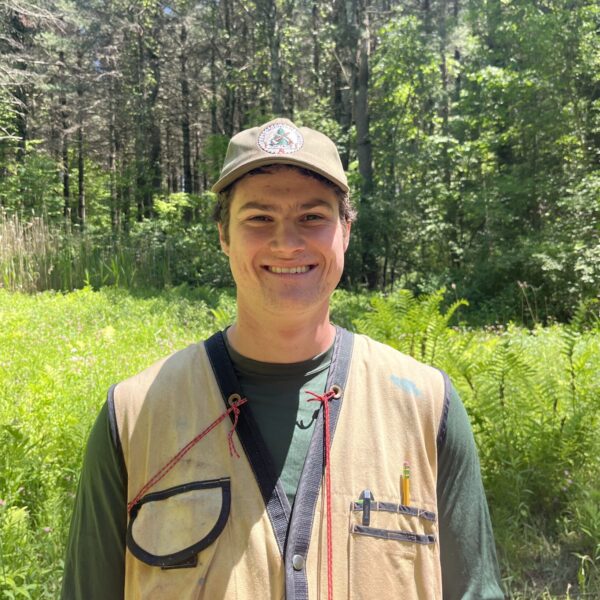
Photo courtesy of Kate Regan-Loomis.
Finn Harris, Intern
My name is Finn Harris, and I am a rising senior at the University of Tennessee Knoxville. There are many aspects of my life that have drawn me to pursue a life in natural resources, but simply put, I have been an avid outdoorsman my entire life and absolutely love being in natural spaces. I often catch myself daydreaming about playing in the woods or in a stream when I’m stuck indoors for too long, so I decided to make my career outdoors.
Throughout my hunt for a summer job, I had been monitoring available positions in New England, as I am eager to learn about a different region of the country and how forestry is done outside of the southeast. Luckily, I was able to land a position on the Great Mountain Forest summer crew!
GMF’s work on forest resilience, supporting biodiversity, protection of watershed resources, and commitment to education and research is important, impactful, and represents ideals that I value deeply. I was further drawn to this position because of GMF’s commitment to exposing interns to lots of different projects and learning opportunities. Considering my future goals are rooted in establishing productive forests to foster ecosystem services and functions, I truly believe my time at GMF will be very meaningful and memorable.
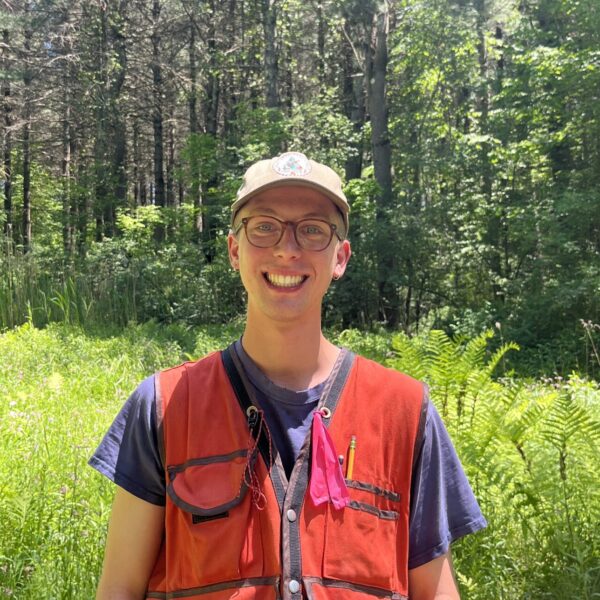
Photo courtesy of Kate Regan-Loomis.
Tim Ostap, Intern
My name is Tim Ostap and I am a rising senior at the University of Vermont pursuing dual B.S. degrees in Forestry and Wildlife and Fisheries Biology. Outside the classroom, I serve as president of the UVM Birding Club and as a board member of the local Audubon chapter.
What draws me most to forestry is the intersection of wildlife conservation and land stewardship, particularly the way active management can benefit both the land and the species that depend on it. Forests are incredibly complex systems, and I am continually fascinated by how a forester’s decisions cascade across an entire ecosystem, shaping far more than just species composition. I have already been surprised by the tree, wildlife, and bird diversity that Great Mountain Forest stewards, and I look forward to discovering more.
I am so grateful to be here this summer. I am excited to contribute to the large-scale inventory plots, participate in the wide array of ongoing research projects, and mark my first silvicultural treatment. GMF offers exactly the kind of hands-on experience that makes everything learned in the classroom feel tangible, and I cannot wait to see what the rest of the summer has in store.
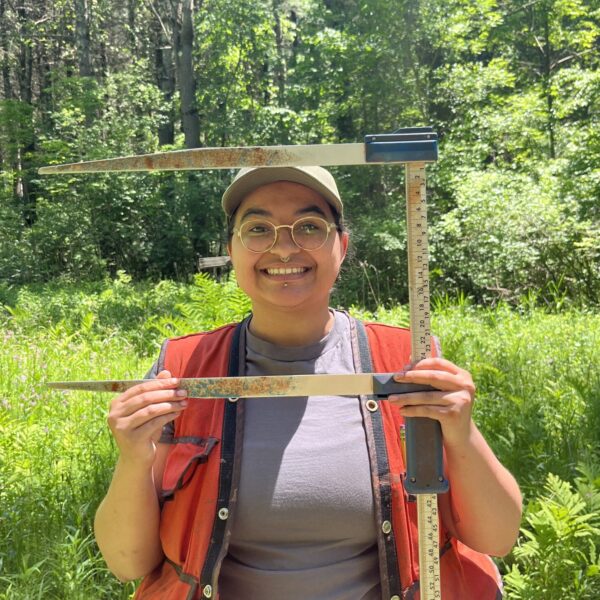
Photo courtesy of Kate Regan-Loomis.
Serenity Zullo, Intern
My name is Serenity Zullo and I’m a student at Paul Smith’s College majoring in ecological forest management with a botany minor. I was born and raised in New York City, specifically the Bronx. I currently reside in western New York near Buffalo and Rochester but
visit the Hudson Valley region often. I always had a love for nature but didn’t grow up knowing about forestry. It wasn’t until I did a landscaping internship at the Woodlawn Cemetery in the Bronx that really solidified my love for the outdoors. My love for nature increased when I decided to go to Paul Smith’s College in the Adirondacks.
I’m currently finding a lot of interest in understory plant identification and management. I’d love to be able to understand a forest through what grows below it. I’m also interested in forest management with a wildlife thought process. I’ve picked up bird watching not too long ago and continued to wonder how forestry might impact specific birds.
I’m very excited to build upon my forestry knowledge and skills with Great Mountain Forest. I’m looking forward to tackling different projects including forest inventory, setting up trail cameras, and more! I’m also looking forward to increasing my knowledge of understory plants in the Great Mountain Forest. I’m thrilled to be working with GMF this summer.