
PREVIOUS WEATHER REPORTS
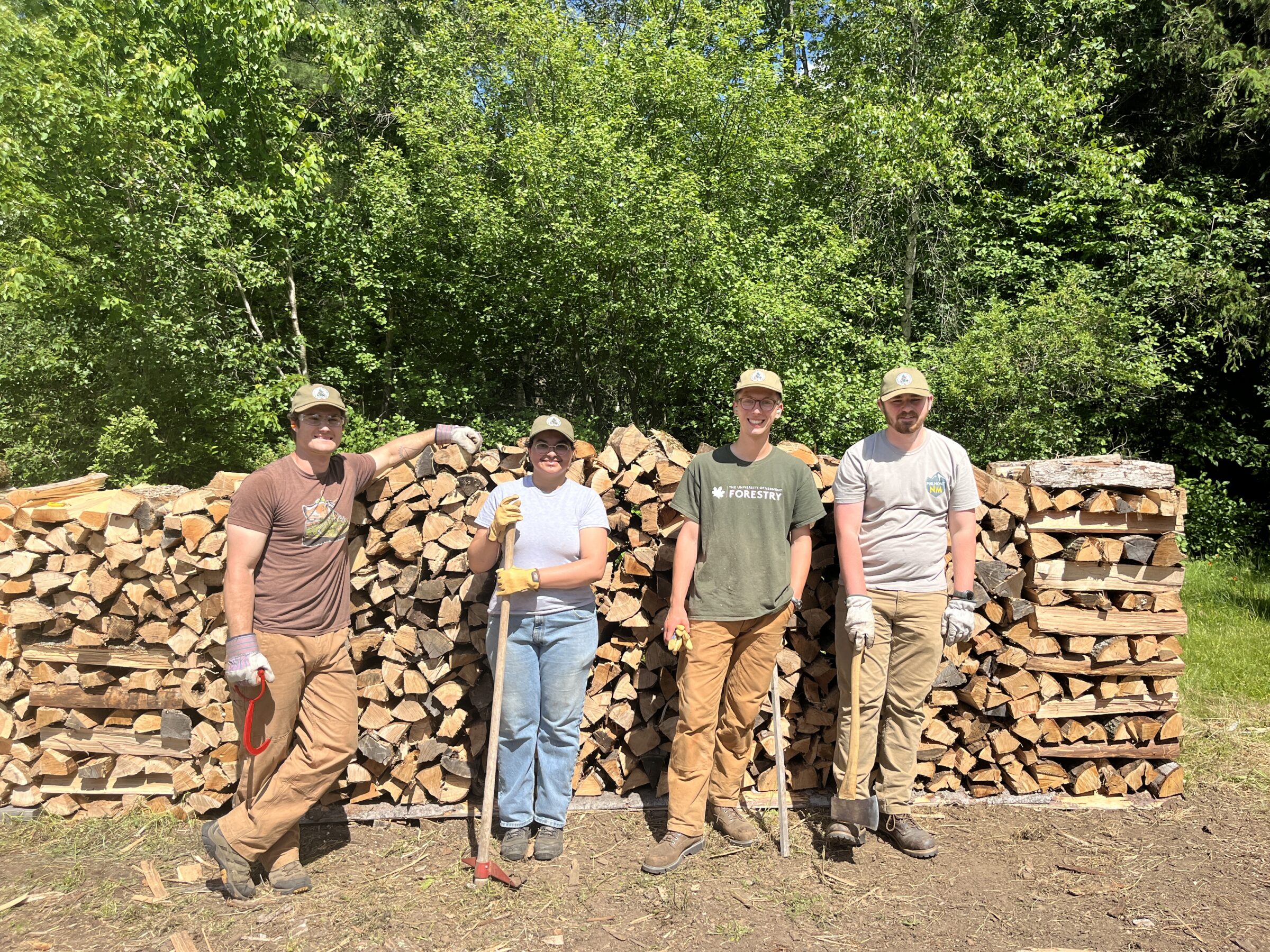
The Next Generation of Land Forest Stewards Take on Great Mountain Forest
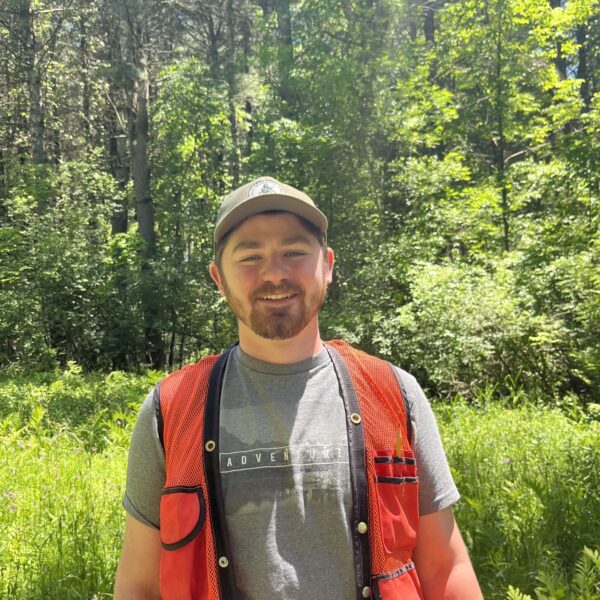
Photo courtesy of Kate Regan-Loomis.
Will Watkins, Forester’s Assistant
My name is Will Watkins. I recently graduated from North Carolina State University in Raleigh with a bachelor’s degree in Forest Management. If you recognize my bio at all, it’s because I was an intern here at GMF last summer, and I loved it so much that I wanted to return. This summer I am filling a position as a forester’s assistant, supervising and working with the interns on most of their projects while also getting to go out and complete some individual tasks. One of the reasons that I wanted to come back to GMF was because of how diverse and large the forest is. Even though I was here an entire summer, I only touched the surface of what I could experience at GMF. So, I wanted to come back and discover all I missed and continue some of the work I ran out of time to finish.
In only the first week of being back, we hit the ground running, setting up trail cameras around the forest to monitor wildlife. We have also begun to take inventory of and mark out an old stand of white pine for a thinning. We are thinning to give more space to the best trees in the stand so that they can add more growth around the stem and to allow more light to reach the forest floor. Methods to choose which trees to keep standing and which to take out involve looking at how the spacing of each tree impacts the trees around it as well as the growth form of the trees.
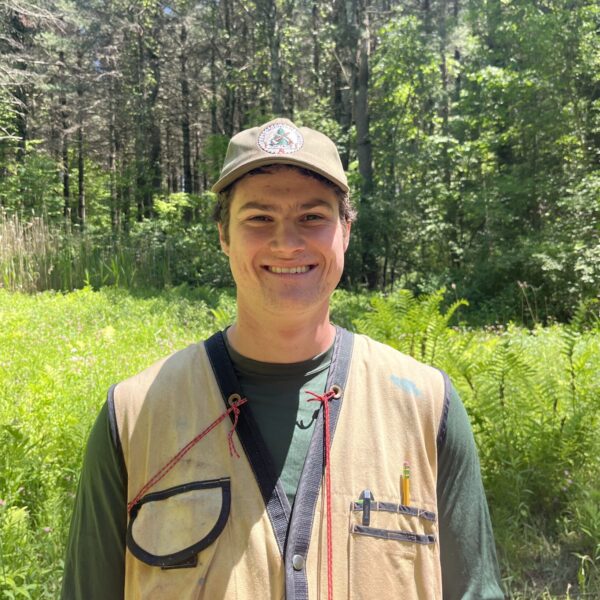
Photo courtesy of Kate Regan-Loomis.
Finn Harris, Intern
My name is Finn Harris, and I am a rising senior at the University of Tennessee Knoxville. There are many aspects of my life that have drawn me to pursue a life in natural resources, but simply put, I have been an avid outdoorsman my entire life and absolutely love being in natural spaces. I often catch myself daydreaming about playing in the woods or in a stream when I’m stuck indoors for too long, so I decided to make my career outdoors.
Throughout my hunt for a summer job, I had been monitoring available positions in New England, as I am eager to learn about a different region of the country and how forestry is done outside of the southeast. Luckily, I was able to land a position on the Great Mountain Forest summer crew!
GMF’s work on forest resilience, supporting biodiversity, protection of watershed resources, and commitment to education and research is important, impactful, and represents ideals that I value deeply. I was further drawn to this position because of GMF’s commitment to exposing interns to lots of different projects and learning opportunities. Considering my future goals are rooted in establishing productive forests to foster ecosystem services and functions, I truly believe my time at GMF will be very meaningful and memorable.
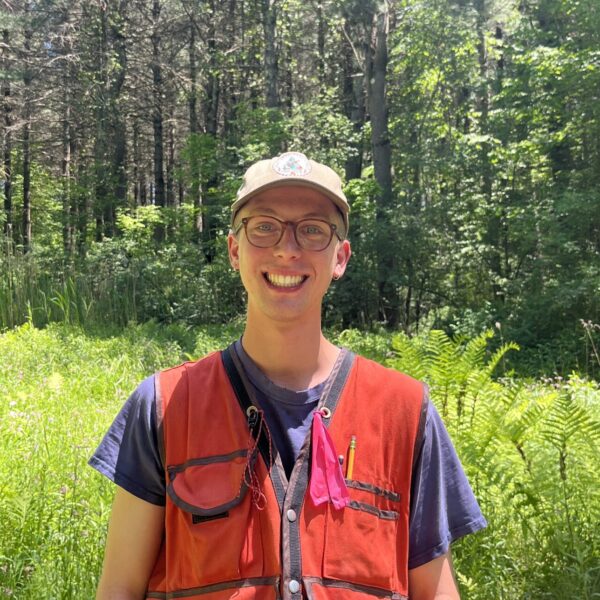
Photo courtesy of Kate Regan-Loomis.
Tim Ostap, Intern
My name is Tim Ostap and I am a rising senior at the University of Vermont pursuing dual B.S. degrees in Forestry and Wildlife and Fisheries Biology. Outside the classroom, I serve as president of the UVM Birding Club and as a board member of the local Audubon chapter.
What draws me most to forestry is the intersection of wildlife conservation and land stewardship, particularly the way active management can benefit both the land and the species that depend on it. Forests are incredibly complex systems, and I am continually fascinated by how a forester’s decisions cascade across an entire ecosystem, shaping far more than just species composition. I have already been surprised by the tree, wildlife, and bird diversity that Great Mountain Forest stewards, and I look forward to discovering more.
I am so grateful to be here this summer. I am excited to contribute to the large-scale inventory plots, participate in the wide array of ongoing research projects, and mark my first silvicultural treatment. GMF offers exactly the kind of hands-on experience that makes everything learned in the classroom feel tangible, and I cannot wait to see what the rest of the summer has in store.
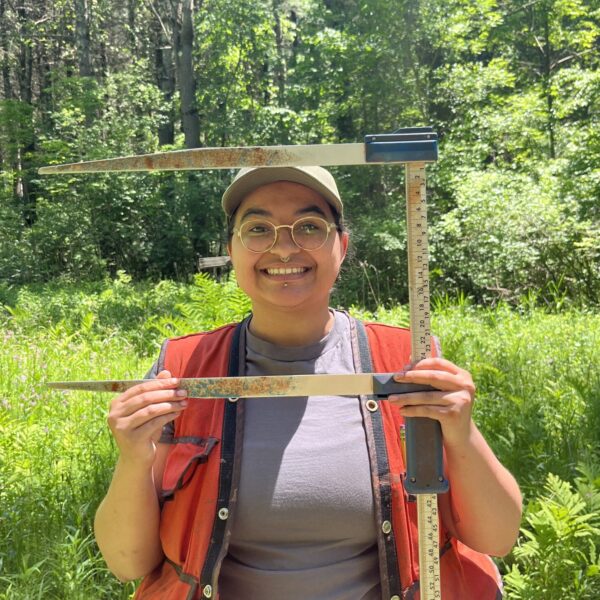
Photo courtesy of Kate Regan-Loomis.
Serenity Zullo, Intern
My name is Serenity Zullo and I’m a student at Paul Smith’s College majoring in ecological forest management with a botany minor. I was born and raised in New York City, specifically the Bronx. I currently reside in western New York near Buffalo and Rochester but
visit the Hudson Valley region often. I always had a love for nature but didn’t grow up knowing about forestry. It wasn’t until I did a landscaping internship at the Woodlawn Cemetery in the Bronx that really solidified my love for the outdoors. My love for nature increased when I decided to go to Paul Smith’s College in the Adirondacks.
I’m currently finding a lot of interest in understory plant identification and management. I’d love to be able to understand a forest through what grows below it. I’m also interested in forest management with a wildlife thought process. I’ve picked up bird watching not too long ago and continued to wonder how forestry might impact specific birds.
I’m very excited to build upon my forestry knowledge and skills with Great Mountain Forest. I’m looking forward to tackling different projects including forest inventory, setting up trail cameras, and more! I’m also looking forward to increasing my knowledge of understory plants in the Great Mountain Forest. I’m thrilled to be working with GMF this summer.
The Understudied Understory: Spring Ephemerals and the Changing Forest
A walk in the woods in April can feel confusing. The twiggy canopy and leaf-brown forest floor look like November, while the bright sun seems to indicate summer has arrived.
During this brief window between snowmelt and foliage—while the bears are still groggy, the birds are returning from southern sojourns and the deciduous trees are still bare—the spring ephemerals make their appearance. Great Mountain Forest abounds with these woodland blooms, beloved by foresters, hikers and pollinators alike.
For all their familiar beauty, there’s much to be learned about how these species are responding to the various anthropogenic stressors impacting New England’s forests today.
“Herbs are so understudied as a whole,” said Dr. Marlyse Duguid, a forest ecologist with the Yale School of the Environment. “We’re just a very tree-centric field.”
The understory, she explained, “is where most of our vascular plant diversity is.” If you’re only looking at trees, or the “charismatic megaflora” as she called them, “you’re ignoring the vast majority of different species.”
What are spring ephemerals?
The term “spring ephemeral” is a quasi-scientific label given to herbs—a term botanists use to describe small, non-woody flora—that take advantage of the early-season sunlight that reaches the forest floor. “True” ephemerals are perennial flowers that complete their entire yearly cycle of blooming and dispersing seeds in the period before leaf out, usually a span of several weeks. Some species may only be in flower for a few days, while others (not so “true” ephemerals) may last past leaf out.
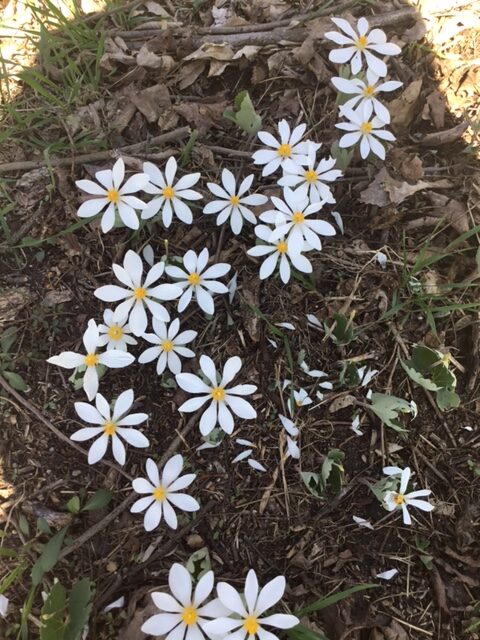
Bloodroot in blossom. Photo by Jody Bronson.
Bloodroot (Sanguinaria canadensis) is one ephemeral that lives up to the label. The plant sometimes loses its petals less than three days after flowering in heavy rain, explained Deb Munson, an expert horticulturalist and neighbor of GMF’s West Gate on Canaan Mountain Road.
“But they’re incredibly beautiful and they have a very thick tuberous root that if you break it in half, it bleeds a reddish substance,” Munson said, noting that the substance is used by Indigenous tribes as a skin paint and dye for baskets.
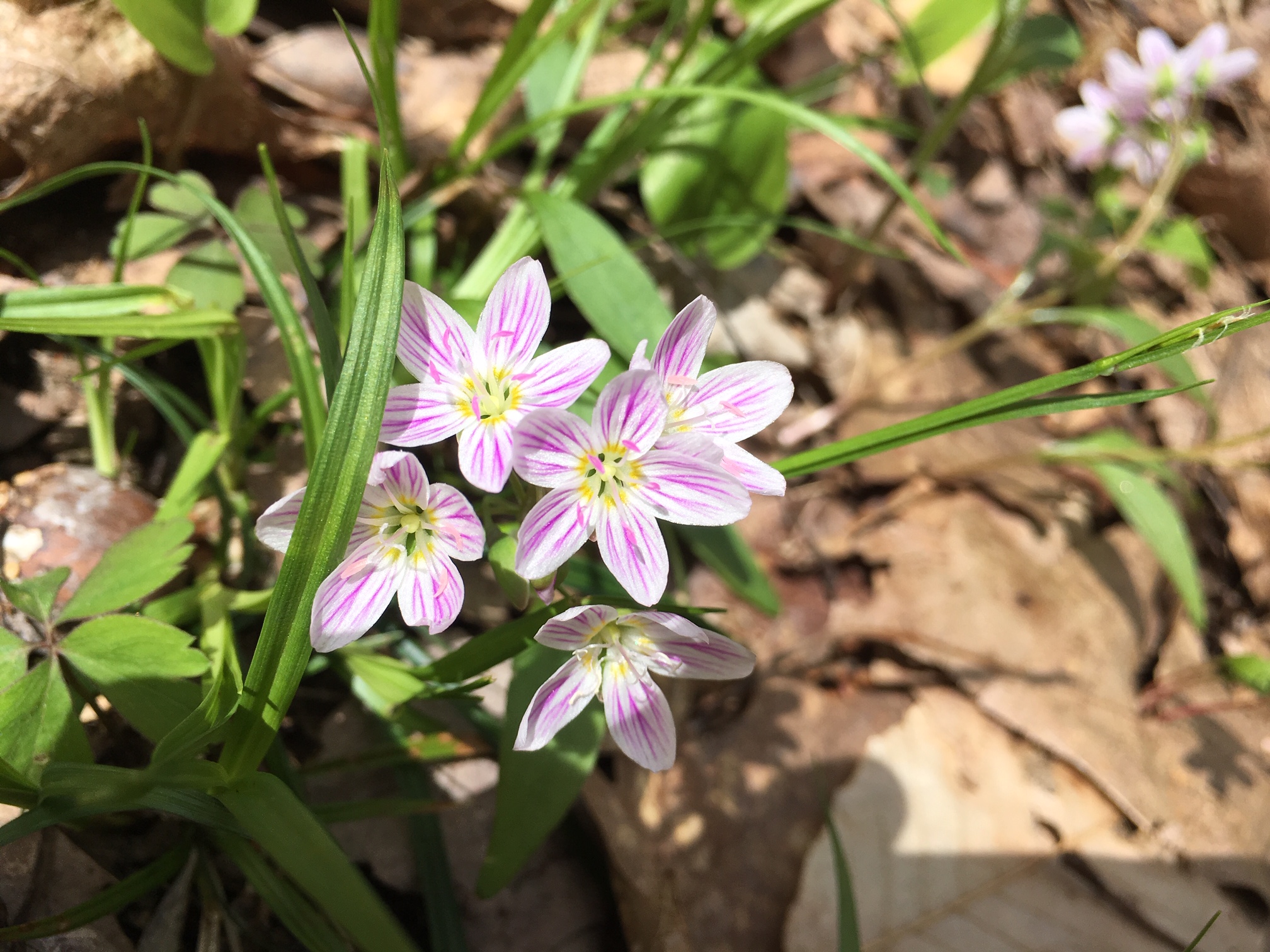
Some of her other favorites to watch out for in the April woods are Dutchman’s breeches (Dicentra cucullaria), the flowers of which “look like little Dutch pantaloons,” and spring beauty (Claytonia), which have white to pale pink petals streaked with vibrant pink.
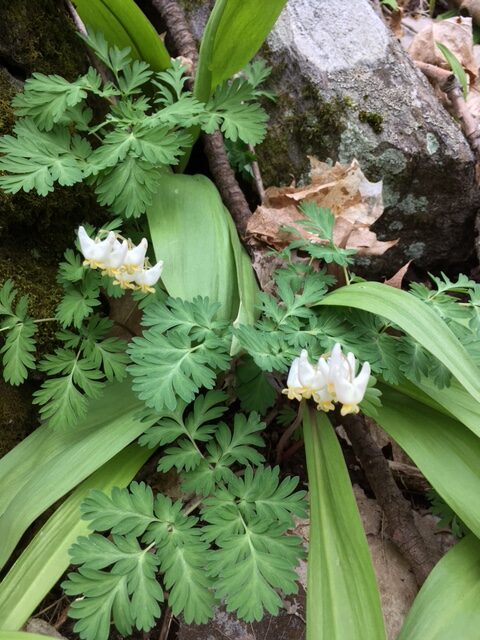
The idiosyncratic namesake blossoms of Dutchman’s breeches. Photo by Jody Bronson.
Munson advised gardeners who wish to grow spring ephemerals to do so with a gentle touch—they like to be left wild. She also warned to never dig them out from the forest, but rather patronize a local garden center. Taking them from their natural environment is harmful to both the plants themselves and the broader ecosystem, she explained.
GMF Forester Emeritus Jody Bronson is also an ephemeral enthusiast, explaining that he fell in love with them the same way an early season pollinator might: “When anything shows up as a flower, especially when everything else is brown and gray and the green is not out yet, you’re going to be drawn to it—who wouldn’t be drawn to it?”
Bronson said that even after decades of logging blooms in Great Mountain Forest, the tiny, transient wildflowers can still surprise.
“A few years ago I was just doing one of my walkabouts, which I love to do,” Bronson recalled, when he stumbled upon a colony of rare yellow morph red trillium (Trillium erectum, also known as wake robin or red trillium). “I’m like, ‘what the hell am I looking at,’” he said. “It’s something you don’t see at all.”
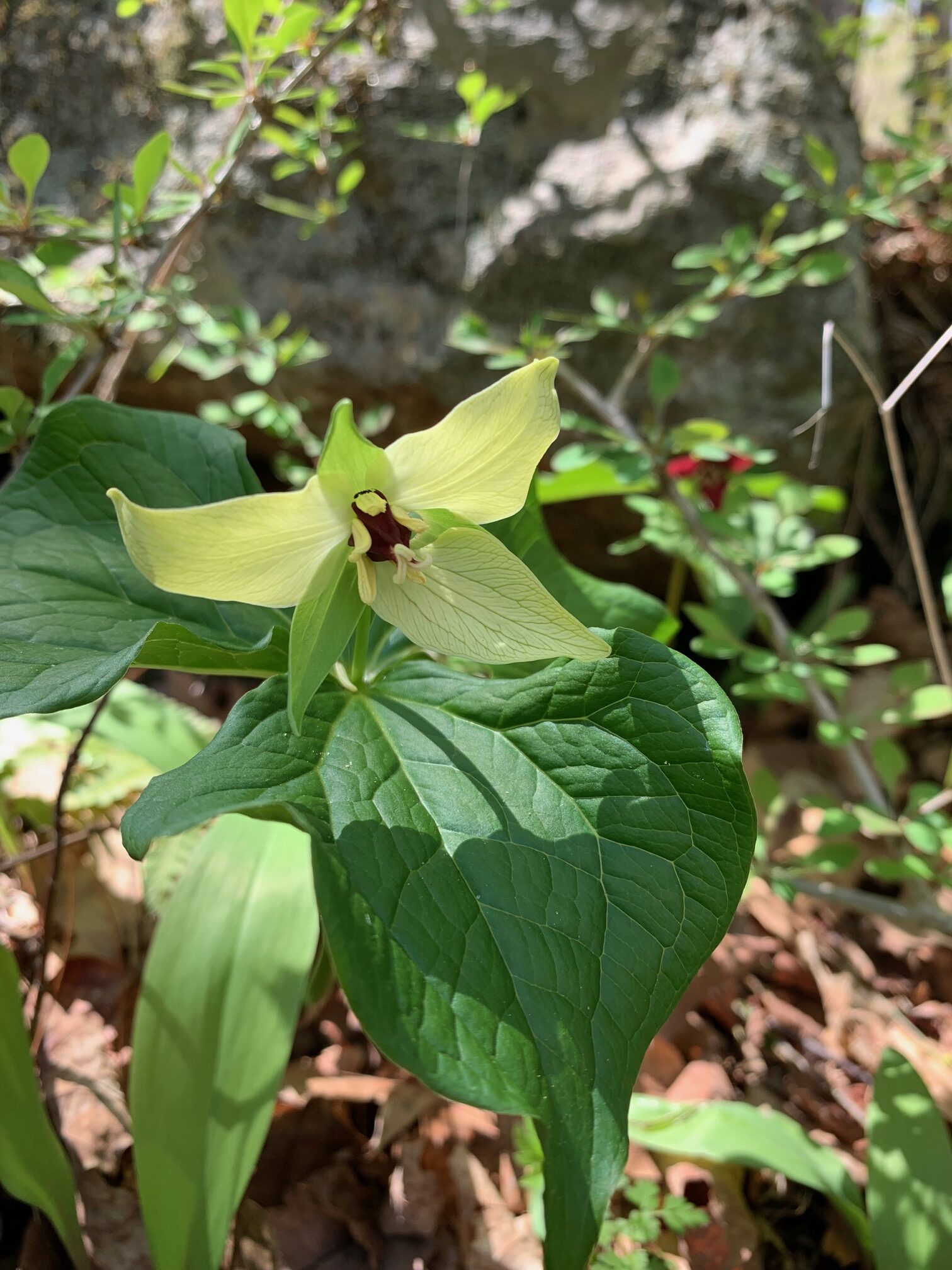
A rare yellow morph of red trillium, found by GMF Forester Emeritus Jody Bronson. Photo by Jody Bronson
A meal for the early risers
While spring ephemerals make up only a small percentage of understory plants, they play a vital ecological role as the first species to green and flower each spring. Part of that role is serving breakfast for hungry over-winterers.
“They’re actually really important to a lot of organisms because they might be some of the first food sources they have,” explained Dr. Sara Kuebbing, a Yale School of the Environment ecologist and recent speaker for GMF’s Winter Lecture Series. Ants, rodents, pollinating insects, deer and more all take advantage of the early nutrition.
Ephemerals also act as nutrient stores for the ecosystem to access later in the year. Forest ecologist Dr. Martin Dovciak, a professor at the State University of New York’s College of Environmental Science and Forestry, explained that since they are active before other plants, they uptake and store some of the nutrients generated by microbial decomposition that may have otherwise been lost to snowmelt or rainfall runoff. “They prevent nutrients from leaving the system,” he explained.
Dovciak also pointed to a unique adaptation of skunk cabbage, the earliest wildflower to bloom in New England forests. “It has the ability to create its own heat through thermogenesis,” he explained, “and it can actually melt out through the snow.”
In doing so, it creates a more temperate microclimate and shelter—a warming hut for insects, of sorts. “And in the process they pollinate the plant, right?” said Dovciak.
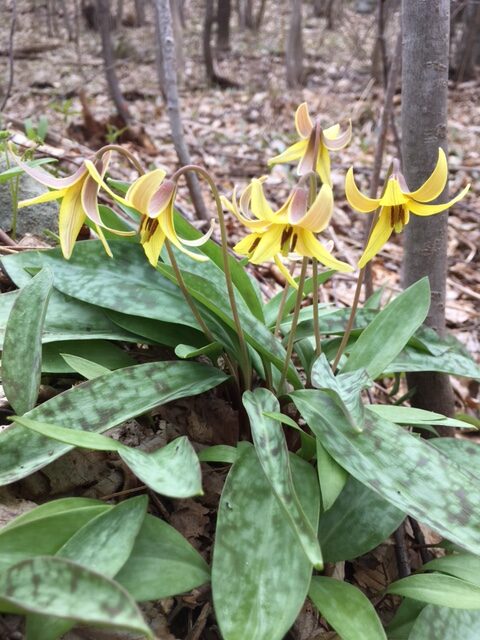
Trout lilies are a favorite of GMF Forester Emeritus Jody Bronson. Photo by Jody Bronson.
Climate change, invasives, and deer – oh my!
But what happens if there isn’t any snow to melt?
Dovciak said that’s a question researchers are starting to ask about the complex implications of shorter, warmer, and less reliably snowy winters on early blooming plants and their interaction with the broader ecosystem.
“What are these plants going to do when they are robbed of that opportunity to create this unique microclimate that they depend on to attract those insects to pollinate them?” he said.
The effects of a changing climate, and the constellation of weather impacts it will bring, are complicated and multifaceted, Dovciak explained. For instance, with no snow cover, skunk cabbage also face early season over browsing by herbivores. “They can really just be mowed by the deer because they are some of the first kind of juicy, substantial material that shows up above the ground so early,” he said.
This uncertainty belongs to the field of phenology, which explores the annual seasonality of plants and animals in relation to climate. Dr. Kuebbing has been researching differential responses between understory wildflowers and trees to earlier spring seasons. She said evidence has indicated that trees are responding to the changing seasonal pattern more quickly than the ephemerals, meaning that leaf out is happening earlier, while wildflowers might not be making up the time on the other end of their flowering window. This amounts to a shorter above ground life cycle, which can put stress on the plants and deplete them over time.
There’s also the threat of mistimed flowering with ants waking up, which are responsible for the seed dispersal of many wildflower species. “There are lots of important questions about whether those interactions are disrupted because of warming,” Kuebbing said.
Invasive plants also may have the adaptive upper hand with a warming climate. Ephemerals are conservative in leafing out, Kuebbing explained—an energy storing tactic to account for New England’s once-common late season frosts. Many invasive species don’t have that same safety mechanism, and “they’re really capitalizing on the warming weather.”
They also capitalize on not being tasty to plant browsers. “The reason why they’re invasive is that deer don’t like to eat them,” said Dr. Jeffrey Ward, who was chief scientist at the Connecticut Agricultural Experiment Station from 2005-2022 and is a current GMF board member.
Spring ephemerals, on the other hand, are very appealing to a deer that has spent the winter digging for twigs under the snow.
Ward sees deer over browsing—and invasive plants, which he explained are a symptom of deer overpopulation—as the most immediate danger to understory plant populations in the Northeast. “Climate change, that’s going to happen over the scale of decades,” he said, but right now, we have a “real-time problem.”
To fence, or to hunt?
So what to do about deer? Many advocate for hunting, including Dovciak. “It’s great food actually—venison is really yummy.”
“I think we need to get more young people and women involved in hunting,” Deb Munson offered, noting that deer fencing, another method people use to protect plants, is prohibitively expensive. “Plus, it interferes with wildlife corridors,” she added.
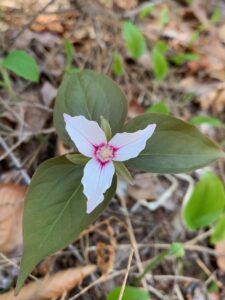
Painted trillium (Trillium undulatum), an increasingly rare feature of Connecticut’s April forest floor. Photo by Jody Bronson.
Ward noted that while forests that allow hunting demonstrate noticeably greater wildflower and shrub populations, deer hunting is ultimately a policy issue. “Because you can’t sell [hunted deer meat], there’s really not an incentive to go out there and shoot even more deer,” he said.
Ward advocated for a type of fencing that uses slash from a forestry operation which has yielded encouraging results. “It was just unbelievable on the inside, just this explosion of plant diversity,” he recalled of one slash wall enclosure.
Dr. Duguid has been similarly impressed by slash wall projects she’s worked on—“I cannot believe the difference inside and out,” she said.
But, as Dovciak pointed out, “you can’t fence everything.”
Duguid agrees. She sees selective enclosing as a temporary solution to protect biodiversity as scientists address the bigger problem. “The deer are just out of control,” she said, “it’s definitely the biggest risk.”
Making Space: Encouraging Bat Habitat at Great Mountain Forest
Often maligned and feared, bats are actually helpful to humans and serve important ecological functions. Insect-eating bats make summer life more tolerable for people by consuming mosquitoes, black flies, and other nuisance insects and agricultural pests. Fruit-eating bats assist in the agricultural process by dispersing seeds, while other bats pollinate plants. Even without these ecological services, bats need support as the threat of disease and habitat loss caused by forest conversion grows.
In the past few decades, bat populations in the eastern United States have been devastated by an invasive fungus, Pseudogymnoascus destructans. Commonly known as white-nose syndrome for the distinctive white growth it leaves on their muzzles, this disease infects bats during hibernation, damaging their wings and disrupting critical physiological functions. Since its discovery in New York in 2006, populations of little brown bats, northern long-eared bats, and tri-colored bats have declined by more than 90%.
To support bat population growth and resiliency, Great Mountain Forest is working with the Natural Resources Conservation Service (NRCS)—an agency of the United States Department of Agriculture—to help create and promote bat habitat on the property.
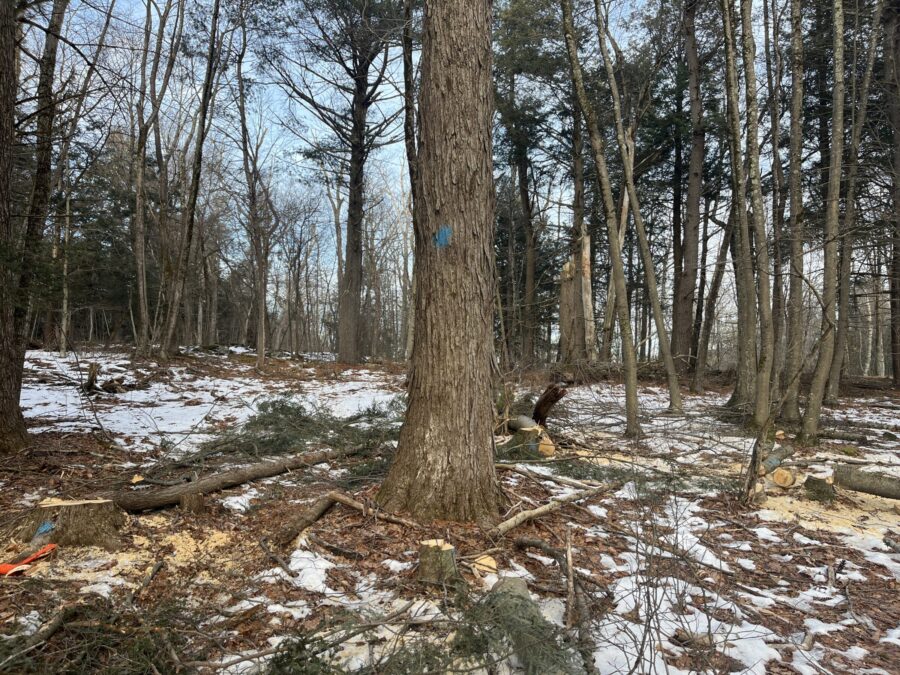
During the summer, bats rely on roost trees, to raise their young, or “pups.” Ideal roost trees are characterized as large and having peeling or shaggy bark; however, bats also use standing dead trees with cavities to shelter their pups. In the fall, GMF staff began collaborating with NRCS staff and biologists to identify prime roost trees along GMF’s Iron Trail, marking them with blue dots.
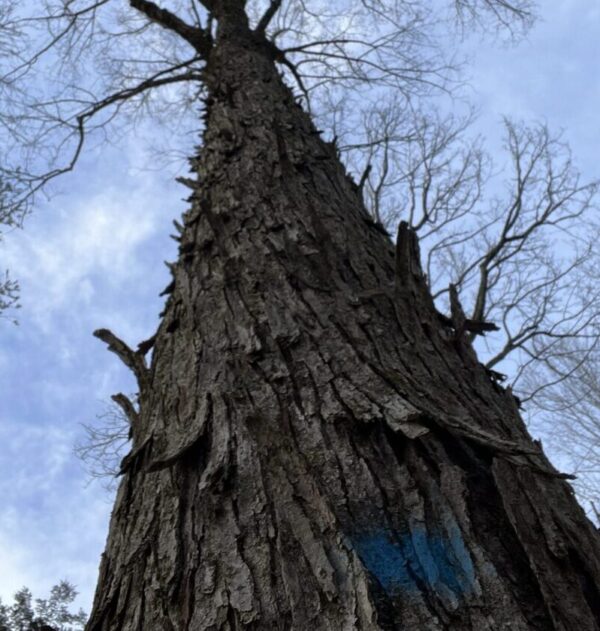
With its shaggy bark, this ideal roosting tree has been identified according to NRCS guidance and GMF preliminary research. Photo by Kate Regan-Loomis.
This winter, to support these roost trees and prevent disruption to the bats’ roosting cycle, trees within a 15-foot radius of the marked trees were removed. By reducing competition from surrounding trees, the selected roost trees have more room to grow their canopies and access light and nutrients. This allows them to increase in size, develop more exfoliating bark, and remain healthy for longer.
Clearing smaller surrounding trees also allows more sunlight to warm the tree trunks, creating more comfortable roosting conditions for bats. Additionally, this work increases structural diversity in an otherwise relatively homogeneous forest, thereby developing more foraging opportunities for bats.
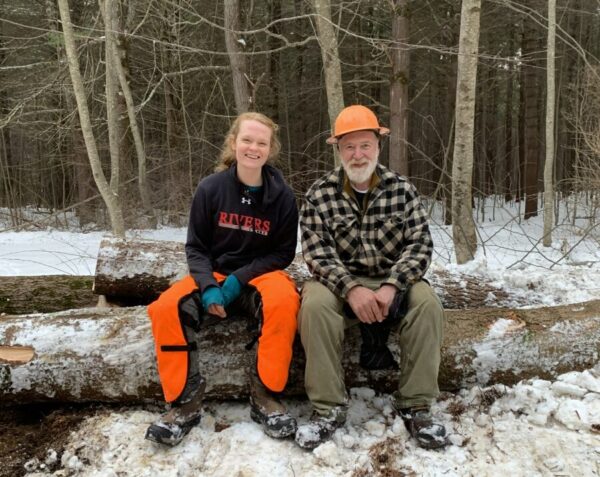
From left to right: Foresters Kate Regan-Loomis and Jody Bronson managing the forest and improving bat habitat. Photo by Kate Regan-Loomis.
The larger trees removed during this process are put to good use by GMF staff. Higher-quality logs are milled and used in current projects and future structures, while lower-quality wood is used for firewood to heat buildings and boil maple sap. Smaller trees and limbs are left in the forest, where they provide temporary shelter for wildlife and return nutrients to the soil as they decompose.
So while certain areas of GMF might look a little less tidy than usual, that apparent mess is creating more habitat for an endangered group of species, improving the health of large, old trees, and supporting the use of local wood by an organization dedicated to forest stewardship.
What Happens When We Lose the American Beech?
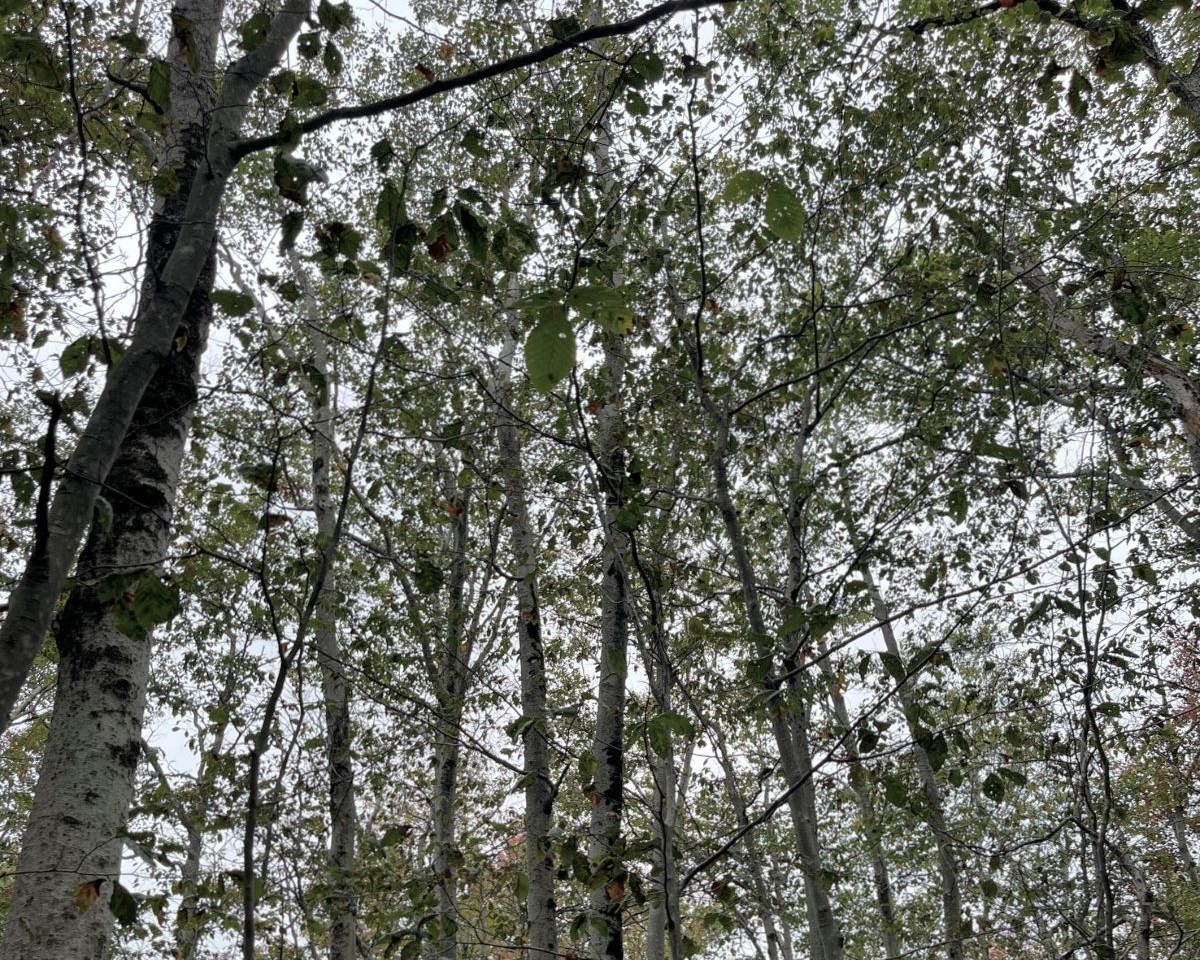
Less than a decade ago, beech leaf disease was unknown to New England’s expansive beech canopies.
But now? “In Connecticut, every single beech tree has beech leaf disease,” said Elisabeth Ward, a forest ecologist with the Connecticut Agricultural Experiment Station (CAES).
Ward is one of several researchers working on a long-term study in Great Mountain Forest – and across Connecticut – to gather data on this rapidly spreading pestilence in order to forecast what might happen to New England’s woodlands if – or rather when – the beeches are gone.
“This project isn’t about preserving existing beech,” said GMF Forester Kate Regan-Loomis, who helps coordinate and support research projects in the forest. “The question is how is the forest going to respond to beech leaf disease?”
“What is going to come back when the beech are gone? And how does our management affect that?”
Beech leaf disease, often referred to as BLD, was first detected in Ohio in 2012 and jumped to Connecticut in 2019. Caused by an invasive nematode – a microscopic worm – the disease infects the leaves, causing a noticeable “banding” effect, then crinkling the leaves as the disease progresses, ultimately defoliating the tree. Without leaves, the trees cannot photosynthesize, which means they cannot grow and will eventually die.
Ward, who coordinates Connecticut’s forest health program, a joint effort between the Agricultural Experiment Station and the Department of Energy and Environmental Protection, said that BLD is an invasive disease that stands out even in New England’s increasingly-diseased woodlands.
“The northeastern U.S. has a long history with lots of different introductions of forest pest pathogens and diseases from around the world… but an invasive foliar nematode is not something we’ve seen before,” she explained. “Foliar” means that the pest targets the leaf.
“It’s just not something that’s ever been dealt with in terms of a forest health issue.”
This fact, along with the unprecedented speed with which the disease spreads, means that “scientific research hasn’t really been able to keep up with what to do,” Ward said.
Ward’s own work on BLD seeks to fill the gap formed between the disease’s swift takeover of northeastern forests and the relative lag of peer-reviewed scientific research. She is part of a collaborative, multi-discipline study using eight sets of large forest plots across Connecticut, including some nearly 70 year-old plots within GMF, to examine how beech trees of various age, size, and other variables are responding to the disease.
“We’re calling it a rapid assessment,” she explained, noting that the goal is to survey a large sample size “to get some really robust, good initial data about beech leaf disease and its impacts.”
Her work continues that of Jeffrey Ward (no relation), former chief scientist at CAES and GMF trustee, who began monitoring the GMF plots specifically for BLD when it landed in Connecticut. The project, which is ongoing, tracks 2,500 trees across the research sites, and so far, the scientists have found “pretty much complete stagnation of growth amongst all tree size classes,” she reported.
Interestingly, the researchers have not found a notable uptick in mortality in beech yet, but Ward warned that this isn’t cause to rejoice. Beech are clonal, meaning that in a stand, many stems are connected to the same root system. This enables healthier, larger trees to subsidize sicker ones for a time. When this reservoir runs out, though, possibly due to a co-stressor such as drought, “we’re going to see stand level die back,” Ward said.
While the situation is dire, Ward emphasized that much is still unknown. “We’re kind of limited by our lifetimes and what we see happening,” she said, noting that in Japan, where the nematode is suspected to have originated, beech have “completely co-evolved” with the nematode and live alongside it.
Regan-Loomis said that forest management can help play a role in giving the species a chance at survival: “Evolution is just luck… we can try to direct that in selecting management trees [to protect] that we hope have a good shot.”
Ward is working with GMF to explore another project that would test a potential treatment that could help preserve a sampling of healthier beech trees. Over the summer, she plans to test a phosphite bark spray at sites across the state including GMF. While not a landscape-scale solution – “I wouldn’t recommend spraying anything over the entire eastern United States” – it could save some trees, which is important, Ward explained:
“At least we’ll be doing something to preserve some beech genetic diversity across Connecticut rather than just waiting for them all to die.”
Other researchers are tackling BLD from other angles at GMF. Ecosystem ecologist Jonathan Gewirtzman, who just defended his PhD thesis at the Yale School of the Environment and is moving on to a post-doc at Stanford University, is part of the same collaborative, state-wide project that Ward is working on, but his focus is on what’s happening below the bark.
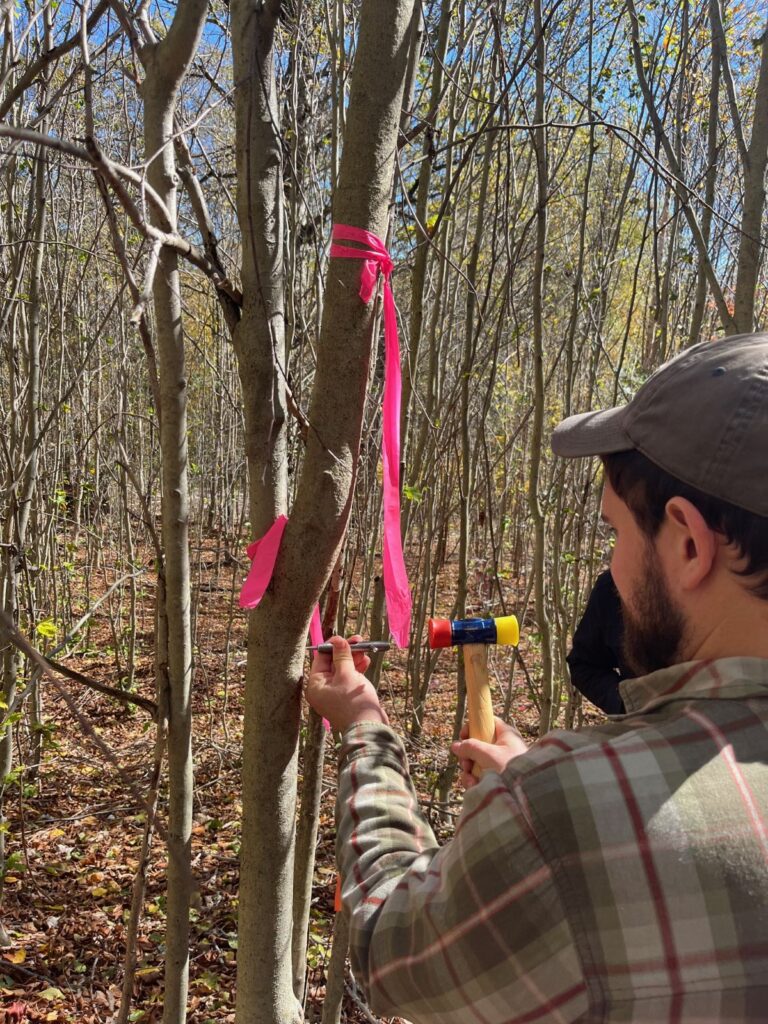
Researcher Jonathan Gewirtzman takes a core from a small beech to search for nutrient uptake. Photo by Kate Regan-Loomis
Gewirtzman studies non-structural carbohydrates – sugars and starches – in the outer part of infected beech trunks. In other words, he researches tree food. “Do these trees run out of sugar and die? Is that what’s going to lead to their mortality?”
He explained that his lab takes samples twice a year to get maximum and minimums, as trees build up stores throughout the leaf season to sustain them over the winter – “like a hibernating bear.” The research group expects results from the first batch of samples within the next several months.
Another upcoming project comes from Akshay Patel, a first-year Master’s student at the Yale School of the Environment. Patel is currently in the planning stages of a study on whether the disease can be accurately monitored using drone technology.
“In a lot of my research,” he said, “I’ve seen that a common pattern of diseases that run away from us is that we’re not able to keep a consistent and spatially explicit record of where they are.” He explained that more efficient tracking of the disease’s progress will aid forest managers and researchers in myriad ways as the scientific community deepens its understanding of this devastating pathogen.
Despite hints of progress, the story of New England’s beech trees is a sad one, and not just for humans, Regan-Loomis said. She noted that while the tree has often been regarded as a nuisance and of low-value among foresters, it provides vital nutrition for wildlife. “Beech nuts are important especially where there aren’t oak trees around,” she said. “It’s just a very useful, very fatty food for, like, everything, especially larger animals like deer and bear.”
“I always want to defend the beech,” emphasized Loomis.
Following the Forest GMF Style
Great Mountain Forest’s 6,300-acre expanse is, in a sense, one of Connecticut’s broadest highways. Save the rare maintenance vehicle or Sunday stroller, though, it is no conduit for humans, but rather the fast lane – or a rest stop – for the abundant flora and fauna of the New England woodlands.
That highway is not isolated to Norfolk and Falls Village. It is part of an ecological interstate that runs from the uplands of the lower Hudson Valley to the northern forests of Quebec. The Follow the Forest initiative, a collective effort between the Housatonic Valley Association, the Litchfield Hills Greenprint Collaborative, and many other regional groups, seeks to connect and protect this dark green thoroughfare, and GMF is a vital junction on a route that carries moose, bears, bobcats, salamanders, seed pods and beyond across an increasingly fragmented landscape.
The project recently received $30,000 in grant funding to further its mission, which combines citizen science, expert input, and regional partnerships to aid in wildlife mobility along a “corridor” that follows protected forests from the Hudson Highlands through the Berkshire and Taconic ranges before connecting with the Adirondack and Green Mountains and ultimately Canada.
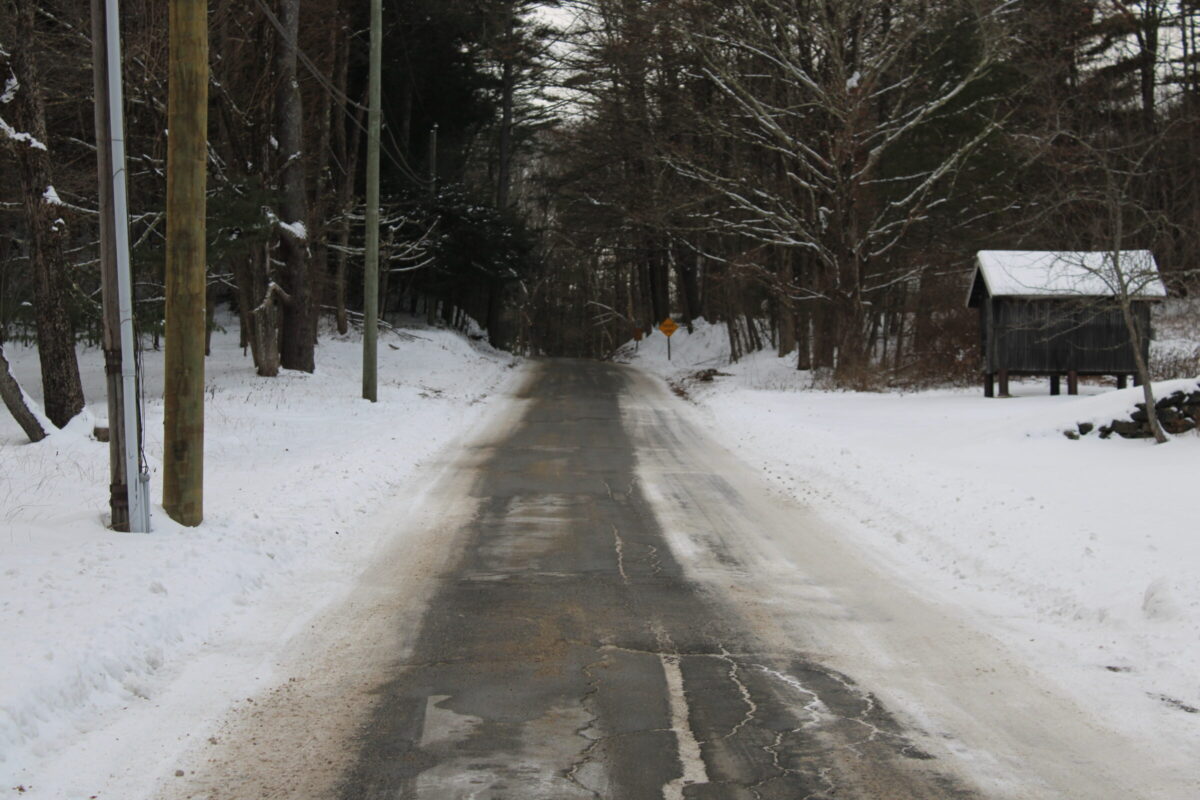
Windrow Road approaching the GMF Visitor Center in early December. Even quiet roads like this can pose an obstruction to wildlife mobility between large forest cores. Photo by Alec Linden.
“Connectivity” is the concept of keeping “core” habitats bridged through “linkages” – sites where animals are able to traverse an anthropogenic boundary from one core to another. Many animals depend on mobility for vital reasons, such as seeking food or water or mating and reproduction, but the isolation of habitats from one another impacts humans downstream as well. According to the World Wildlife Fund, habitat fragmentation stemming from development has impacts beyond local ecosystem collapse, including degrading soil health and polluting fresh water.
Large and connected refuges of wildland that enable animals and plants to move freely are considered havens of “resilience” amid increasing pressures from climate change and development, which is an ecosystem’s ability to survive and thrive amidst disturbance. The corridor that runs up the highland spine from southern New York state to Canada connects an extensive swath of North America’s eastern woods, regarded to be the largest stretch of intact temperate mixed and deciduous forest in the world, according to Follow the Forest.
GMF’s territory makes up what the Follow the Forest initiative identifies as “core forest habitat” – a tract of protected woodland, 250 acres or greater, that is not disrupted by human alterations like roads or farmland. In addition to GMF’s conserved lands, thousands more acres of protected state-owned highland forest spread across the Canaan Mountain massif. Far exceeding the size qualification, the extensive, contiguous, and diverse forest contained within and directly abutting GMF’s boundaries is part of a “key stronghold” of climate resilience, according to HVA Conservation Director Julia Rogers.
During a recent interview, Rogers addressed the value in GMF’s longstanding commitment to conserving forestland. “Without that legacy,” she said, “I would predict that there is a strong likelihood that parts of [the forest] would be developed and we would have a much smaller core forest.”
Big cores, she explained, are fundamental as they are able to withstand disruption and damage more so than smaller tracts of land. “Larger cores are going to be more resilient to all the impacts of climate change,” she said, including more extreme and unpredictable weather patterns, which may topple trees that have less protection.
Plus, GMF has elevation on its side: “As we think about species who are going to need to move either north or upward in elevation as a response to climate change, Great Mountain Forest is going to serve as a key climate refuge.”
“That connectivity with the protected lands further south and lower in elevation is so critical to Great Mountain Forest serving as a key part of the Follow the Forest initiative,” Rogers added.
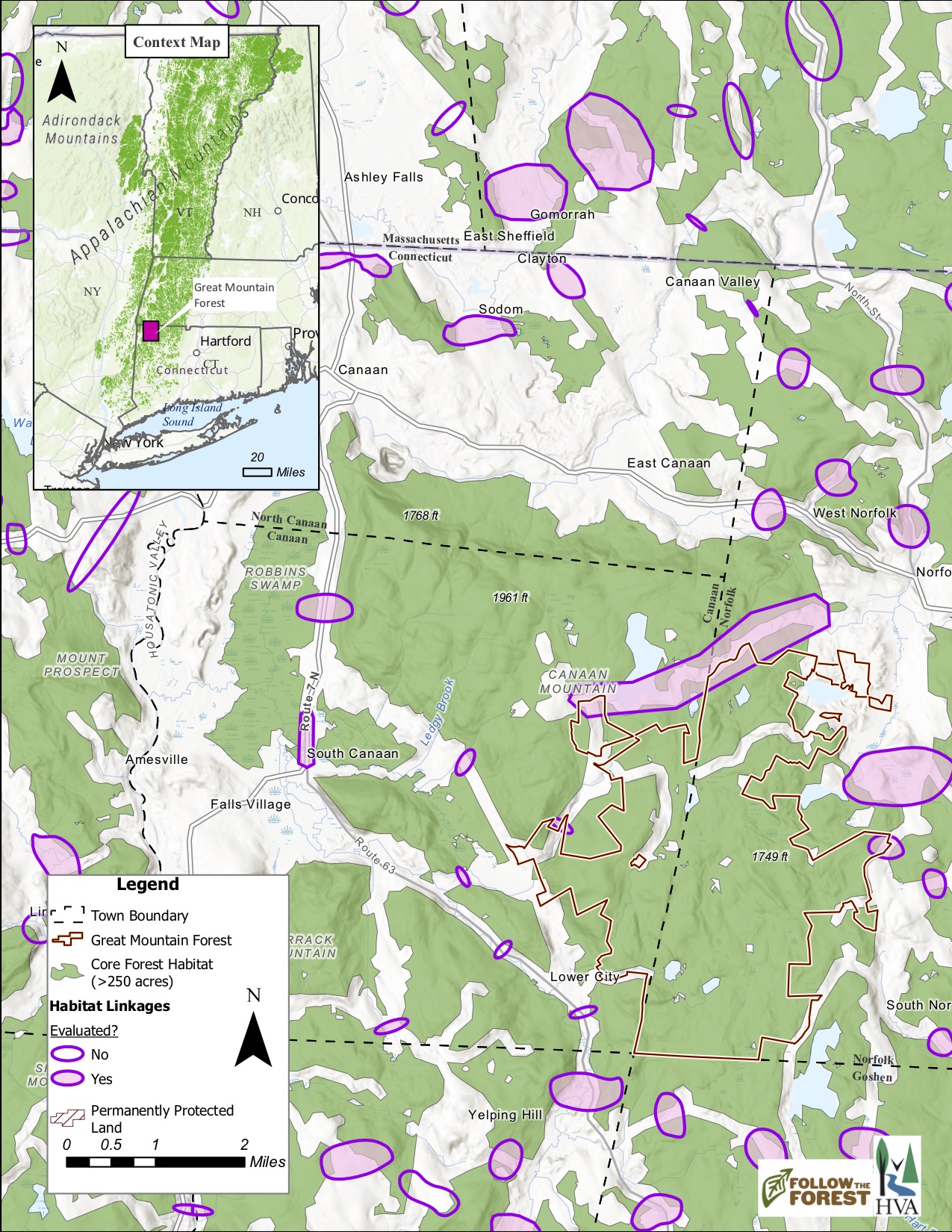
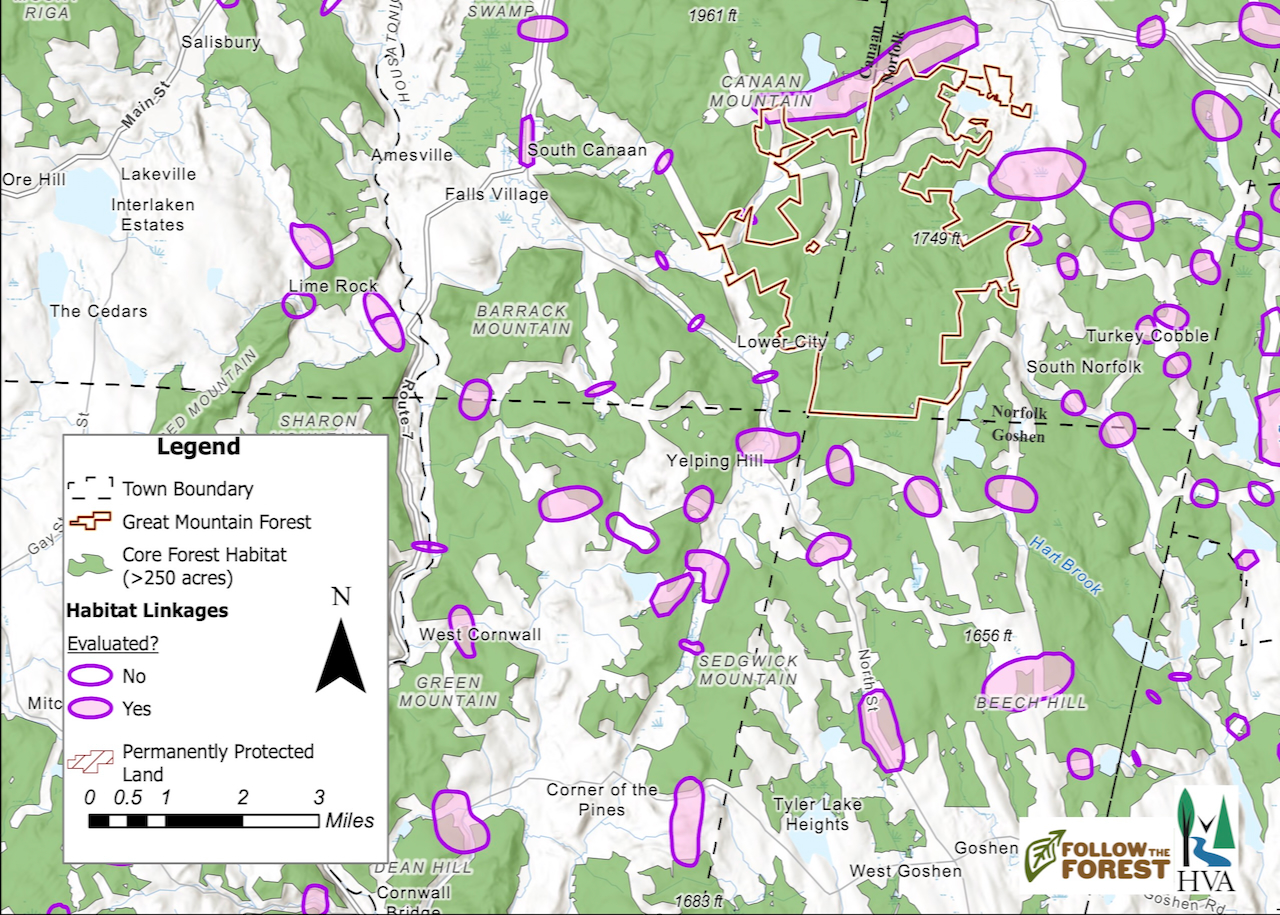
The property lines of GMF, outlined in red, with the surrounding wildlife linkages to other core forest habitat demarcated by purple ovals. Shaded ovals indicate sites that have been assessed in person by a community scientist. Map courtesy of Stacy Deming/Housatonic Valley Association.
Not just a stronghold, GMF is also surrounded by linkages to other protected habitats. These sites, identified by purple ovals on the Follow the Forest map, were initially identified by computer modeling, but many have been visited by volunteer citizen scientists who contributed their own observations to the data pool.
Stacy Deming, HVA’s GIS manager who is behind Follow the Forest’s intricate and user-friendly story map, also joined the interview. She spoke with pride about the collaboration with locals. “I’d say we’ve really done a lot of work with community scientists to come up with these,” she said of the map tags detailing each linkage. “I feel like they’re a better display of what the linkages really are.”
Rogers echoed Deming’s sentiment: “What’s really cool about getting community scientists out there is that they have information that we can’t gather from a computer.” Plus, involvement begets interest, she said, noting that the project promotes engagement with the idea of wildlife connectivity as volunteers inspect these linkage sites firsthand.
Both Rogers and Deming agree that a communal approach to preserving connected wildlife corridors is essential in southern New England, a region abounding with roads, property lines, and town borders.
“None of us can do it alone,” said Rogers. “We need each other. And what’s fun about Follow the Forest is that it unites all of us under something that’s exciting, right?”
GMF’s Resident Moose are the Subject of Scientific and Photographic Study
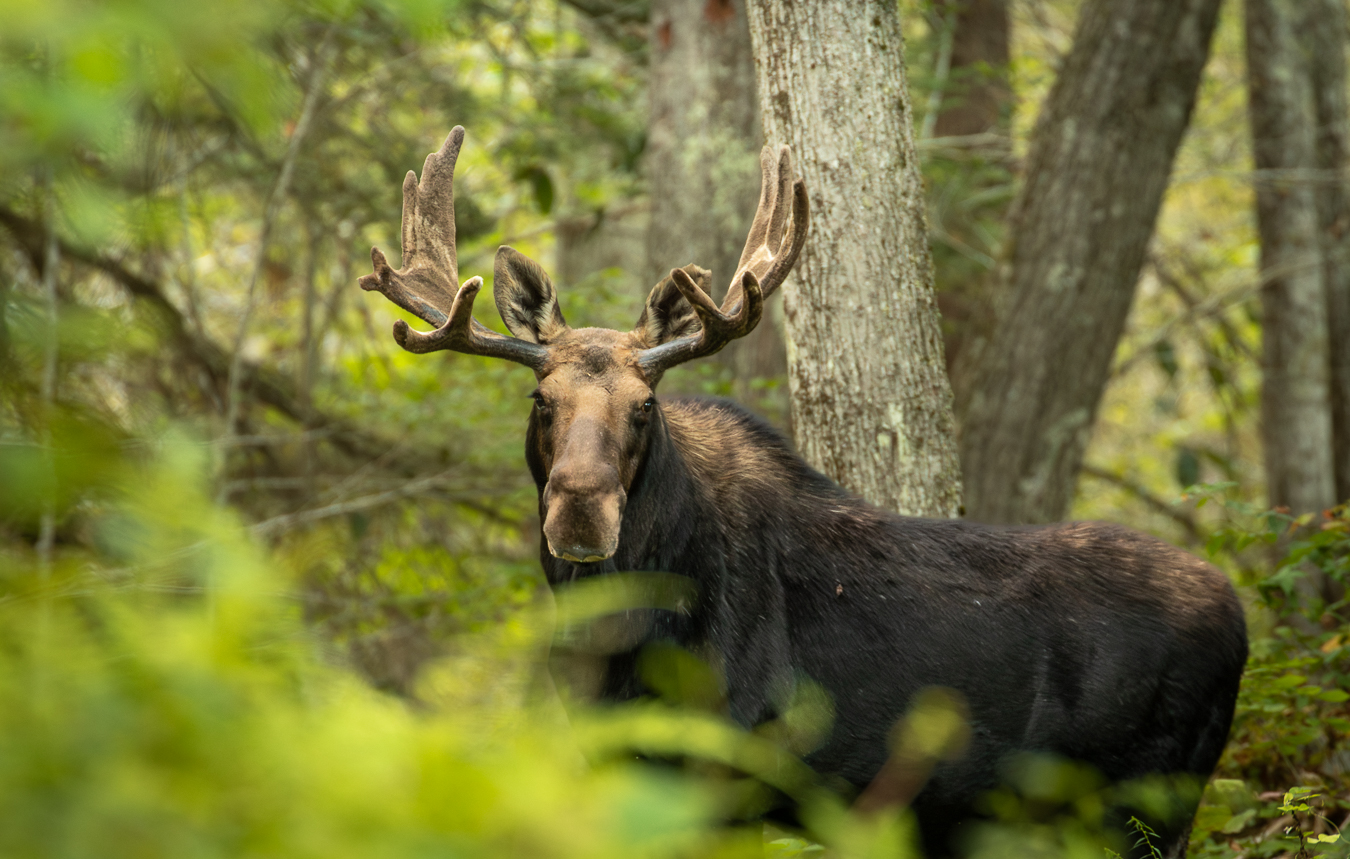
Great Mountain Forest is home to 20 of Connecticut’s 100 or so moose. Yet most people who visit the forest will never spot one. That’s because despite their significant stature and status as New England’s largest land mammal, these ungainly ungulates—members of the order of hoofed mammals— move through the forest with remarkable stealth and agility.
Wildlife photographer Stephen Schumacher, however, who has been documenting GMF’s diverse fauna for eight years, has captured GMF’s resident moose on multiple occasions. And Ed Faison, senior ecologist at the Highstead Foundation, a regional conservation organization based in Redding, CT, has studied GMF moose to better understand how they impact temperate forests.
Under the Microscope
Faison, the lead author of a recent paper on the effect of moose and white-tailed deer in New England on forest regeneration, explains “Moose have been studied for decades in the boreal forest, in Canada and Scandinavia and Alaska. So a lot is known about what they do to forests up there, but very little is known about what’s going on down here [in the temperate forest].”
Moose are relative newcomers to Connecticut. In fact, there is no hard evidence to suggest that the species had a stable breeding population in the state until the 20th century.“GMF is a great study site because it’s one of the few spots in Connecticut with moose, it supports long-term research and is actively managed” explains Faison.
Faison along with Steve DeStefano from the United States Geological Survey Collaborative Wildlife Research Unit at the University of Massachusetts spent 15 years monitoring the browsing (foraging) habits of moose and deer to determine their impacts on the abundance and composition of a re-growing forest in a disturbed woodland site, such as an area that had been cleared for timber harvesting. GMF proved an ideal study site.
A moose that eats up to forty or fifty pounds of food per day can certainly produce notable effects on the reemergent trees. Faison and DeStafano found that rather than restrict the forest’s ability to regrow, as prior scholarship had suggested, browsing’s primary impact was to direct different plant species to succeed in the disturbed environment, without substantial sacrifices to overall biomass or biodiversity.
The study, Resilience and Alternative Successional Trajectories in Temperate Forests Exposed to Two Large Herbivores published in the journal Forest Ecology and Management in June, concluded that the moose and deer did not significantly impact forest resiliency, or its ability to regrow after disturbance.
However, the scientists also concluded that the moose and deer’s feeding habits did affect the forest’s composition. The browsed sites showed markedly reduced deciduous tree growth. That’s because the animals favored deciduous species, allowing white pine (Pinus strobus) to grow more abundantly in the browsed stands.
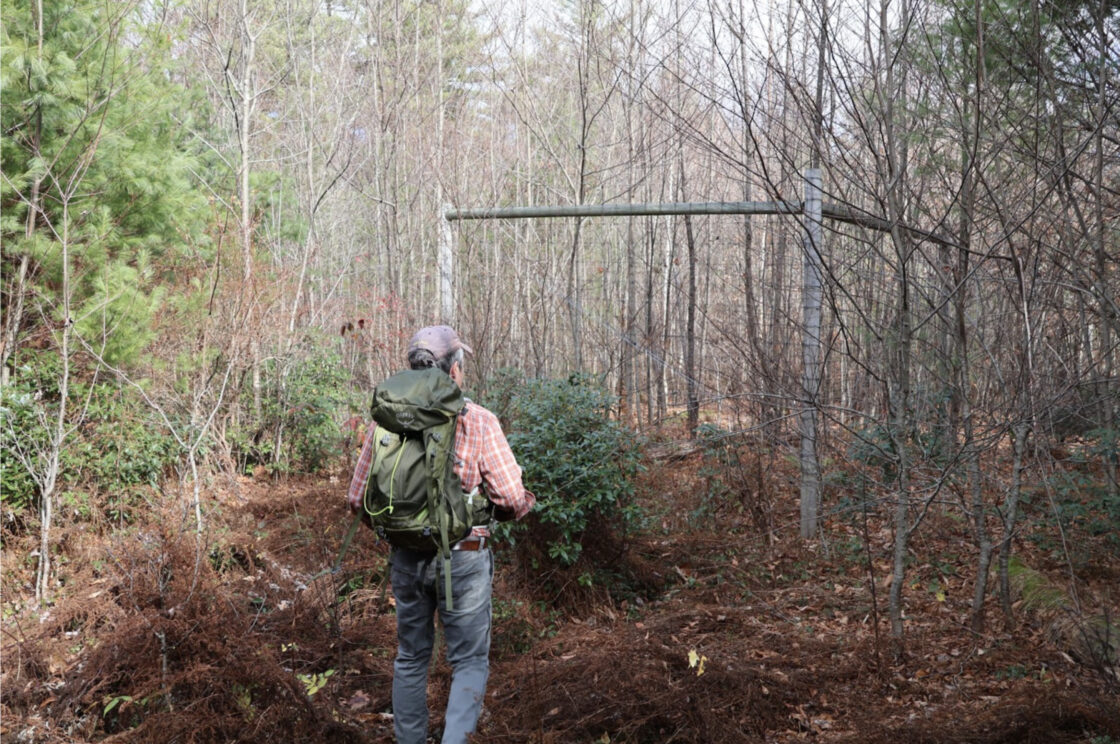
Faison inspects a partially enclosed plot that excludes moose but permits deer. Photo provided.
Through the Camera’s Lens
Rather than their impacts on the forest, wildlife photographer Stephen Schumacher is interested in documenting the animals themselves, which is no easy feat.
Despite being New England’s largest land mammal, moose are seldom seen. And even though their antlers can span up to five feet across, these ungainly looking, yet agile animals manage to negotiate the dense understory with remarkable ease.
“I’ve seen moose going through mountain laurel that is thicker than thick,” remarked Schumacher during a recent conversation. “It’s hard enough for me to get through there.”
Yet Schumacher persists. “This is a lifelong project,” he says. “I still want to get my quintessential moose in early morning or late afternoon sun getting lit up like a Christmas tree.”
Not only does their reticent nature make moose encounters a challenge. But a moose that feels threatened can kick, charge or stomp, particularly a cow protecting her calf.
Schumacher’s dogged pursuit of moose has meant he’s had his share of run-ins with the woodlands giants, and the pictures to prove it. On August 27 this year, while riding his bike, Schumacher spotted a looming shape emerging from the edge of the woods. Jumping off his bike, and struggling to keep his hands steady as he prepped his camera for the shot, Schumacher uttered a low guttural sound to draw the huge bull’s gaze.
Normally, the photographer wouldn’t vocalize to the animals, but since this was before rutting season, he said the bull was calm. “His ears were up… he wasn’t posturing with his antlers. He was relaxed.”
To Schumacher’s amazement, the bull offered a reply. “He turned his head broadside, and he looked back at me, and he answered me back.”
“It sent chills up my spine,” he continued, after a pause.
“Seeing that bull, that’s probably the coolest thing I’ll ever encounter. And I’ve been able to photograph wolves out in Yellowstone,” he said.
Schumacher has been tromping around GMF’s hinterlands for eight years, and he also monitors a number of trail cameras he set up around the forest, which gives him rare access to documenting moose as well as other mammals in the wild. Once, five years ago, two deer walked by one of his cameras and for a split second, the outline of their antlers matched perfectly. “Those guys were actually twins,” Schumacher said with a grin. Schumacher’s cameras have also captured fishers, martins, coyotes, foxes, bobcats, and “lots of bears—some giant bears.”
“I don’t take any of that for granted,” he said, emphasizing his gratitude to GMF staff for allowing him the access to do what he does. “It’s like getting a golden ticket in Willy Wonka.”
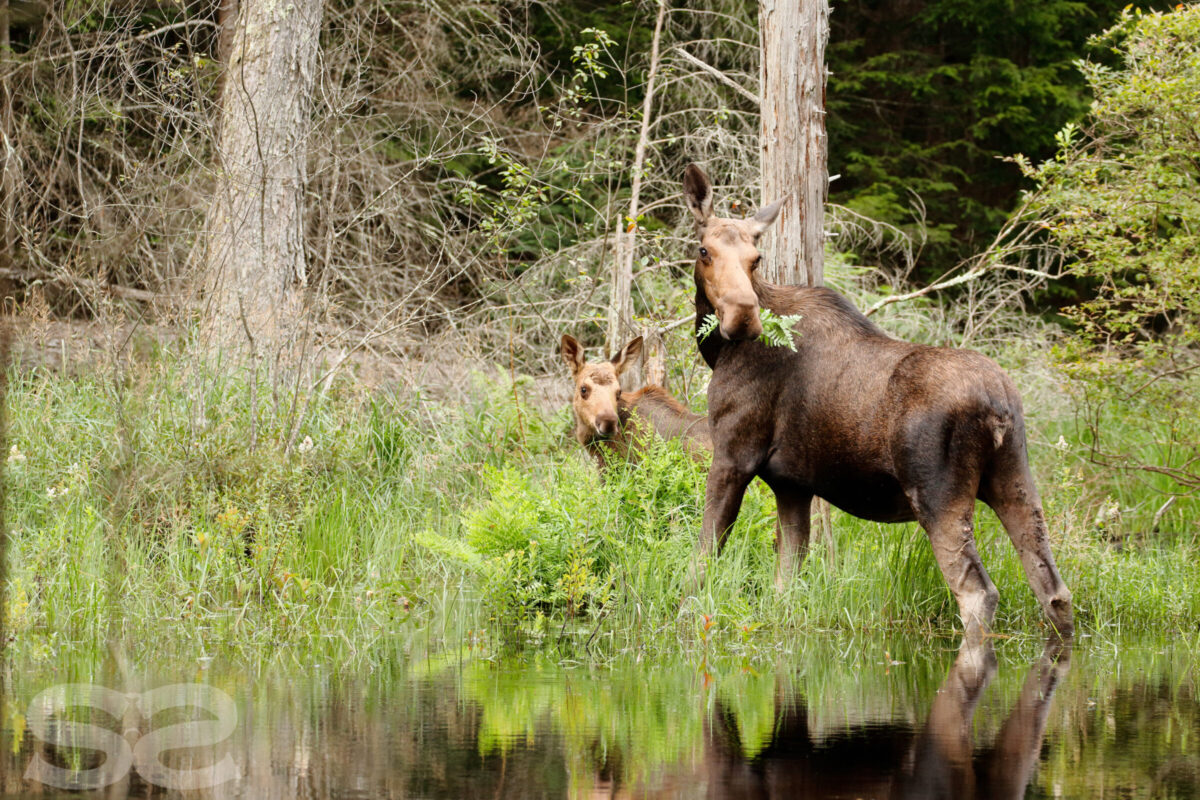
Despite his hands quaking with trepidation, Schumacher managed to capture a few images of a moose cow and her calf. Photo: Stephen Schumacher
Schumacher’s photographs and trail camera footage can be found on instagram @sds.wildlifeimages.
Future Forests in the Making: Climate-Smart Thinning at Great Mountain Forest
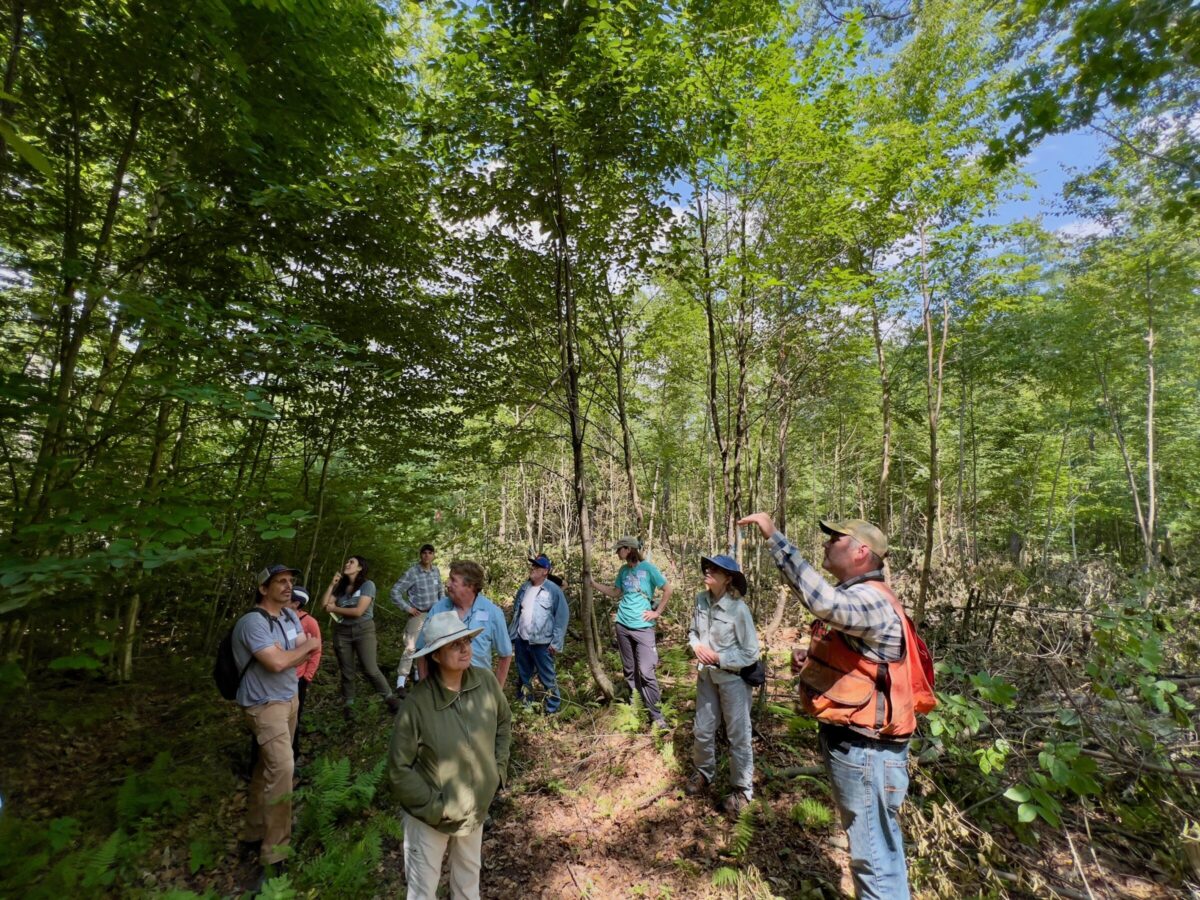
As New England experiences increasingly extreme weather, including hotter and wetter summers, keeping forests healthy and resilient to pests and disease is an ongoing challenge. Work has begun implementing Connecticut Land Conservation Council’s (CLCC) Climate Smart Land Stewardship Grant at GMF! Great Mountain Forest recently began a pre-commercial thinning project, which is a forest management practice that involves removing trees from a young, dense stand before they reach a size where they can be commercially harvested.
Managing Competition
In areas at GMF where trees were harvested 20 years ago, young trees have grown back fiercely, racing to become the future forest. Most of these new trees will end up being shaded out underneath their stronger brethren or succumbing to damage or disease. By applying management methods that support a diversity of tree and animal species and provide more resilience to pests and other disturbances, our foresters are controlling that competition to enhance traits we hope to promote.
We start by marking a “pre-commercial thinning,” or PCT, in three stands that are approximately 20 years old. “Thinning” means removing the trees that are competing with those we want to keep strong and healthy. “Pre-commercial” means that we are implementing this treatment when the trees are too small to be sold as wood products, which is where funding directed by CLCC comes in to support this work. We chose trees spaced on average 10 feet from one another, giving them the light they need to grow quickly when they are “released” from competition by this treatment.
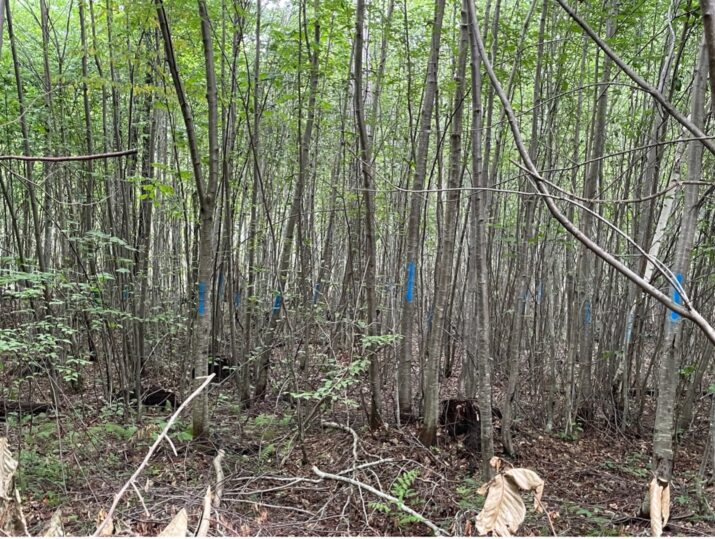
Stand marked before treatment (note very high density of stems).
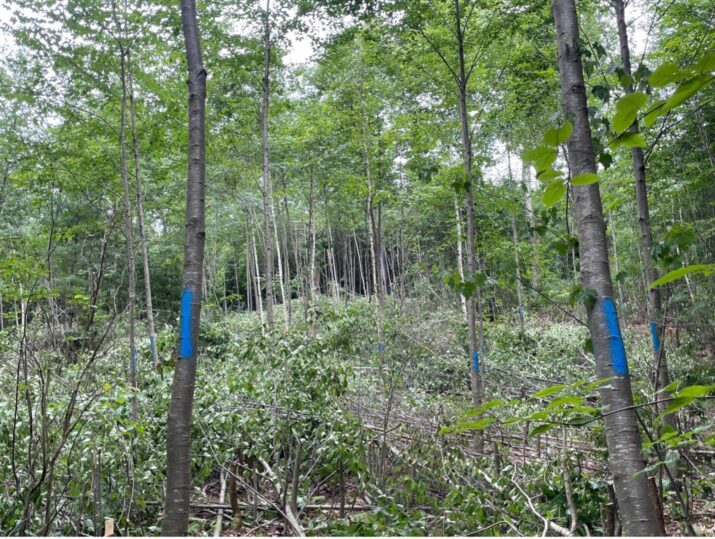
Stand after thinning treatment (only marked individuals remain standing).
Shaping the Future Forest
In selecting which trees to keep, there are a few things we keep in mind. The first is health and form. We choose trees that are going to last: those that aren’t suffering from disease, that have stable trunks and full crowns, and that have no obvious wounds.
Unfortunately, we have to remove most of the beech in these young stands. American Beech, or Fagus Grandifolia, is currently under a dual attack from beech leaf disease and beech bark disease. Nearly all of the beech in our forest are succumbing to one or both of these diseases. While we save any individuals that seem to display resistance, we know we cannot count on the majority of them as our future canopy.
The other factor we consider is species composition. Presently, these stands are almost entirely beech and black birch (Betula lenta). We therefore want to promote the other species within the stand to make it as diverse as we can. Tulip poplar, white, yellow and grey birch, ash, cottonwood, and oak are growing in these stands too, and we select for them to prevent the stands from becoming near-monocultures of black birch. While there’s nothing wrong with black birch, aiming for as much diversity as possible helps to increase stand resilience and support additional non-tree species in the forest. We’re also making sure to leave species like serviceberry and highbush blueberry. While these species won’t be our canopy trees, the fruits they produce are important food sources for birds.
Looking below the canopy, the effects of this treatment will also be seen on the forest floor. In this stage of competition, the amount of light that can reach the ground is quite limited. The trees are so densely packed that nearly nothing can grow beneath them. But by thinning the trees, we are allowing that light back in.
Forester Emeritus Jody Bronson inspired this project through his implementation of a similar PCT on a smaller scale over many years. What he saw after thinning was an understory full of not only herbaceous plants, but a new cohort of tree seedlings, particularly oaks, a group of species that has wonderful ecological value but can be difficult to regenerate. Now, should an ice storm come through and knock out the canopy trees, that young cohort is waiting in the wings to take off and swiftly become a forest again instead of having to compete for establishment.
Great Mountain Forest’s 2025 summer interns got to mark this treatment, selecting which trees to cut and which to leave. From the first week, they started thinking like foresters, making decisions that they would not see the full effects of for decades.
We are so grateful to CLCC for funding this work, which has provided young foresters with unique learning opportunities, added resilience to our forest, and created an excellent demonstration of sustainable forest stewardship.
Funding for this project was paid for by the Climate Smart Farming: Agriculture and Forestry Grant. Funding awarded and administered by the Connecticut Department of Agriculture and the Connecticut Land Conservation Council.
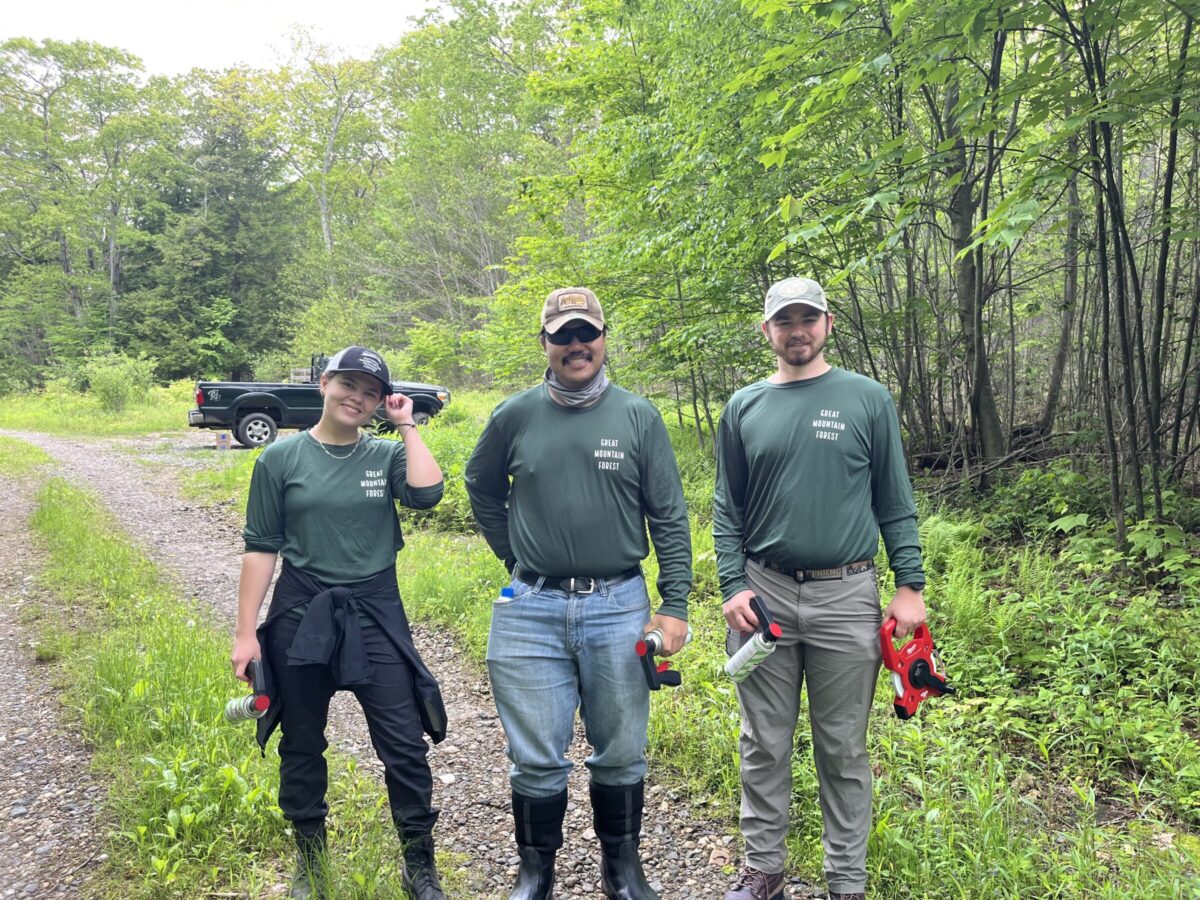
GMF’s 77th Cohort of Forestry Interns
Ren Cattafe
Hello! My name is Ren Cattafe, and I am an undergraduate student at UMass Amherst studying forest ecology and conservation. I grew up in eastern Massachusetts, spending a lot of time in forests, which fostered my love of nature early on and influenced my decision to pursue a career in natural resources. I’m interested in sustainable logging practices, promoting forest resilience through silviculture, and increasing community accessibility and knowledge of forested areas. During my studies I have also had the opportunity to participate in active hemlock woolly adelgid research, which I plan to continue in the coming academic year.
I feel extremely grateful to be working with GMF this summer. Not only has it been an incredible learning opportunity, but a chance to do work that serves a real purpose.
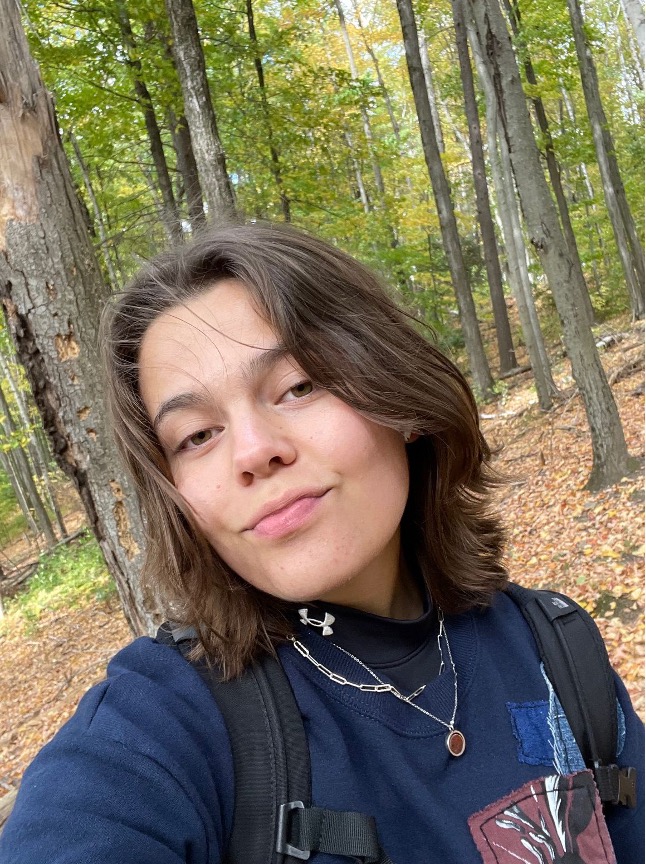
Within the first week, my fellow interns and I supported research that involved marking 30+ acres of trees with the goal of strengthening the dominant cohort and the understory. This experience has enhanced my ability to perceive and interpret forested landscapes in a manner that can’t be achieved in a classroom setting. I am thrilled that such research is supported here, and that both industry and science can coexist within the same space.
Will Watkins
Hello, my name is Will Watkins. I am a rising senior at North Carolina State University studying forest management with a concentration in ecology and a minor in environmental education. I first got into forestry as a degree because I grew up participating in boy scouts and spent a lot of time outdoors. The summer before I started my freshman year at college I was able to go on a special backpacking trip out in New Mexico where I learned about and helped with some forestry and conservation efforts. This inspired me to pursue forestry at school. Now that I have had some schooling and this internship, I know I made the right choice.
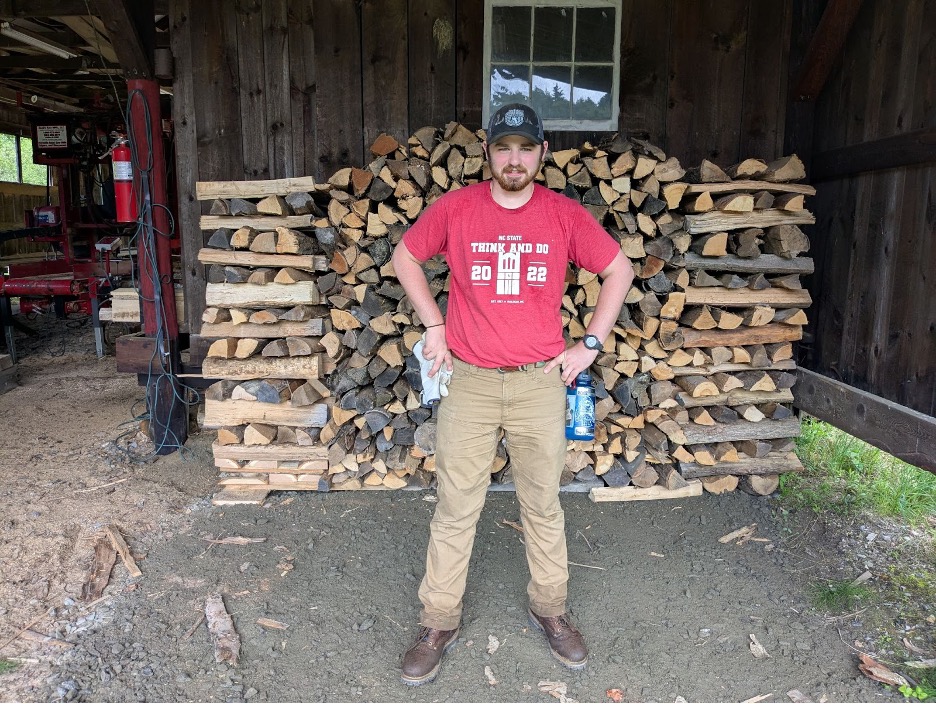
I was born and raised in North Carolina and had never heard of Great Mountain Forest, nor did I know much about the northwest corner of Connecticut. But as soon as I ran across this opportunity online I was excited and applied immediately. It checked all my boxes, plus it was in a part of the country that I have never been to? That’s great! Even now, after working here for a month, I am still slowly learning more about both GMF and the area.
So far, we have marked stands of trees for a pre-commercial thinning and we have made some plots in a stand of barberry to get an inventory of the understory. That is only a small bit of what we have done so far and what we will eventually get to do later in the summer. I am very much looking forward to the rest of the summer.
Ronald Law
Hello, my name is Ronald Law, and I am a 2025 summer intern at Great Mountain Forest. My interest in forestry began quite late in life as I was originally studying computer science. After some time however, my disinterest in the field became apparent to me and I decided I had to quit.

Six months later, I started working at a lawn care company, eventually becoming a tree and shrub specialist. Though I enjoyed my time there, I slowly came to realize the elements in our environment that were changing dramatically, resulting in the death and weakening of numerous plants under my care. As unusually warm winters became the norm, and invasive pests became more prevalent, I realized I wanted to work in a position that was more proactive than reactive when it came to the health of our environment. So I decided to return to school and pursue environmental studies, which eventually led me to my internship at Great Mountain Forest.

Healthy forests, healthy people – and healthy ticks?
The hills are alive in Northwest Connecticut, but it’s not all birdsong and snowdrops: the blacklegged tick has shaken off its winter torpor, and now crawls in droves through the understory, spreading disease and myths in equal measure.
Dr. Scott Williams, Chief Scientist and Head of the Department of Environmental Science and Forestry at the Connecticut Agricultural Experiment Station (CAES), a state organization spearheading research on tick-borne diseases, dismissed two commonly held misconceptions about the tiny, dangerous insect: “They don’t fly. They don’t drop out of trees.” Williams advised that rather than worry about the branches overhead, think low and keep your ankles covered. “They crawl up from the ground for the most part, or [from] a few inches off the ground.”
Demystifying tick behavior and pathogen transmission yields surprising insights into how to manage disease levels in our region: in a healthy forest, more ticks might actually equal less disease, Williams explained.
Debunking Myths
Blacklegged ticks (also widely known as deer ticks) and Lyme disease are commonly misunderstood components of the New England forest, starting with the illness’ origin story. Conspiracy theories abound speculating where it began, with an especially persistent and oft-debunked claim that it leaked from a government research facility on Plumb Island.
But reputable research has shown that the disease has been circulating in the northern hemisphere for millennia. One of the bacterium responsible for causing Lyme disease, Borrelia burgdorferi, was detected in Ötzi the Iceman, a 5,000 year-old mummy found in the Eastern Alps in the 1990s. A study conducted by the Yale School of Public Health in 2017 traced B. burgdorferi back to North American forests of 60,000 years ago, meaning the bacterium was resident in our woods long before the earliest human inhabitants arrived.
Closer to home
Deer ticks and Lyme disease are as Connecticut as New Haven pizza, with one of our picturesque coastal towns lending its name to the ailment after a cluster of cases there in the 1970s lead to its identification as a unique condition. The state remains positioned in the very heart of tick country, and the Icebox of Connecticut, which previously benefitted from the protection of its harsh winters, is losing its defenses as the cold season continues to warm up.
“We’re not trying to scare people from being outside, we’re trying to educate people on when the various stages [of ticks] are active – what’s tick habitat and what’s not,” Williams said. For instance, a field of high grass, commonly regarded as a tick haven, is actually largely inhospitable to the bugs, as they desiccate quickly in a dry environment. “That’s kind of a desert for ticks,” Williams explained.
The most “ticky” habitat “is really that edge where your lawn meets the forest,” he said, and when it comes to getting bitten, it’s often a matter of timing.
When to watch out
While adult deer ticks are active now, Williams explained that May, June, and early July are the months when most infections occur since that’s when both humans and the nymphal stage of deer ticks are likely to be active outdoors. Although the adult ticks wandering the undergrowth and brush now can certainly transmit the pathogen, it’s the nymphs that are “the really problematic guys,” Williams said, in part because they are small and hard to detect, and also because in spring, “human activity and tick activity in the nymphal stages coincide.”

A white-tailed deer in the forest. Photo: Mike Zarfos
Host competency and the dilution hypothesis
Active ticks, active humans, and an abundance of both yield higher bite rates, thus contributing to more infections. However, Williams explained that the species present in an ecosystem can have significant impacts on the spread of tick-borne pathogens to humans.
A surplus of white-tailed deer upon the landscape, for example, is often thought to correlate to more tick-borne illness. While a large deer population will often support a high concentration of ticks, deer are a “dead-end host” for the bacterium, meaning they don’t transfer the pathogen back into the ticks.
Mice, however, are “competent hosts.” The concept of host competency is the ability of a reservoir host species (animals that carry and spread disease-causing pathogens) to infect the ticks with pathogens, which small rodents are highly adept at whereas larger animals are less so. When deer are plentiful on a landscape, “you typically have high tick abundances with lower infections with the various pathogens,” Williams said.
The reservoir host species of B. burgdorferi that actually infects the ticks with the pathogen are small rodents, especially the white-footed mouse which is common to the Litchfield Hills. When fewer deer, and other medium sized mammals, are available, Williams explained that the ticks will then be forced to feed primarily on mice, which will support a smaller population of ticks within which the pathogen is much more concentrated.

CAES team conducts Lyme disease research with mice in Woodbury. Photo: Mike Zarfos
Healthy forests, healthy people
In a healthy ecosystem with a spectrum of animal species, ticks aren’t forced to rely on these highly competent hosts for a blood meal. Williams explained that this scenario, in a species-diverse forest, describes what disease ecologists call the dilution hypothesis: “with a diversity of animals, you’re going to see less infection in the ticks because they have so many options to feed.”
The loss of forest diversity can have the opposite effect, Williams said, which is happening across the Northeast due to development and the incursion of invasive species. Several years ago, Williams conducted research on the correlation of Japanese barberry, an invasive shrub, with tick populations; some of the work was done at Great Mountain Forest with the help of GMF forester Jody Bronson. The study found that the dense tangle of undergrowth created by the proliferation of the shrub caused a humid microclimate that not only provided great tick habitat, but enabled them to remain active throughout the day.
Normally, the moisture-dependent ticks might be inactive under a pile of leaves during the heat of the day, Williams said. But the microclimate created by the “monoculture” of invasive brush growth means ticks continue looking for a host “pretty much 24 hours a day.” He clarified that this was not specific to Japanese barberry, but any plant that grows in a monoculture tangle, “which is pretty much what invasives do in our neck of the woods.”
“What we’re trying to push is a healthy, diverse forest, and that’s very applicable to Great Mountain Forest,” Williams said. The goal, he continued, is responsible management: “If you have a healthy, diverse, well-managed forest, you’re going to have a diverse array of wildlife, and as a result you’re going to have a healthier tick population with lower pathogen infection. That’s kind of the bottom line.”